The Albanese government has watered down one of its most contentious revenue measures, removing a planned tax on unrealised capital gains.
Two years after it was first unveiled, the reworked plan—approved by cabinet on Oct. 13— softens key elements of the original policy by introducing indexed thresholds, removing the tax on unrealised capital gains, and delaying implementation by a year.
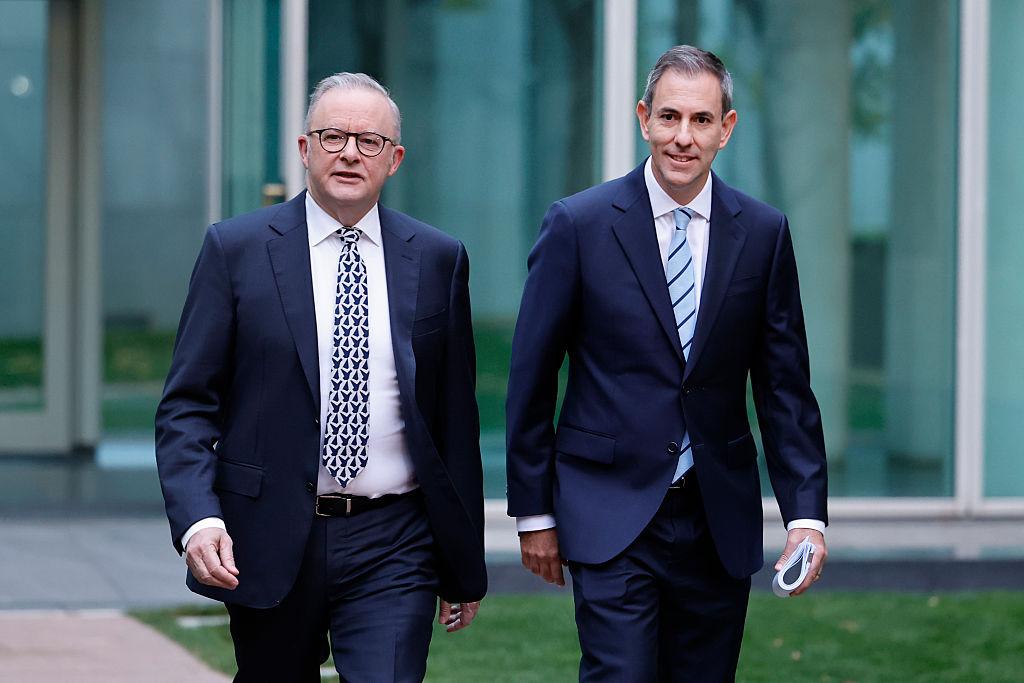
Treasurer Jim Chalmers said the new package reflected feedback from the superannuation sector and aimed to deliver a fairer and more workable system.
New $10 Million Tier Added
Australians with superannuation balances above $3 million will still pay a 30 percent tax on earnings, except a new tier has now been introduced for those with balances over $10 million—set to pay a 40 percent tax rate.Both thresholds will be indexed to inflation, ensuring the tax does not automatically capture more individuals over time through bracket creep.
“We didn’t think a blunt cap was the best way forward, so instead we’ve introduced an additional threshold,” Chalmers said.
Treasury estimates around 90,000 people will fall within the $3 million band, and just 8,000 will exceed $10 million.
Shift Away From Unrealised Gains
In a significant retreat from its original proposal, the government has confirmed the new tax will apply only to realised capital gains—that is, profits actually made from investments—rather than the on paper value.The initial plan to tax paper profits drew heavy criticism from accountants and super fund managers, who warned it would distort investment behaviour—funneling investors into the already overloaded property market—and result in unpredictable tax liabilities.
Chalmers said the decision was made after extensive consultation and that Treasury would continue to refine the rules with superannuation experts.
“We want to get the calculation right and ensure it’s transparent and manageable for funds,” he said.
Low-Income Earners Set to Benefit
While tightening tax concessions at the top end, the government also announced an increase to the Low-Income Superannuation Tax Offset (LISTO) from $500 to $810, and raised the income eligibility threshold from $37,000 to $45,000, effective 2027.The change, which aligns with the government’s next round of tax cuts, will benefit about 1.3 million additional Australians, 60 per cent of whom are women.
It will bring the total number of eligible workers to 3.1 million and is projected to add around $15,000 to retirement savings for many low-income earners.
The measure will cost approximately $435 million but is designed to offset the impact of inflation and boost equity in the system.
The government will also move to align the treatment of federal judges’ defined benefit interests with those of state judges, ensuring consistent constitutional exemptions.
Revenue Impact and Political Stakes
Chalmers said the revised package is expected to raise around $2 billion over the forward estimates, less than the $6.2 billion forecast under the 2023 version.Most of the revenue loss stems from the one-year delay and higher concessions for low-income workers.
He defended the reduction, arguing the revised design strikes a balance between revenue needs and long-term sustainability.
Chalmers Hopeful of Greens’ Backing
Treasurer Chalmers also said he is optimistic the Greens will back the government’s revised superannuation tax plan when it reaches the Senate, after what he described as a constructive initial discussion with Senator Larissa Waters.Chalmers confirmed he spoke with the Greens’ Senate leader shortly after cabinet approved the updated proposal.
“It was a positive and respectful conversation,” he said. “Larissa will consult her colleagues and the party room, as is appropriate, and they’ll make their position known in due course.”
While stopping short of declaring the Greens’ support guaranteed, Chalmers said he valued the “constructive engagement” the government has had with the minor party throughout the process.
“I’m hopeful the Greens will see this as a balanced and responsible package that strengthens super while addressing fairness concerns,” he said.
Meanwhile Greens economic justice spokesperson Nick McKim said Labor’s revised super plan “weakens” efforts to make the wealthiest pay their fair share.
He accused the government of lacking “the guts to tax billionaires fairly,” calling the removal of the unrealised gains tax and indexation of the $3 million threshold “a gift to the super-rich.”
“It’s clear Labor doesn’t have the guts to tax big corporations and billionaires fairly.
Opposition Hails ‘Victory for Common Sense’
Deputy Opposition Leader and Shadow Treasurer Ted O’Brien declared the government’s revised superannuation plan a “victory for common sense,” saying Labor’s decision was long overdue.
“I welcome today’s decision to dump a tax which was always super big and super bad,” O’Brien told reporters. “We’ve known for a very long time that this tax was bad for Australians, but the treasurer refused to budge.”
He said the move represented a political setback for Chalmers but a win for working Australians.
“Today is a humiliating day for the Treasurer, but a victory for everyday Australians who were going to be stung by a fundamentally unfair tax,” O’Brien said.
He earlier said Prime Minister Anthony Albanese had been compelled to pull rank on treasurer after criticism from economists and senior Labor figures.Former Labor Prime Minister Paul Keating, who introduced the super scheme, welcomed the revised changes, saying they end a long “impasse.”
“Bringing equity and an important measure of tax justice to super’s current runaway arrangements with the nomination of a $3 million limit taxed at 15 percent and 30 percent thereafter, is a huge policy achievement by the Treasurer … It is reform of a kind that shares substance with necessity,” he wrote in a statement on X.