Speaking recently in Kazakhstan, Italian Prime Minister Giorgia Meloni described Central Asia as a vital “crossroads” between East and West—a region, she said, that plays a “strategic role in the global scenario.”
Meloni called for enhancing ties between Italy and the five Central Asian states—Kazakhstan, Kyrgyzstan, Tajikistan, Turkmenistan, and Uzbekistan—to make relations “more sound, long-lasting, and strategic.”
In recent years, the European Union (EU), the United States, and China have all expended significant effort—and capital—to draw Central Asia into their respective geopolitical orbits.
“There is clearly a competition between major powers, as well as regional powers like Iran and Turkey, in Greater Central Asia,” said Mamuka Tsereteli, senior fellow at the Central Asia–Caucasus Institute at the American Foreign Policy Council.
“The U.S. and the EU are latecomers in this competition. They are way behind in terms of their presence in, and commitment to, the region.”


He attributed the burgeoning great power rivalry over Central Asia to a “combination of factors,” including “access to resources, trade routes, and a growing market with increasing purchasing power.”
Richard Spooner, a Central Asia expert based in Kazakhstan’s capital, Astana, said that the United States, the EU, and China all “have an interest in Central Asia.”
‘Partners of Choice’
Meloni made her remarks at the Astana International Forum, which was held in the Kazakh capital on May 29 and May 30.Attended by officials from dozens of countries, including some heads of state, the forum tackled a range of issues, including energy security, interregional trade, and a host of bilateral cooperation initiatives. The leaders of all five Central Asian states participated in the event, which was chaired by Kazakh President Kassym-Jomart Tokayev.
Regional leaders who attended the forum hailed growing commercial ties between Italy and the Central Asian states, pledging to further promote bilateral trade and investment.
During her visit, Meloni signed economic deals with local partners collectively worth more than 7 billion euros (approximately $8 billion), and a follow-up Central Asia–Italy summit has been planned for 2027.
The Italian leader’s charm offensive comes amid broader European efforts to deepen relations with the Central Asian states.
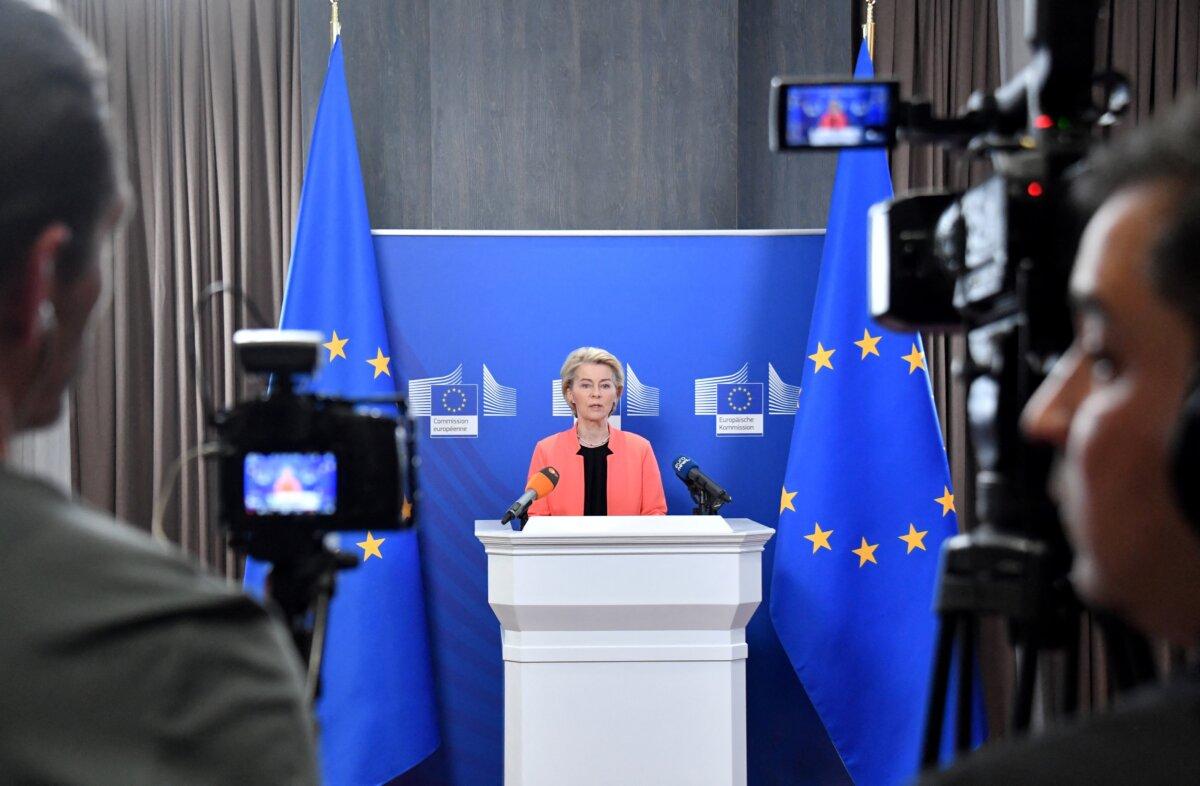
In April, the Uzbek city of Samarkand hosted the first-ever EU–Central Asia summit, where European Commission President Ursula von der Leyen and European Council President António Costa represented the 27-nation bloc.
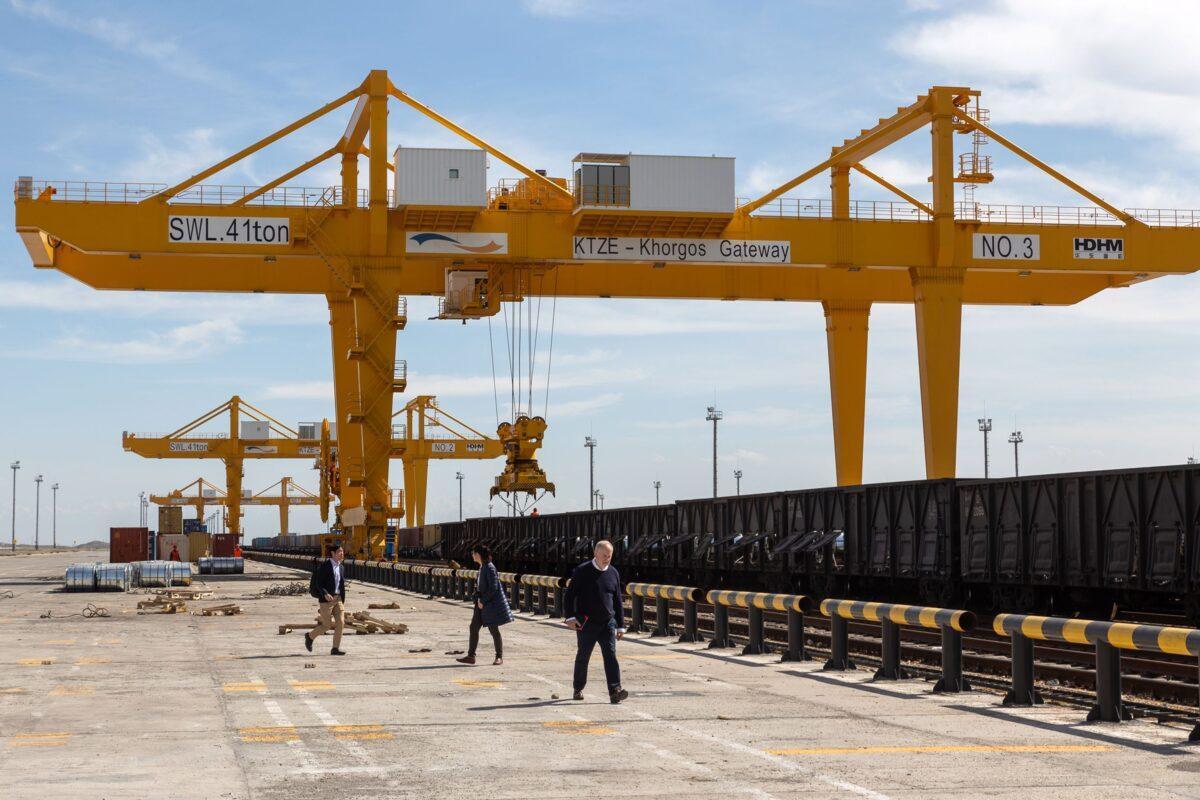
For Brussels, deeper ties with Central Asia would give it access to alternative sources of energy, along with regional trade routes that bypass Russia, such as the emerging international Trans-Caspian Corridor (or Middle Corridor).
In Samarkand, Brussels unveiled a 12-billion-euro investment package (approximately $13.7 billion) as part of its Global Gateway Initiative.
Launched in 2021 with the aim of investing in infrastructure projects worldwide, the EU’s Global Gateway Initiative is widely seen as Europe’s answer to China’s continent-spanning Belt and Road Initiative.
According to Von der Leyen, the investment package is aimed at “strengthening transport links” between Europe and Central Asia and “deepening cooperation on critical raw materials.”
The hefty investment package was not the first of its kind.
In 2024, as part of the Global Gateway Initiative, Western financial institutions invested 10 billion euros (approximately $11.3 billion) to promote transport connectivity across Central Asia, with an emphasis on the Middle Corridor.
Mirziyoyev said the summit had served to raise EU–Central Asia relations to the level of a “strategic partnership.”
According to Spooner, the recent uptick in Western interest in Central Asia derives from the region’s wealth of natural resources and potentially game-changing trade routes.
“U.S. companies have been big investors in Kazakhstan’s oil and gas resources for 30 years, remain so to this day, and are now paying attention to its critical minerals and those of Uzbekistan,” said Spooner, who sits on the advisory board of the Caspian Policy Center, a Washington-based think tank.
“The same applies to Europe. The Middle Corridor offers an alternative for taking delivery of Chinese goods without using the territory of Russia.”
For China, a close ally of Moscow, the Middle Corridor—which has been more or less operational since 2017—“has nothing to do with avoiding Russian territory,” according to Spooner.
“It’s about putting Chinese goods in Iran, Afghanistan, Pakistan [and] India, and, crucially, the Gulf States, with their expanding economies and logistical access to African markets,” he said.
New ‘Great Game’
In 2023, the first China–Central Asia summit was held in the Chinese city of Xi’an, which was also attended by all five Central Asian leaders.At that summit, Beijing extended significant financial support for the development of the region’s infrastructure, pledging to further promote bilateral trade and speed up the construction of a gas pipeline linking China to Central Asia.
A follow-up summit is now slated to be held later in 2025 in Kazakhstan.
And in April, Chinese Foreign Minister Wang Yi met his five Central Asian counterparts in Kazakhstan’s eastern city of Almaty to discuss bilateral trade, economic integration, and regional transport schemes.
The United States, too, has sought to exert its influence in Central Asia, which in the 19th century hosted another big power rivalry—between the UK and Russia—known as the “Great Game.”
Shortly after the 2023 summit in Xi’an, the first U.S.–Central Asia (C5+1) summit convened in New York City, where the leaders of all six participant states met to discuss regional issues and potential areas of cooperation.
They also called for stepped-up security cooperation to address “shared regional security challenges” with a view to “maintaining the sovereignty and independence of the Central Asian states.”
Spooner described the regional summits organized by Washington and Brussels as attempts by the latter to “couple geopolitical issues with economic development initiatives.”
“For China, meanwhile, the interest in Central Asia has been consistently strong since the Soviet Union ceased to exist 33-plus years ago,” he said, noting that Beijing’s economic presence in the region today “dwarfs that of the EU or the United States.”
“Given China’s geographic proximity to the region, Beijing succeeds at leveraging its economic and geopolitical influence over the five countries of Central Asia,” Spooner said.
Tsereteli agreed that Washington lags significantly behind Beijing and Moscow in terms of its efforts to court the five states of the region.
“No sitting U.S. president has ever visited Central Asia, while Chinese and Russian leaders are there every year—sometimes multiple times a year,” he said.
“That may change. There are signs of greater [U.S.] interest, but this will require clarity of strategy and a major commitment.”
Nevertheless, he said, within the past two decades, Beijing has emerged as the “clear winner of this competition.”
“China’s role in Central Asia went from being almost non-existent 30 years ago to being a major trade and investment partner and an increasingly strategic actor,” Tsereteli said.
Russia, meanwhile, which has traditionally viewed Central Asia as its backyard, also remains deeply invested in the region.
“[But Moscow] no longer has the ability to dominate Central Asia as it did for almost 200 years,” Tsereteli said. “Russia now faces several Middle Powers in Greater Central Asia, [which are] focused on their independence and political and economic sovereignty.
“The growing presence of other powers in the region limits Russia’s capacity to exert influence. But Russian power should not be underestimated.”