Although it’s been over a year since the first meeting of creditors of the failed Rex airline was held, it’s still not clear how much creditors—which include Australian taxpayers after the federal government decided to provide financial support—can expect to recover as the operation is taken over by American aviation company Air T.
While analysts at the time attributed the company’s woes to its poorly executed entry into capital city markets, positioning it as a rival to Qantas, Virgin and Jetstar, administrators EY blame entirely different factors.
Airlines worldwide are expanding rapidly.
Rex Gave Loans to Train New Pilots
Rex had attempted to fill its roster by loaning cadet pilots money to pay for their training at the Australian Airline Pilot Academy (AAPA), which was owned and operated by the airline group, meaning they could now be considered debtors of the collapsed company.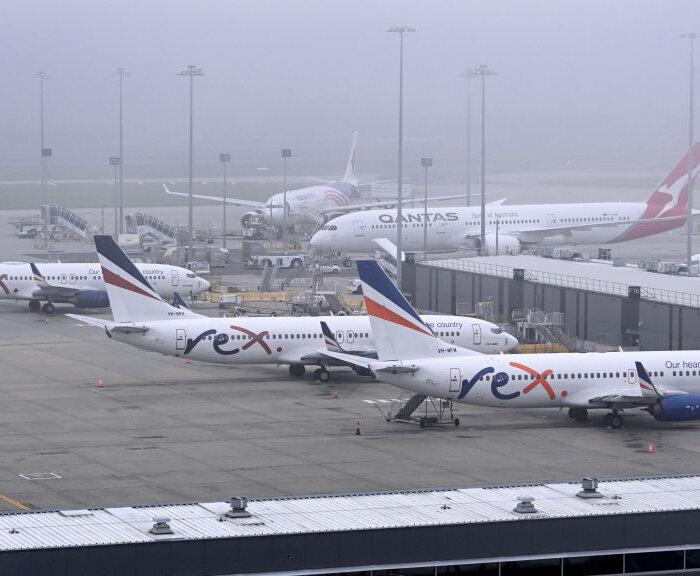
The initial programme cost cadets $105,000, inclusive of simulator training and uniforms as well as food and board.
A deposit of $25,000 was required, and Rex would loan $80,000. When they were accepted for employment (the “ground school phase”), they could borrow up to $105,000, with $80,000 going to AAPA and $25,000 to Rex as a “performance bond.”
However, the administrators revealed that “AAPA and Rex have received correspondence on behalf of a group of current and former Rex pilots (cadets) asserting that while the cadets were engaged as cadets under their respective ‘AAPA Student Agreements,’ [they] performed tasks of an employee, which they ought to have been paid for during the programme.”
Move to Tackle ‘Golden Triangle’ a Mistake
The move to take on three established competitors on capital routes was nonetheless a mistake, given an “inability to secure frequency” on those highly competitive routes, EY says.The capital-to-capital routes have been disestablished and are not part of Air T’s plans.
The report charts how Rex went from a profitable business prior to COVID-19, including through the Global Financial Crisis, to the recommendation that it be wound up.
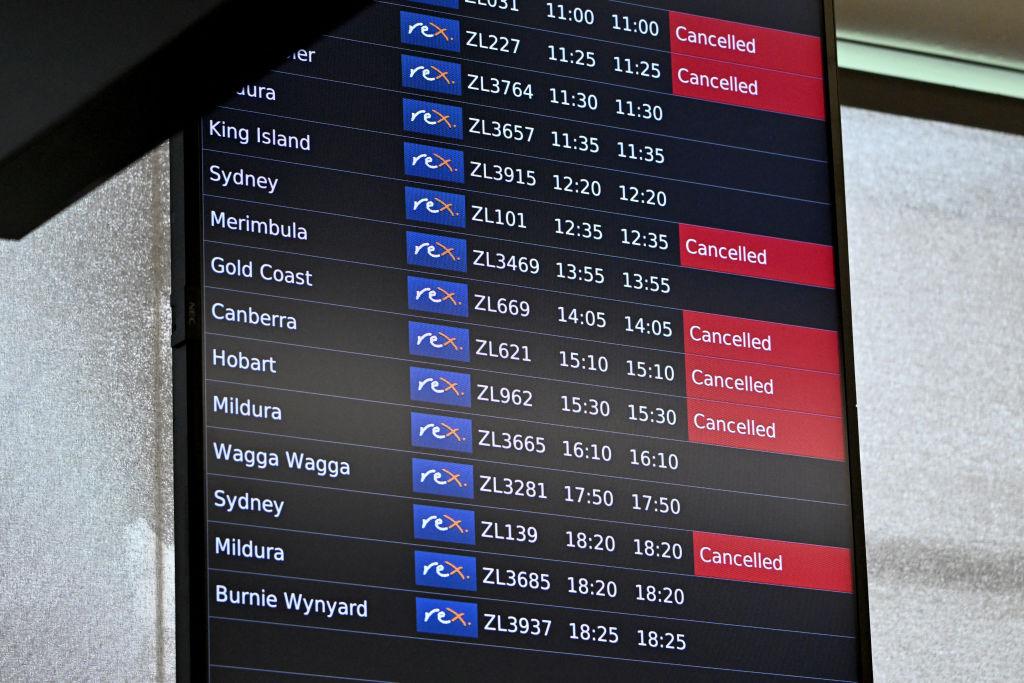
“In 2020, Virgin Australia (one of Rex Group’s main competitors) reduced its footprint in regional Australia and downsized its Boeing 737 fleet. At the same time, Virgin Australia also grounded its Tiger Air brand, a budget airline flying between major cities, including the ‘golden triangle.’
“Rex saw the reduction in Virgin Australia’s services as an opportunity to establish Rex Domestic, entering the market by leasing a fleet of nine Boeing 737s to service the metro flight routes between major cities.
“However, with a highly competitive market with a lack of scale (i.e. only 9 aircraft), the Rex Domestic segment struggled to attract sufficient demand to make it profitable. During this time, the Rex Group (excluding Rex Domestic) maintained profitable performance; however, Rex Domestic was impacting overall group profitability.
“After 4 years in the market, Rex Domestic was no longer a viable business. [The group] undertook a strategic review of the business but ultimately had no option other than to appoint administrators.”
EY says it believes the Rex Group “were likely insolvent from at least 20 July 2024, the date a major operator withdrew its offer, and remained insolvent up until the date of the appointment of the administrators (that is, a period of around 10 days),” which, if correct, is a breach of the Corporations Act.
Options Going Forward?
The EY report outlines several options for how creditors may be treated, depending on whether the takeover goes ahead or liquidation occurs.“The administrators understand the debt to the Commonwealth will be restructured immediately upon [the takeover],” it says.
If that does not take place, the government is first in line to be repaid, and “there is no estimated return to ordinary unsecured creditors or contingent creditors.”
In that scenario, Rex Airlines’ assets will be sold, with the proceeds going to the Commonwealth, though they are expected to be “insufficient to discharge the debt in full,” with the taxpayer likely to see a return of between 35 and 63 cents on the dollar, while employees will get 10 percent of what’s owed to them.
Canberra provided at least $130 million to support Rex: $80 million through a commercial loan offered in November 2024 to maintain regional services, and $50 million in offloaded debt it assumed in January this year.