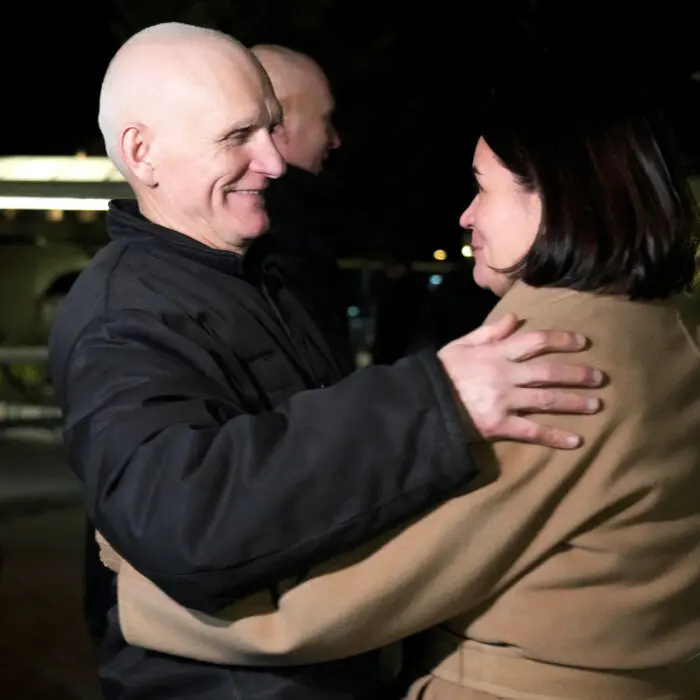
Germany has offered refuge to Viktar Babaryka and Maria Kalesnikava, two prominent Belarusian opposition leaders released from prison following a U.S.-brokered deal with Minsk.
“Ms. Kalesnikava and Mr. Babaryka, two prominent figures in the democracy movement who played a major role in the past, were imprisoned, have now been released, and are therefore being granted asylum because we have an interest in ensuring that the democracy movement in Belarus continues to receive support from abroad,” he said.
Dobrindt praised the United States for its work in negotiating the scores of releases, telling ARD that it was “the significant influence of the Americans” that made it possible for the imprisoned opposition figures in Belarus to be released.
Belarusian President Alexander Lukashenko has been in power since 1994, and when he was reelected in 2020 for his sixth term, the results were condemned by the opposition and Western governments as fraudulent. The election sparked widespread protests across the country, which were met with a sweeping crackdown during which thousands of Lukashenko’s opponents, critics, and protesters were jailed.
Then, in 2021, the Biden administration added dozens of entities and individuals connected to the Lukashenko government to the U.S. Treasury Department’s blacklist, citing the crackdown on dissidents and what it called the “fraudulent Belarusian election.” One of those entities was the state-owned Belaruskali OAO, one of the world’s largest producers of potash fertilizer.
Bialiatski Vows to Continue Activism
They were released on Dec. 13 along with Nobel Peace Prize-winning human rights activist Ales Bialiatski.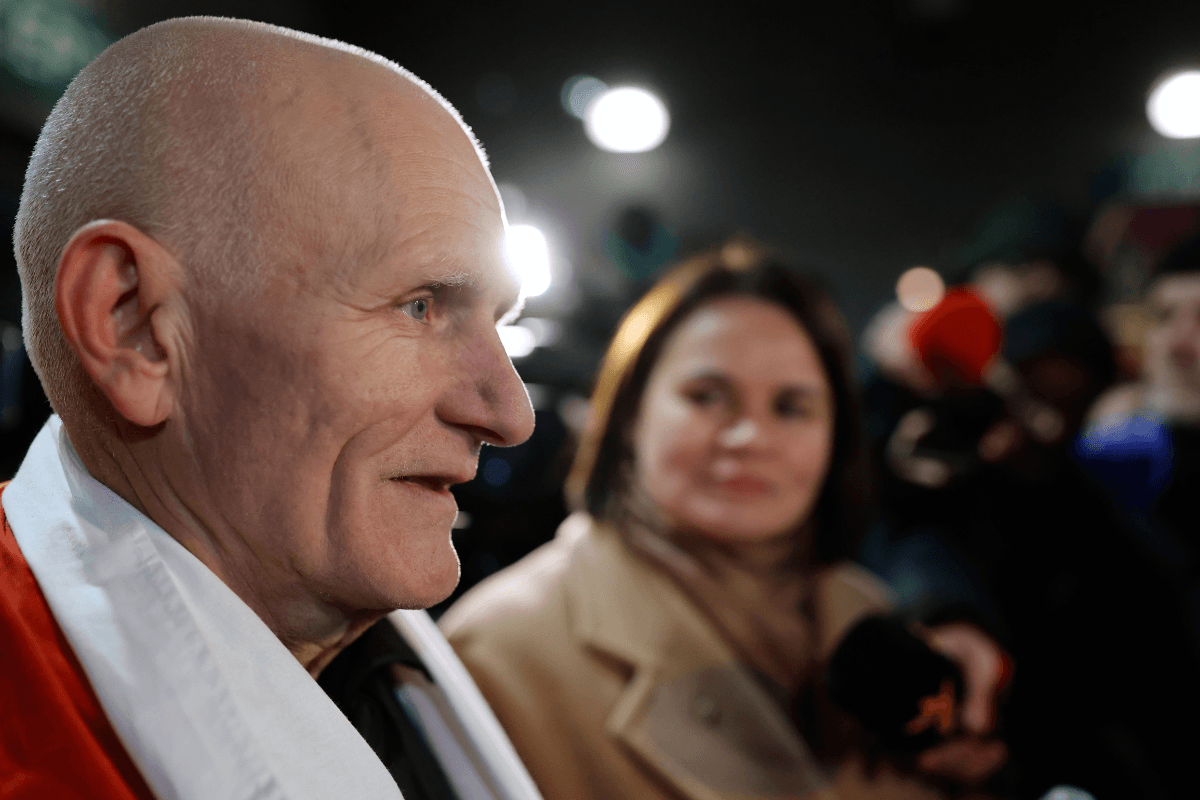
He told the Associated Press on Dec. 13 that his release after 1,613 days into a 10-year prison sentence came as a surprise; in the morning, he was still in his overcrowded prison cell.
“It feels like I jumped out of icy water into a normal, warm room, so I have to adapt. After isolation, I need to get information about what’s going on,” Bialiatski said.
The activist vowed to continue his work, saying that “more than a thousand political prisoners in Belarus remain behind bars simply because they chose freedom.”
Kyiv Facilitating Transfers to EU
Kyiv will be facilitating the transfer of the freed prisoners to the European Union.The agency noted that the group of freed prisoners also includes Ukrainian citizens who had been held in Belarus.
“We express our gratitude to the United States of America and President Donald Trump for the productive work in returning civilian and military personnel from Belarus and the Russian Federation,” the statement reads.
Besides Belarusians and Ukrainians, the group also includes citizens of Australia, Japan, Latvia, Lithuania, the UK, and the United States, according to Lukashenko’s office.
Including a group of political prisoners released at the end of November, Belarus stated that the total number of individuals pardoned now stands at 156.