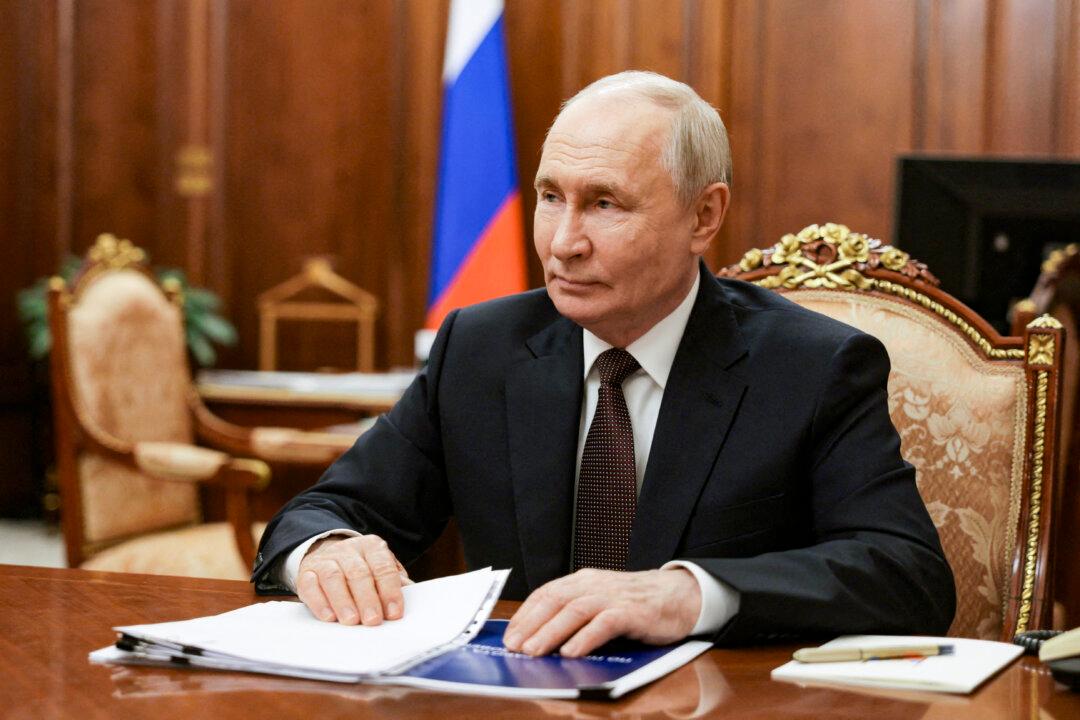
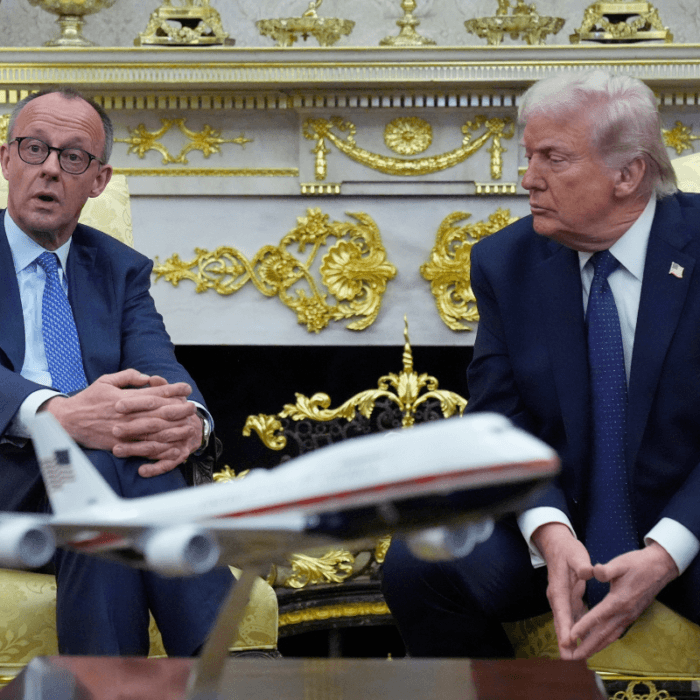
German Foreign Minister Johann Wadephul has played down tensions between U.S. President Donald Trump and German Chancellor Friedrich Merz, saying that the two leaders’ relationship is “very solid.”
In an interview with Bloomberg TV on May 7, Wadephul said Merz’s government fully supported Trump’s aim to ensure that Iran cannot develop a nuclear weapon.
Relations between Washington and Berlin have been rocky in recent weeks, with Trump and the German leader appearing to exchange barbs on defense and security issues.
When Wadephul was asked during the Bloomberg interview whether Merz’s comments had been a mistake, he said: “No, I think it was unfortunately a big misunderstanding in what he was saying.

“He was explaining to students in a school how the situation is, and of course, that it is the attempt of Iran to humiliate the American president.”
The foreign minister said it was a “risk” that some observers could misconstrue Merz’s comments, and he said, “So this was unfortunately really a misunderstanding.”
Germany ‘Behind’ US War Aims
“Though it was not our advice to begin this very war, we are absolutely behind the United States in all ... they are doing to prevent Iran to become a nuclear-weaponized power,” Wadephul said.On May 1, the U.S. Department of War said it would be cutting its presence in Germany by 5,000 soldiers.
“We’re going to cut way down,“ Trump told reporters on May 2. ”And we’re cutting a lot further than 5,000.”
In an interview with Germany’s public broadcaster, ARD, which was aired on May 3, Merz said, “I have to accept that the American president has a different view on these issues than we do.”
When asked whether the troop drawdown was linked to the row over Iran, Merz said, “There is no connection.”
‘We Will Find a Solution’
When asked whether he was negotiating with the Trump administration on troop levels, the sale of long-range U.S. missiles, and import tariffs on German cars, Wadephul said he had a good relationship with U.S. Secretary of State Marco Rubio, whom he called a “friend,” and said, “We will find a solution.”In July 2024, the Biden administration announced that it had reached an agreement with Berlin to periodically deploy surface-to-surface Tomahawk missiles to Germany from 2026.
But in his May 3 interview, Merz said Trump had never committed to this plan, and he suggested that the United States had a shortage of Tomahawks.
“If I’m not mistaken, the Americans don’t have enough themselves at the moment,” Merz said.