This copy is for your personal, non-commercial use only. Distribution and use of this material are governed by our Subscriber Agreement and by copyright law. For non-personal use or to order multiple copies, please contact The Epoch Times Reprints.
French President Emmanuel Macron and Saudi Arabian Crown Prince Mohammed bin Salman attend a press conference at the Elysee Palace in Paris, on Apr. 10, 2018. Yoan Valat/Pool via Reuters
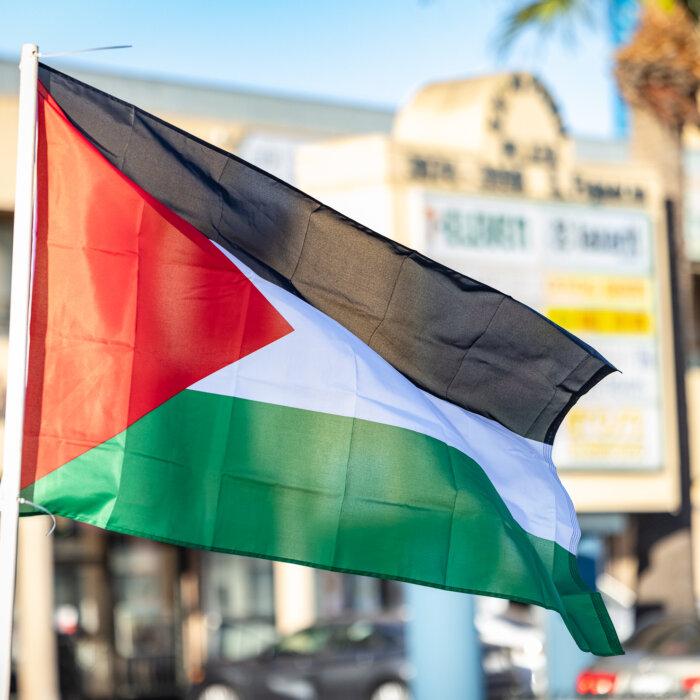
World leaders will gather in New York on Sept. 22 for a U.N. summit in which several countries are expected to recognize a Palestinian state, following similar moves a day earlier by Canada, Australia, the UK, and Portugal.
The summit, co-led by France and Saudi Arabia, comes ahead of the 80th session of the U.N. General Assembly on Sept. 23, in which leaders from about 150 of the 193 member states will gather in New York City. The meeting comes after Israel expanded its military operation in Gaza and called for a full evacuation of Gaza City.
The U.N. stated that it expects the summit to “inject new momentum into efforts to establish a UN roadmap towards two states.”
Riyad Mansour, Palestinian ambassador to the U.N., said, “Palestine is going to be the huge elephant in this session of the General Assembly.”
More than 145 states recognized a Palestinian state as of last year, according to the U.N. Human Rights Office. Israel and the United States oppose such recognition, saying it undermines negotiations.
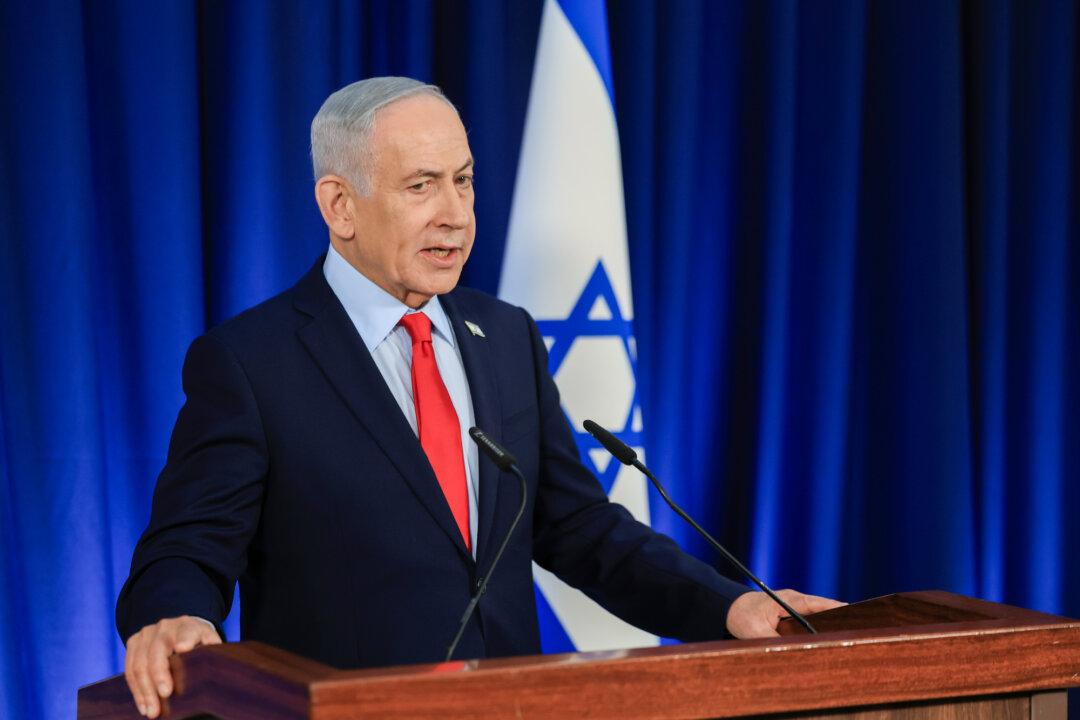
Danny Danon, Israeli ambassador to the U.N., said the declarations of recognition were “empty.”
“No declaration of any country will change the simple fact that before everything the hostages must be returned and that Hamas must be defeated,” he said in a post on X. “The defeat of Hamas and the end of the war will not be achieved by performative speeches at the UN, but by the sustained pressure and activities on the ground by the State of Israel.”
French President Emmanuel Macron, who is expected to announce France’s recognition of a Palestinian state after signaling the intention in July, said in a Sept. 21 video statement that victims of the Oct. 7, 2023, attack by Hamas were not “forgotten” and called for peace, an immediate cease-fire, and the return of 46 hostages held by the terrorist group. Macron described recognition as “the beginning of a path” toward peace.
“What France wants is a Palestinian authority that reinvents itself, renews its school programs that do not teach hatred, and creates the conditions that will allow peace at the heart of this Palestinian authority,” he said in the video statement posted to social media. “What France wants is two states living side by side in peace. An Israel that recognizes a Palestinian state, and a Palestine that recognizes Israel. An Israel that recognizes a Palestinian state that will be demilitarized and that will live in peace alongside Israel.”
Germany has called for the launch of a two-state process with the Palestinians. Before departing for New York, Foreign Minister Johann Wadephul said on Sept. 22 that “recognition of a Palestinian state comes more at the end of the process, but this process must begin now.”
“A Palestinian state is our goal. We support the two-state solution. There is no other way,” he said. “No one should pursue a policy here of trying to break through the wall headfirst. The path of dialogue, compromise and negotiation remains the difficult, laborious middle road. But this is the path that the Federal Republic of Germany supports.”
U.S. Secretary of State Marco Rubio has previously said that unilateral recognition is “counterproductive.”
“We actually think it’s undermined negotiations, because it emboldened Hamas, and we think it undermines future prospects of peace in the region,” he told reporters on Sept. 15.
New York Declaration
On Sept. 12, the U.N. voted to endorse the New York Declaration, outlining “tangible, timebound, and irreversible steps” toward a two-state solution, while condemning Hamas and calling on it to disarm.
“Gaza is an integral part of a Palestinian State and must be unified with the West Bank. There must be no occupation, siege, territorial reduction, or forced displacement,” the declaration reads.
Italy, which co-sponsored the resolution, stated on Sept. 22 that it will support the process of recognizing a Palestinian state once it has actually been established, with the reunification of Gaza and the West Bank.
“A Palestinian State free from Hamas, as enshrined in the UN Resolution co-sponsored by Italy and adopted on 12 September,” Italian Foreign Minister Antonio Tajani said. “I will also reaffirm our commitment to the civilian population through the Food for Gaza initiative, with new medical evacuations planned in the coming weeks. We will also reaffirm our opposition to the occupation of Gaza and the West Bank, which jeopardizes the implementation of the Two-State Solution, and to the ground offensive launched by Israel due to its risks for the civilian population.”
Israel and the United States rejected the New York Declaration, calling the U.N. vote a “misguided and ill-timed publicity stunt that undermines serious diplomatic efforts to end the conflict.”
Macron said on Sept. 20 that 142 countries had backed the declaration, calling it “a turning point” toward lasting peace and security in the region. He said that the New York conference, co-chaired with Saudi Arabia, “must enable us to take a further step in mobilizing the international community.”
Ground Conditions
The war in Gaza, triggered by Hamas’s Oct. 7, 2023, attack that killed about 1,200 people in Israel and saw 251 hostages taken, is nearing its two-year mark. According to the Hamas-run Gaza Health Ministry, 65,000 Palestinians have been killed since the war began.
The ministry does not distinguish between civilians and combatants. The Epoch Times cannot independently verify the figures.
On Sept. 20, the Israel Defense Forces (IDF) stated that troops dismantled “numerous terror sites,” located weapons, eliminated Hamas fighters, and struck sniper posts and booby-trapped structures in northern Gaza. The military noted that its air force hit more than 100 targets, including underground sites, weapons depots, and terrorist cells.
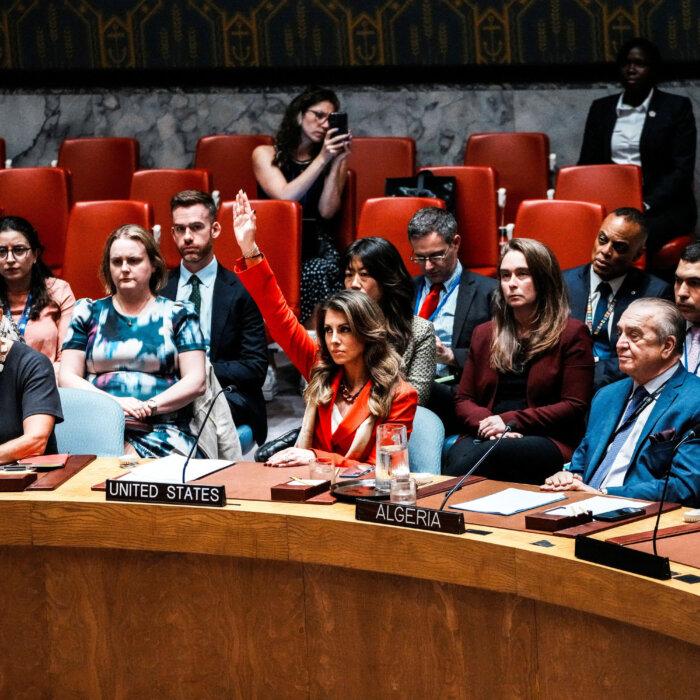
Days earlier, the United States vetoed a U.N. Security Council resolution calling for an immediate cease-fire in Gaza, the release of hostages held by Hamas, and the lifting of Israeli restrictions on humanitarian aid, blocking a measure backed by the other 14 members of the 15-nation body.
U.S. Deputy Middle East Envoy Morgan Ortagus said Washington could not support the resolution because it would have locked in a cease-fire with Hamas still in control of Gaza.
U.N. aid agencies, including the Norwegian Refugee Council, Save the Children, and Action for Humanity, last week urged the international community to intervene in the Gaza Strip, calling on all parties to “disavow violence against civilians ... and pursue peace.”
Evgenia Filimianova is a UK-based journalist covering a wide range of international stories, with a particular interest in foreign policy, economy, and UK politics.