France’s public health agency reported about 1,000 excess deaths between June 24 and June 27 amid an intense heat wave in the country, during which temperatures peaked at 111.7 degrees Fahrenheit.
Excess deaths are the number of people who die beyond the number that would normally be expected to die during a specific period based on historical averages. The measure captures both deaths directly caused by extreme heat, such as in cases of heatstroke, and deaths in which high temperatures worsen existing medical conditions, including heart and respiratory disease.
Officials said the figure is preliminary and expected to increase as additional deaths from hospitals, residential care facilities, and private homes are identified and reported.
The French public health agency said most of the confirmed heat-related deaths involved the elderly, who are especially vulnerable during prolonged periods of extreme heat.
The agency urged people to continue taking precautions as high temperatures persist, including staying hydrated, avoiding strenuous activity during the hottest parts of the day, keeping homes as cool as possible, and checking regularly on elderly relatives, neighbors, and others who may be especially vulnerable to the heat.
Stéphanie Rist, French minister of health, addressed the ongoing heat wave in a series of statements reposted on X on June 28.
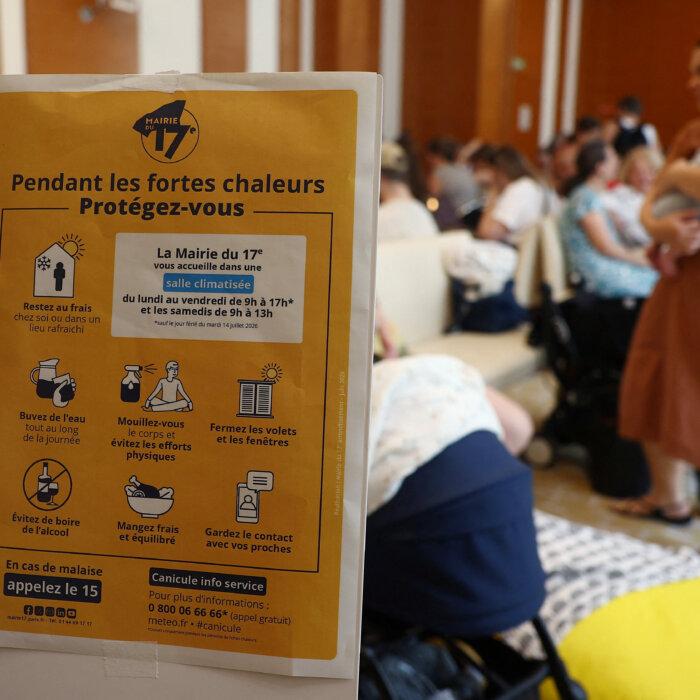
Rist called for community solidarity, urging citizens to check on vulnerable neighbors.
“It’s still time this weekend to go knock on the neighbor’s door to see how he’s doing,” she said, highlighting the risk to isolated elderly people and others most affected by extreme heat.
Rist said she hoped that 30,000 air conditioners ordered for medical facilities would arrive “in the coming days.”
This comes as the health system faces pressure, with Rist reporting a 40 percent to 60 percent increase in calls to emergency medical services.
While acknowledging that the heat wave episode “is not over,” Rist sought to differentiate the current situation from the devastating 2003 heat wave, which caused about 15,000 excess deaths.
“We are probably not in the same health situation as in 2003,” she said, pointing to improved preparedness measures implemented since then.
Électricité de France, the country’s largest electricity company, announced on June 26 that it would release 80 million euros (about $91 million) to equip schools, daycare centers, and recreation centers with cooling systems to protect children and staff from successive heat waves.
“Adaptation to climate change requires the mobilization of all stakeholders,” French Prime Minister Sébastien Lecornu said on X on June 26.
Lecornu asked that citizens refrain from physical overexertion, which he said was putting additional stress on emergency services.