
Around 10,000 people are being evacuated from areas along the path of wildfires that threaten several small towns and villages near France’s border with Spain.
On the morning of July 6, French Interior Minister Laurent Nunez warned on TF1 that conditions were deteriorating again in the Pyrénées-Orientales region in south-west France.
“Today the battle resumes,” Nunez said.
Pierre Regnault de la Mothe, prefect of the Pyrénées-Orientales region, said 11,000 acres of land in the foothills of the Pyrenees mountains had been consumed by the Trévillach fire.
“Respect the instructions from the authorities, do not attempt to return to the evacuated areas, avoid any non-essential travel, and get informed solely through official channels,” de la Mothe said in a post later on July 6.
“Everyone’s safety depends on the vigilance and responsibility of all,” he wrote.
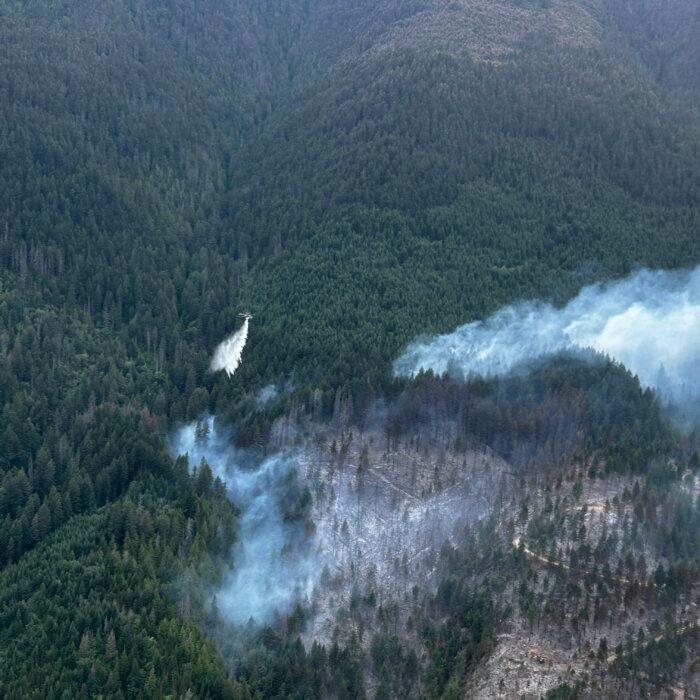
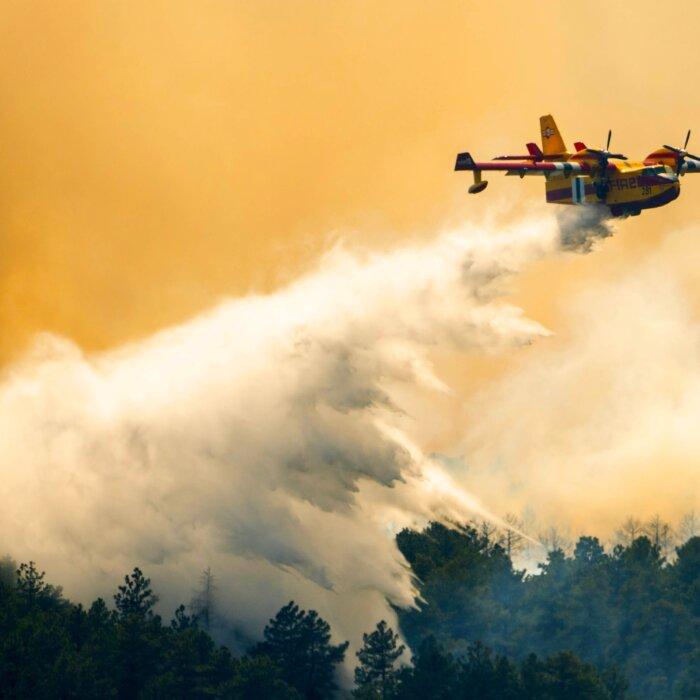
The Pyrénées-Orientales region stretches from the tiny independent state of Andorra, east to the Mediterranean Sea.
Tinder Dry Conditions
Hot weather and a lack of rain in France and across western Europe in May and June have left trees, grass, and bushes tinder dry and vulnerable to wildfires.
On June 25, the head of the Paris police, Patrick Faure, temporarily banned alcohol sales amid a heatwave that was putting hospitals under pressure.
The Trévillach fire has also forced authorities to ban spectators from watching the third stage of the Tour de France.

The third stage, from Granollers, Spain, to Les Angles in France, has gone ahead, but the public will be prohibited from part of the route, which includes several hill climbs.
In a July 6 post on X, the Tour de France said that members of the public were not allowed to view the race from the roadside in the last 25 miles of the third stage, or at the finish site.
“Due to the fire currently affecting the Pyrénées-Orientales and in order to allow for the maximum mobilization of emergency resources, the 3rd stage of the Tour de France will take place without public and without advertising caravan on French territory,” the Tour added.
The Trévillach fire has also burned 5,400 acres on the Spanish side of the border, but the authorities in the Catalonia region said late on July 4 that they believed it would be completely extinguished by the end of the week.
Sparks from an angle grinder being used by contractors working for Catalonia’s regional government are believed to have started the fire.
Another wildfire in Spain’s Castellon province forced the evacuation of 500 people near the Sierra de Espadan national park, which is home to a cork oak forest.
Fires in Portugal, Greece
Hundreds of firefighters are also battling wildfires in Portugal and Greece.
Residents of Greece’s second biggest city, Thessaloniki, are being urged to stay indoors and close their windows as a result of toxic smoke from a recycling plant that lies in the path of one wildfire.
Another major wildfire broke out on July 5 west of the Greek capital, Athens.
Around 210 Greek firefighters, backed up by volunteers, and water-dropping planes and helicopters, are battling the blaze in a pine forest near the Athens suburb of Mandra.
More than 1,200 firefighters are trying to contain a fire in the Vouzela region of central Portugal, which broke out on July 2.
Information from the European Union’s Copernicus satellite mapping agency suggested the wildfire had burned an area of 30,000 acres by July 5.