The roughly eight-hour flight was operated by a Boeing 777 belonging to the Russian carrier Nordwind Airlines, the news agency said.
On July 27, direct commercial flights between the two capitals resumed after a decades-long hiatus, with the same aircraft making the first flight from Moscow to Pyongyang.
Russia’s civil aviation authority has granted Nordwind Airlines permission to run up to two flights a week between the capitals.
According to Russia’s transport ministry, however, the airline will initially operate only one round-trip flight per month, in order to gauge customer demand.
Previously, the only direct flights between the two countries had been operated by Air Koryo, a North Korean carrier, to Russia’s far eastern city of Vladivostok.
Speaking at the welcoming ceremony, Kozlov further asserted that Moscow and Pyongyang were closely cooperating in the logistics field.
“Work is underway in all areas related to logistics,” he said, in remarks cited by TASS.
“The capacity of cargo and passenger railway traffic, including between Moscow and Pyongyang, is expanding,” added Kozlov, who also co-chairs a Russia–North Korea intergovernmental commission on commercial, economic, and technical cooperation.
Last month, passenger rail service between the two capitals—a 10-day journey—was also resumed after a lengthy hiatus.
In April, the two countries inaugurated a bridge for automobile traffic across the Tumen River, a section of which runs along their shared border, according to Kozlov.
Military Alliance
Since Russia invaded Ukraine in early 2022, relations between Moscow and Pyongyang have grown increasingly close.In 2023, Kyiv and its Western allies accused North Korea of providing Russia with artillery shells and ballistic missiles—claims denied by both Moscow and Pyongyang at the time.
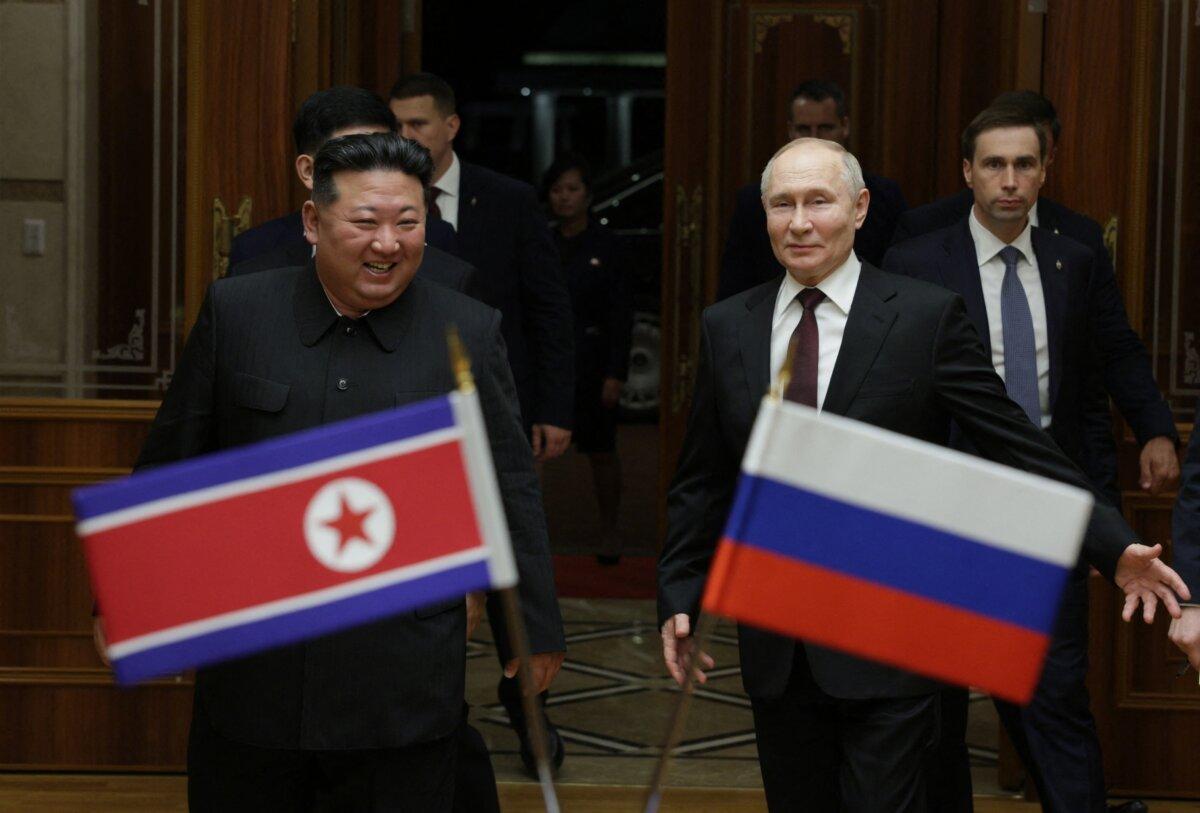
In June 2024, the leaders of both countries signed a comprehensive strategic partnership treaty, which includes a provision on mutual defense.
After a signing ceremony in Pyongyang, Russian President Vladimir Putin said the treaty obliged each party to come to the other’s defense if either was subject to external attack.
He also said the agreement called for stepped-up cooperation in the trade, economic, and cultural fields.
Speaking alongside Putin, North Korean leader Kim Jong Un said the treaty would elevate bilateral ties to the “level of an alliance.”
Moscow and Pyongyang have repeatedly stated that the treaty is purely defensive in nature.
Shortly after the agreement was signed, the U.S., South Korean, and Japanese governments condemned what they called the “deepening military cooperation” between Russia and North Korea.
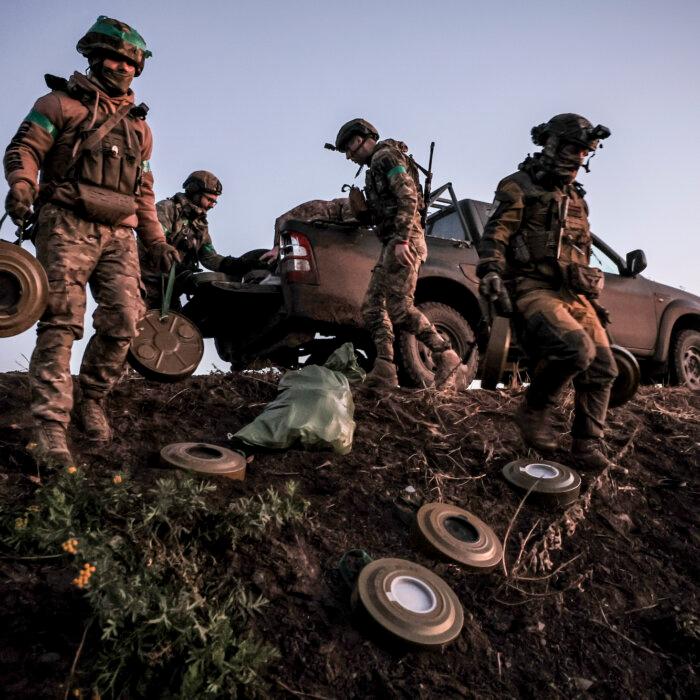
In April, Moscow and Pyongyang both confirmed that North Korean troops had assisted their Russian counterparts in driving Ukrainian forces from Russia’s western Kursk region.
In mid-July, Russian Foreign Minister Sergey Lavrov paid a three-day visit to North Korea, during which he met Kim in the coastal city of Wonsan.
At the meeting, Kim said his country was ready to “unconditionally support ... all the measures taken by the Russian leadership as regards the tackling of the root cause of the Ukrainian crisis,” according to North Korean state media.