The closure of Europe’s busiest airport cost airlines tens of millions of dollars and left thousands of passengers stranded.
At the time, there was widespread speculation in the media that the fire had been caused by Russian sabotage.
However, the report by the National Energy System Operator found that the cause was a preventable electrical fault.
The report states that an “elevated moisture reading” had been found in oil samples at the North Hyde substation in west London in July 2018, but action was not taken to replace electrical insulators, known in the trade as “bushings.”
It noted that in 2022, a decision was made to defer maintenance at the substation, meaning that the issue persisted.
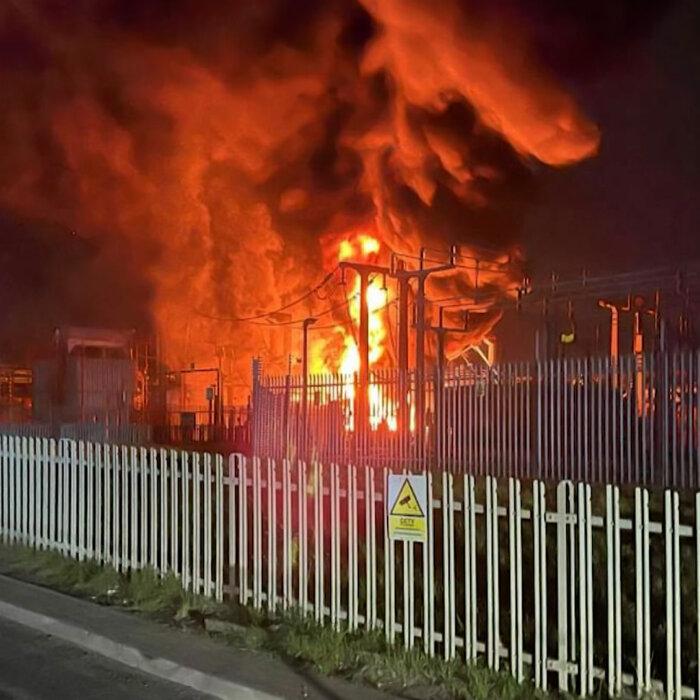

This eventually resulted in “a catastrophic failure” that caused a fire to ignite on the supergrid transformer. This likely happened after moisture got inside the bushing, resulting in a short circuit and creating sparks.
UK Secretary of State for Energy and Climate Change Ed Miliband, who commissioned the report, called the findings “deeply concerning.”
Ofgem said it plans to review whether National Grid complied with the relevant legislation and license conditions relating to the development and maintenance of its electricity system close to Heathrow.
Ofgem will also commission an independent audit into National Grid assets to review whether the failings were a one-off or systemic, it said.
National Grid plc said the company had a comprehensive asset inspection and maintenance program in place and that it has taken further action since the fire.
The National Energy System Operator report also found that the design and configuration of Heathrow’s internal power network meant that the loss of one of its three supply points would lead to “the loss of power to operationally critical systems, leading to a suspension of operations for a significant period.”
It said the airport had plans in place to respond to that situation, but that those plans would have taken 10 to 12 hours to implement.
However, the report said this was not assessed as a likely scenario by Heathrow Airport, as it expected the wider network to be more resilient.
This meant that the airport was unable to make use of its multiple electricity supply points, resulting in a power outage lasting several hours when the substation fire broke out.
“We expect National Grid to be carefully considering what steps they can take to ensure this isn’t repeated,” a Heathrow spokesperson said.
The spokesperson noted that the airport has already conducted its own review of the incident and is working to implement the recommendations made in that report.
More than 83.9 million passengers traveled through Heathrow Airport’s terminals in 2024.