Finance Minister François-Philippe Champagne defended his government’s record in matters of food inflation as he testified before a House of Commons committee, while encouraging Conservative MPs to support the government’s proposed 25 percent increase to the GST credit.
Champagne appeared at the House finance committee on Feb. 3 to answer questions about his recently tabled Bill C-19, also known as the Canada Groceries and Essentials Benefit Act. The bill would amend the Income Tax Act to increase the maximum annual GST credit amounts by 50 percent for the 2025-2026 year, and by 25 percent for the following five years, with around 12 million Canadians being eligible for the credit.
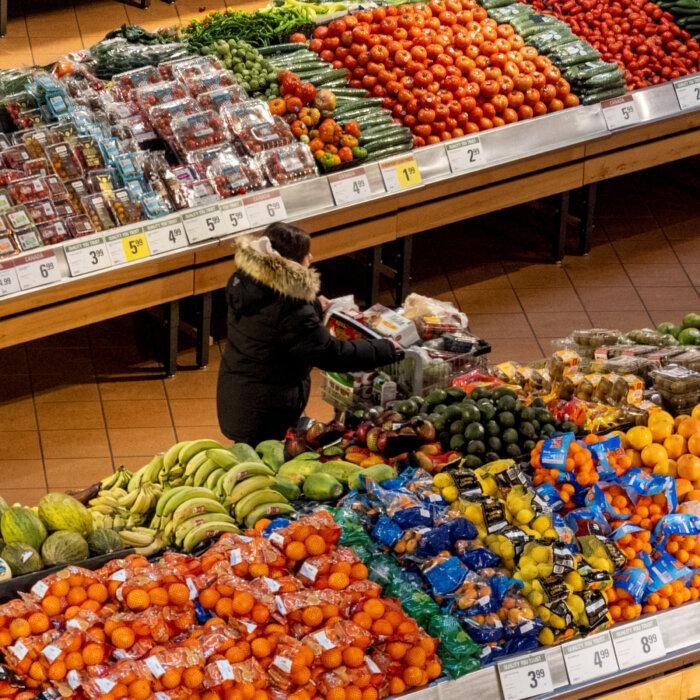
Champagne told MPs on the committee on Feb. 3 that food inflation “remains stubbornly high” and has been exacerbated by “structural issues,” which he cited as the country needing to import most of its produce during the winter, differences between the value of the Canadian and U.S. dollars, tariffs, supply chain disruptions, and climate change.
“You said that you would stabilize prices. You said that you would lower prices,” Lantsman said, noting that the price of peppers had gone up by 41 percent since then, coffee had gone up by 33 percent, and beef had gone up by 27 percent.

Costs, Deficits
Conservative MP Jasraj Singh Hallan raised the Parliamentary Budget Officer’s recent report estimating that the increased GST credit would cost $12.4 billion over six years, and asked if the Liberal government would find the money to “cover the cost” of the program by raising taxes, adding to the debt, or cutting expenses.“I would say there’s another ways [sic] to grow the economy. That’s exactly what we’re doing. That’s why you saw in Budget 2025 that we have generational investments to grow our economy,” Champagne responded, later adding that the government estimated the GST credit boost would cost $11.3 billion.
When Kelly asked Champagne how the credit increase would impact the deficit projections, the finance minister said the measure was needed to support Canadians and increase resilience in food supply chains. After repeated questioning on the deficit, Champagne said that “every measure that we take is taken into account in the budget, and there will be other measures” to support Canadians.
Conservative MP Sandra Cobena also asked Champagne how the government would pay for the GST increase, and the finance minister then questioned whether Conservatives would continue to support Bill C-19. “What will you say to your constituents? You say you voted in favour, but you’re not willing to support Canadians, so I think people will be confused,” Champagne said.
“You are running a deficit. How much will the deficit be then?” Cobena asked.
Competition and Foreign Grocers
Bloc Québécois MP Jean-Denis Garon asked Champagne why the Liberal government would not send GST cheques out on a monthly basis instead of every quarter, given that Canadians tend to buy groceries weekly. Champagne responded that monthly cheques would include an added administrative cost, and the GST credit was “always quarterly.”When Garon asked if any foreign grocery chains had settled in Canada, Champagne said clauses within the Competition Act prevented foreign players from coming to Canada, and the Liberal government removed them.