Hundreds of schools across Greece are set to close as the country faces a decline in its student population, according to new figures from the country’s Ministry of Education.
For the 2025–2026 academic year, the total number of students in primary, secondary, and vocational education is expected to fall to about 1.21 million. That represents a drop of more than 150,000 students from the 1.36 million enrolled in 2018–2019, ministry data show.
The figures, shared with The Epoch Times by a ministry press office employee, reflect a downward trend that worsens each year.
In primary schools alone, enrollment dropped to 506,700 students in 2024–2025 from 599,406 in 2018–2019. Numbers are projected to decline further to 487,462 in 2025–2026.
Secondary schools also show steep declines, falling to a projected 480,478 students from 529,984 over the same period.
In previous years, the number of school units in Greece showed slight fluctuations.
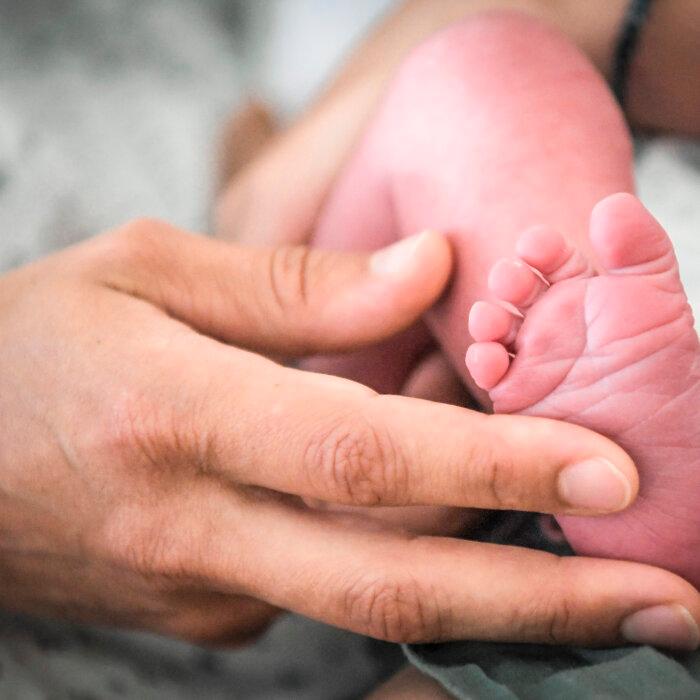

Experts warn that shrinking student numbers reflect a much broader demographic challenge, as Greece struggles with persistently low birth rates and an aging population.
Alexandra Tragaki, a professor of economic demography at Harokopio University in Athens, said the closures are a predictable outcome of decades of falling birth rates.
“It’s absolutely the normal consequence of falling birth rates for the last many decades,” she told The Epoch Times.
Eventually, the number of schools has to go down because the number of pupils is going down, she said.
Fertility Rates
Greece’s fertility rate stands at about 1.3 children per woman, having dropped from 1.5 in 2021.When asked about the underlying reasons for falling fertility, Tragaki said that while economic pressures play a role, cultural and lifestyle changes weigh just as heavily. She said today’s younger generations have grown up amid repeated crises, which has created an environment of insecurity.
“They feel quite insecure and pessimistic about the future,“ she said. ”When the situation is pessimistic, no one has children. In order to have children, you have to believe in the future.”
In her view, smaller families are also a natural reflection of modern living patterns rather than a lack of willingness among young people.
Tragaki said the problem in Greece is not only current fertility levels but the legacy of three decades of very low birth rates.
“The number of mothers-to-be today is really limited compared to the past,” she said.
Even if individual women had more children, the pool of potential mothers is simply too small, she said, warning that births are likely to keep falling.
Aging Population
The country’s aging population compounds the challenge.The aging ratio, or the number of people aged 65 and older relative to children aged zero to 14, stood at 155 in 2019 and climbed to 175.5 in 2023, according to ELSTAT.
Greek Prime Minister Kyriakos Mitsotakis has described the demographic challenge as a “national threat” and a “ticking time bomb” for the country’s welfare and pension system.
In response, the government last year introduced a National Demographic Action Plan, a 10-year strategy running until 2035.
According to the Ministry of Social Cohesion and Family Affairs, the plan goes beyond simply trying to boost births. Its aim is to manage the long-term effects of an aging population on fiscal sustainability, competitiveness, and social cohesion.