The European Commission’s new European Democracy Shield claims that it will “counter information manipulation and disinformation” and strengthen democratic resilience through a “whole-of-society approach.”
But critics warn that by centralizing narrative control in Brussels, the European Union risks outsourcing press freedom to government-funded bodies and transforming democratic debate into a managed information system.
The Shield
The EU argued that “authoritarian regimes seek to exploit divisions, sow mistrust, and restrict democratic actors such as free media and civil society.”She said that “a pan-European, independent network of analysis” is crucial to defending information integrity.
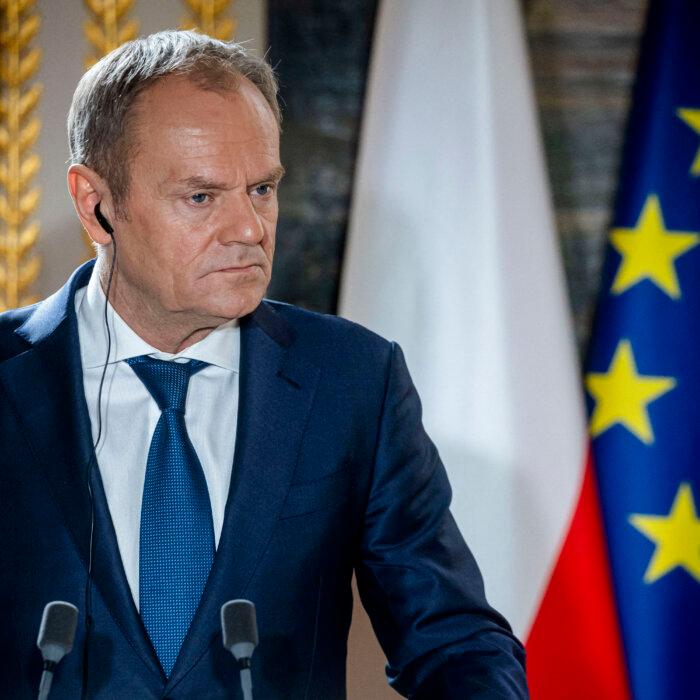
“Disinformation, algorithmic manipulation, financial pressure on media, and AI tools now threaten our democratic way of being,” he said.
Part of the plan also deepens the EU’s role in election and media monitoring and introduces a coordinated crisis-response mechanism to safeguard “the integrity of the information space.”
‘Which Press Can Be Independent After Receiving Millions?’
The political establishment’s driving force with the European Democracy Shield is “fear,” Antonio Tanger Correa, vice-chair of the Patriots for Europe group and the group’s coordinator on the EDS committee, told The Epoch Times.Correa acknowledged that there is “some disinformation“ and ”fake news in social media” but said there is anxiety in Brussels about losing control of the narrative to media outlets that they don’t subsidise.
“I mean, which press can be independent after receiving millions?” he said.
“Of course, we know what they are trying to do, but they are losing ground.”
Some media outlets continue to grow because “they are not misleading people.”
‘State-Guided Boundaries’
“[Such an] expansion of institutional authority raises serious concerns about institutional overreach and the erosion of pluralism,” said Adina Portaru, a senior counsel for Europe at ADF International in Brussels, a U.S. faith-based legal advocacy organisation.The Commission’s proposal markedly extends the EU’s power to “shape, oversee, and intervene in public narratives and online information flows, framed as a defence of democracy,” she said in a statement emailed to The Epoch Times.
Under this banner, Portaru said, the Commission is “effectively equipping itself with broad new instruments for influencing speech, regulating technological ecosystems, and steering public debate.”
US Pushback
U.S. lawyer Preston Byrne told The Epoch Times that he thinks EU laws gag free speech.“The EU Democracy Shield will violate the First Amendment rights of American citizens and companies online,” he said in an email.
The OSA has already given regulators sweeping powers to compel platforms to remove content deemed harmful, with the EU pursuing a similar model at a continental scale with the DSA.
“I am sure they are going to pour hundreds of millions of dollars into it, much as Ofcom poured hundreds of millions of dollars into the Online Safety Act’s enforcement apparatus,” Byrne said.
He believes he can stop the Democracy Shield at “the American shoreline for a cost of $0.”
Byrne said a bill he has offered to New Hampshire legislators could serve as a “template for a U.S. fightback against global censorship, if adapted for federal use.”
Funding
Much of the Shield’s policymaking input has come from nongovernmental organisations (NGOs) that depend heavily on EU financial support.Fact-Checkers
The EU stated that an “independent European Network of Fact-Checkers” will be set up to boost fact-checking capacity in all EU official languages.The exact organisations that will form or lead the network have not yet been publicly specified.
‘Influencer Network’
“This creates a system in which the EU influences who is considered credible and what information is desired,” German politician Christine Anderson, a member of the European Parliament for the conservative Alternative for Germany party, told The Epoch Times by email.“EU institutions must not do this, because such a controlled public sphere contradicts a pluralistic society. I find it completely incomprehensible how the Commission even came up with the idea of wanting to build an influencer network to push its own narratives.”
She said that a civil society “paid for by politicians can no longer independently control political power; this is more reminiscent of China than of liberal democracy.”
‘Online Manipulation Techniques’
The Epoch Times asked the EU Commission what democratic oversight would prevent the Monitoring Centre from expanding its scope into general political speech policing.And also, if NGO advisers receive EU funding, how could the commission guarantee ideological balance and inclusion of critics in the framework?
A spokeswoman for the EU Commission told The Epoch Times by email that “strengthening the integrity of the information space is key to supporting rights such as freedom of expression.”
She said that citizens “must be able to access and partake in a reliable and trustworthy information space—free from interference.”
“Individuals, political, media, or other actors have the right to express themselves freely, including in a way that some may find shocking or disruptive,” the spokeswoman said.
She said that at the same time, there has been a “proliferation of online manipulation techniques” including the “inauthentic” deployment of bots or fake accounts, websites designed to mimic official sources, as well as deepfakes and the artificial amplification of content.
“This is where the focus is, on organised campaigns where hostile actors aim at manipulating information and shaping people’s views to interfere in the democratic sphere and democratic processes in the EU and its neighbourhood,” the spokeswoman said.
The Media Freedom Rapid Response consortium, Transparency International EU, and EEB did not respond to The Epoch Times’ request for comment.