European Union foreign policy chief Kaja Kallas has rejected calls for a Europe-wide army, warning that establishing a parallel force alongside NATO would risk confusion in times of crisis and could prove “extremely dangerous.”
Speaking at the Oslo Security Conference in Norway on Feb. 2, Kallas said proposals for a European army fail to account for the practical realities of command and defense budgeting.
“You know that you have one army, you have one defence budget,” she said.
Kallas cautioned that NATO member states could not simply layer another military structure on top of their existing commitments.
“In terms of crises, what is the most important is the chain of command, who gives orders to whom,” she said.
If Europe were to operate both a NATO command and a distinct European army, Kallas warned, “the ball just falls between the chairs,” describing this as “extremely, extremely dangerous.”
Kallas, who previously served as the Estonian prime minister, said Europe should instead focus on strengthening its own defense capabilities within the NATO framework.
“That’s why I say we have to strengthen European defence, which is also part of NATO. It is really complementary to NATO. Let’s not throw NATO out of the window,” she said.
Her comments come amid renewed debate within Europe about strategic autonomy and the continent’s long-term reliance on the United States for security guarantees.
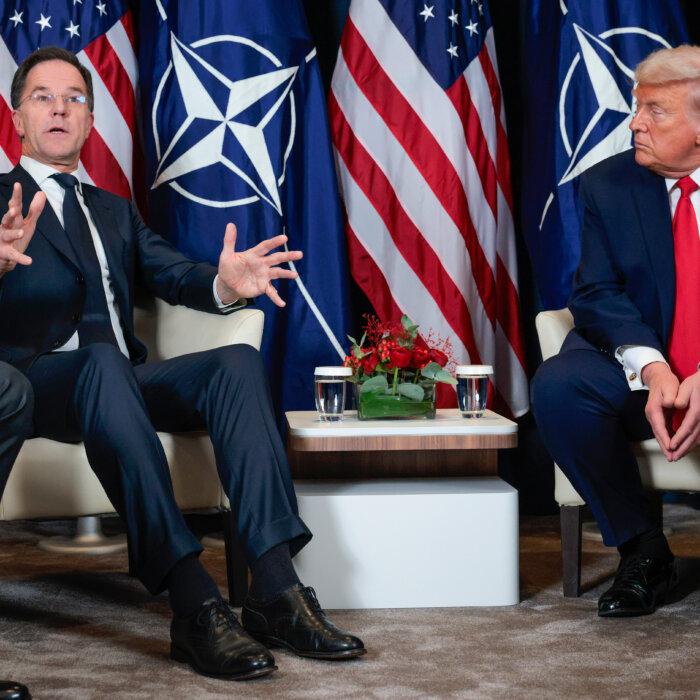
A former Dutch prime minister, Rutte said a European army would risk duplication and require countries to recruit additional personnel beyond their existing national forces.
During a joint press point at the Oslo conference, Kallas was asked whether she agreed with Rutte’s assessment that Europe cannot defend itself without Washington.
“Well, right now the situation is such,” Kallas said. “But we are working to be more independent, also when it comes to security, because it is clear that our vulnerabilities are our weaknesses, and that is why we are working to invest more in defence, also the capabilities. And also, consider it European and not only national.”
Of the 27 EU member states, 23 are also NATO members.Norway Against Divisive Debate
Norwegian Prime Minister Jonas Gahr Store, speaking alongside Kallas, said proposals for the EU to assume separate defense and command structures risked damaging the broader security debate.“Those proposals that the European Union should be about the defence and command structures [is] doing a lot of damage to the debate, because it’s not the road to travel. Take that away,” Store said.
He emphasized the complexity of Europe’s security landscape, noting that major military powers such as the United Kingdom, a nuclear power, remain outside the EU but play central roles in NATO.
“NATO is there with the decision-making process among allies, which is in itself complex, but it is trained to work,” Store added.
He also noted the need for regional coordination, noting that northern European countries share specific security concerns, while southern European states face different geographic challenges.
“We now invest in defense to 3.5 percent and 5 percent. Let us do that wisely. Because if we do it side by side by side, it will be waste. If we do it coordinated, it can be a formidable force of deterrence,” Store said.
“NATO threatens nobody, but nobody should be under the intention that they can threaten us.”