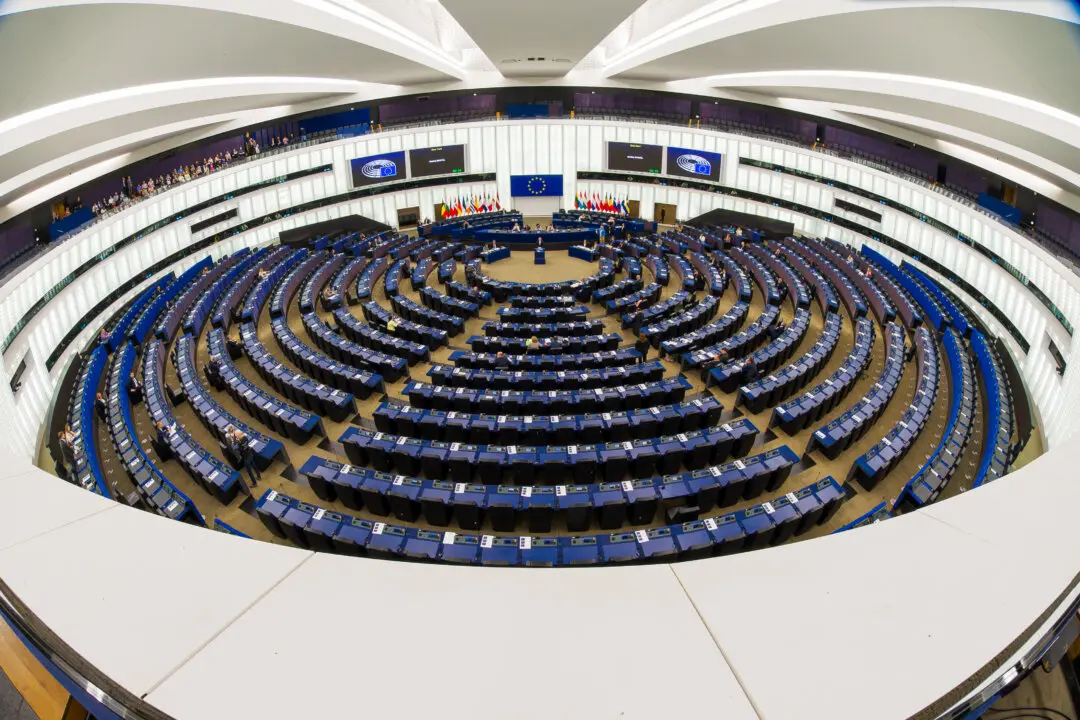
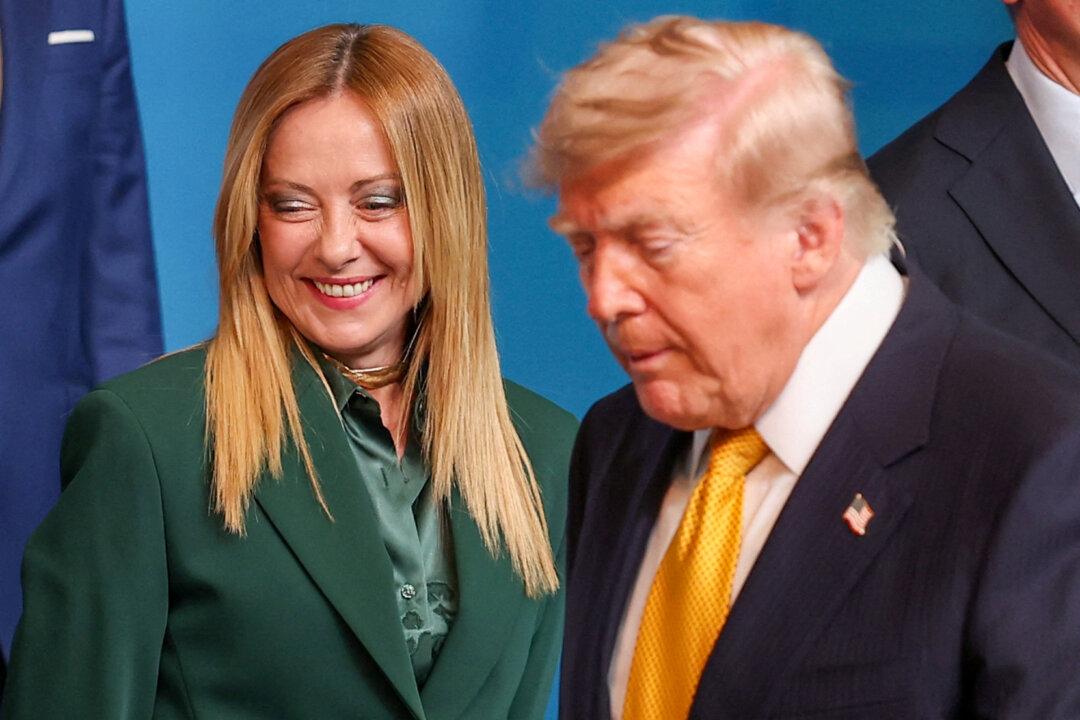
Across the European continent, despite gaining considerable proportions of the vote, populist parties are increasingly being frozen out of governing in coalitions by political opponents who regard them as extremist.
Proponents of the tactic known as a “cordon sanitaire,” or “firewall,” say it’s not an attack on democracy but a defense of it. But one war expert said the tactic will only arouse anger in voters and that, with this strategy, “there is no potential for peaceful political change.”
Coalitions are part and parcel of political life in many European countries.
But the cordon sanitaire, a measure normally directed at keeping out fringe outliers, is now being used to keep out parties that are gaining majority-level support.
Such parties include the Alternative for Germany (AfD), France’s National Rally, Austria’s Freedom Party, Spain’s Vox, and the Netherlands’ Party for Freedom.
AfD
The AfD, an anti-mass immigration party, which came in second in Germany’s national parliamentary elections, earning nearly 21 percent of the vote, was recently denied allotted committee chairmanships and vice-chairmanships.
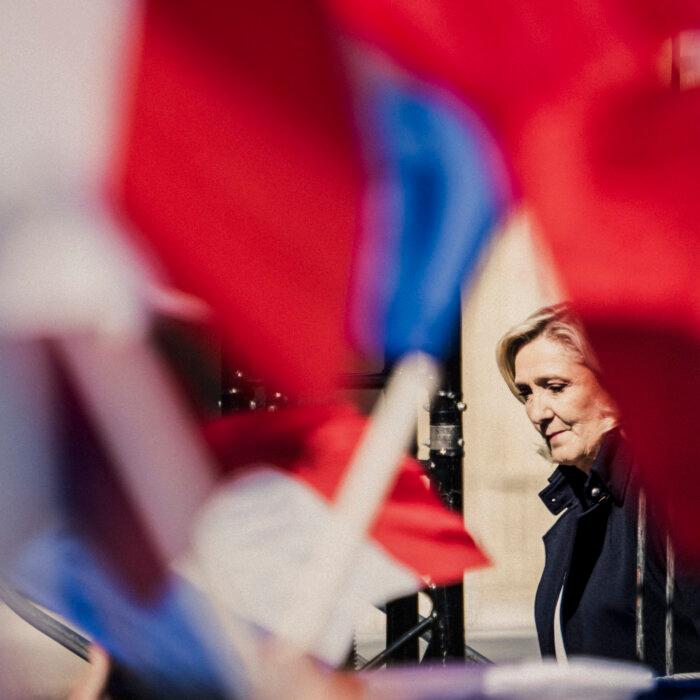
AfD’s policies include strong support for traditional marriage between a man and woman and the nuclear family, the preservation of national independence in the face of the European Union’s increasing power, the preservation of German culture amid “European integration” and Islamization, and border security, including the expulsion of illegal immigrants.
A similar pattern is being seen in other countries.
Wilders asked coalition partners to sign up for a plan to cut illegal immigration, which included using the army to protect Dutch borders, rejecting all illegal immigrants, sending Syrian refugees back to their country, and closing asylum shelters.
At the time, he said that if the country’s immigration policy was not strengthened, the PVV would be “out of the Cabinet.” He followed through on the threat.
The party was founded in 1956 by Anton Reinthaller, a former SS officer and member of the Reichstag.
‘We Were Excluded’
Explaining the AfD situation in Germany, Richard Schenk, a research fellow at MCC Brussels, told The Epoch Times that freezing out the AfD will have “certain consequences.”“AfD can now just exactly claim: ‘We were excluded from the decisions that led to this chaos. You excluded us. We wanted to participate, to put forward proposals, to take responsibility, but you excluded us. So we really do not have to do anything with the mess that’s currently going on,'” Schenk said.
“This is, in the long run, making the AfD more powerful than any committee chairmanships.”
Efforts in the European Parliament have also seen the Greens and liberal Renew Europe groups join forces with the pro-European EPP (European People’s Party) to enforce the cordon sanitaire.
‘Militant Democracy’
Some analysts say the cordon sanitaire is rooted in democracy’s built-in safeguards.David Ucko, a nonresident senior fellow at the Global and National Security Institute (GNSI) at the University of South Florida, told The Epoch Times that it is a long-running tradition “to set out certain rules of the game” within democratic institutions.
“If you don’t follow [the rules], you don’t get to play the game,” he said.
“What you’re seeing with the various efforts, sometimes called ‘militant democracy,’ is simply an attempt by the state, albeit through the serving government, to ensure that the constitutional rules of democracy are being followed.”
He said the targeted party could be “left wing or right wing,” but if they abrogate the rules of the game, then they “break the constitutional entry requirement to be a democratic contender.”
‘No Potential for Peaceful Political Change’
Others say that such a high-stakes tactic could encourage a drift toward confrontation.David Betz, professor of war in the modern world in the Department of War Studies at King’s College London, has discussed the idea that forces are driving the West toward civil war.
“I’m not going to say it leads; I'd say it is part of the overall picture,” he told The Epoch Times.
Betz said that governments are “closing off other political voices.”
“We’re not doing natural politics anymore, and all it does is it convinces people that the system itself is invidious, and that there is no potential for peaceful political change,” he said.
“The two things are deeply interrelated,” Betz said.
“These are movements which are almost completely animated by people’s sense of frustrated nationalism, essentially frustrated patriotism.
“They are movements which are animated by a perception of being displaced in their own lands but also at the same time of having been betrayed by their own political elite. So you have both an ethnic conflict and a conservative revolt or a nationalist revolt at the same time.”
Floudas told The Epoch Times by email that “historically, political exclusion has often led to increased radicalization and occasionally to a surge in popularity for the excluded parties. Besides, such tactics may backfire by eroding public trust in democratic systems.”