The European Union on Dec. 3 outlined plans to reduce economic security risks, such as dependency on rare earth metals and battery materials from China.
The new EU economic security doctrine includes new guidelines for the screening of foreign direct investment, taking economic security into consideration in trade defense investigations, and subsidizing projects that can reduce the EU’s dependencies on single third countries.
The Commission identified six priority high-risk areas, including reducing strategic dependencies for goods and services; vetting investment into the EU; strengthening defense, space, and other key industries in Europe; securing EU leadership across critical technologies; and protecting the EU’s sensitive information, data, and critical infrastructure.
The Commission unveiled one of its new tools, RESourceEU, which is designed to reduce dependency on Chinese critical minerals and battery materials. This is a similar initiative to REPower, which Brussels launched in 2022 to phase out Russian energy.
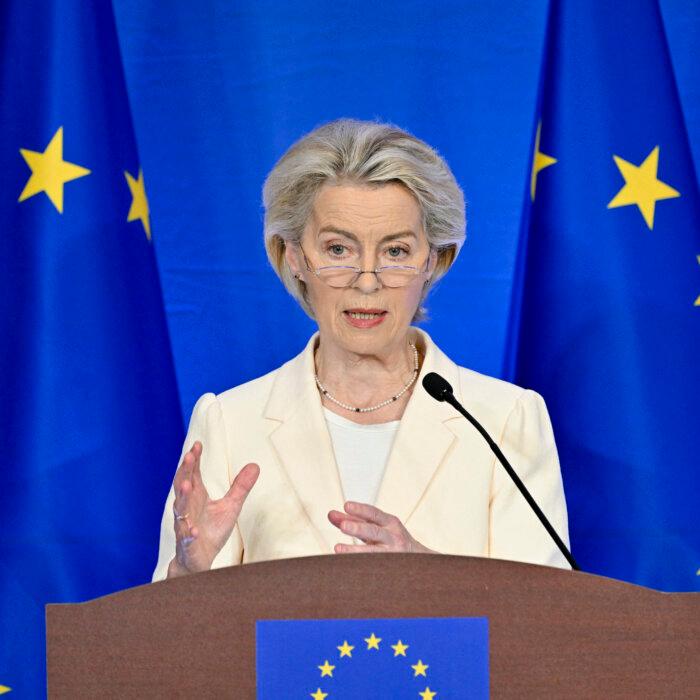
Under RESourceEU, the Commission plans to provide nearly €3 billion (about $3.5 billion) in the coming year to fund critical raw material projects, including Canadian company Greenland Resources’ Malmbjerg molybdenum mining project and Vulcan’s lithium extraction project in Germany.
Other parts of the initiative include cutting red tape to accelerate permitting for projects, joint purchasing and stockpiling of materials, establishing a critical raw materials center to coordinate diversification efforts and resilience boosts, and keeping materials in the EU for recycling.
With projects implemented, the Commission estimated that the dependency rates will be reduced to 80 percent, 42 percent, and 60 percent, respectively, by 2030.
For other battery or defense raw materials, the dependency rate this year ranged between 29 percent and 89 percent, and the commission’s project placed the rates in 203o at between zero and 64 percent, the document said.
European Commissioner for Trade Maros Sefcovic said it’s “imperative that Europe strengthens its economic security” amid weaponized trade, state-backed overcapacities, and other risks.
“Our goal is to prevent short-term disruptions, while steadily reducing risky dependencies and avoiding new ones,” he said.