The European Union has unveiled plans to stockpile essential goods, including medical supplies, and to boost the European chemical industry.
The proposals followed remarks on Tuesday by President of the European Commission, Ursula von der Leyen, that the bloc has to de-risk its economy and industry and reduce dependency on Chinese imports.
On Wednesday, the EU executive launched an EU Stockpiling Strategy and a Medical Countermeasures Strategy, which are aimed at ensuring that member states have access to food, water, energy, and medicines in future crises.
“We need a long-term strategy to make sure that essential supplies that keep society running are always available,” European Commissioner Hadja Lahbib told a news conference.
“We know that some countries are stockpiling on their own, but we don’t know who has what. The first step is to exchange information,” Lahbib said.
The strategy also aims to enhance civil-military cooperation and public-private partnerships.
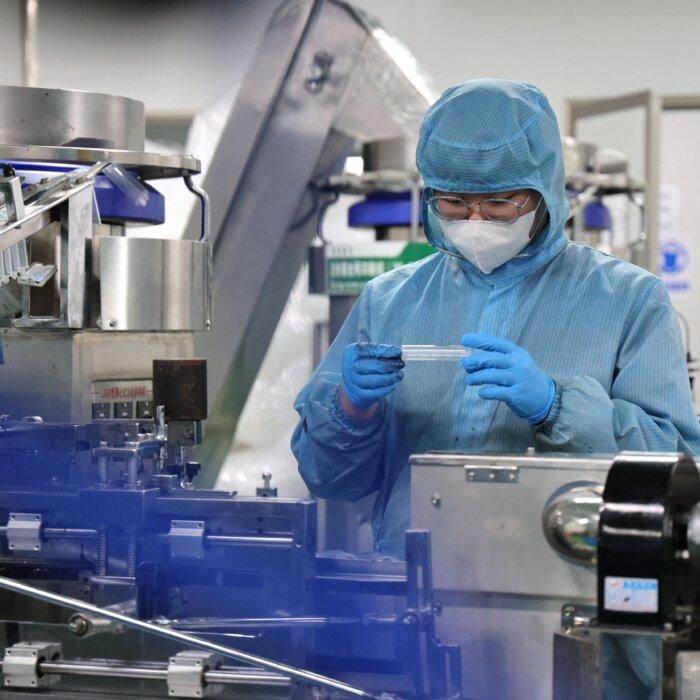
The Medical Countermeasures Strategy is designed to accelerate the development, production, deployment, and accessibility of medical supplies within the EU.
As of June 30, the commission has enforced 46 measures related to chemical imports. Most of the measures “concern imports from China, likely due to a build-up of massive overcapacities,” the document says.
Addressing members of the European Parliament on Tuesday in a debate on EU–China relations, von der Leyen said the Chinese regime has restricted the EU’s access to the Chinese market while allowing subsidized Chinese goods to flood global markets.
“These realities do present a real challenge for Europe to confront. And we have started to address these challenges—whether de-risking our economy and industry, using our new toolbox of trade defense measures, or diversifying our supply chains in sectors where China holds dependencies, if not outright monopolies,” she said.
Von der Leyen said if the EU–China partnership is to move forward, there needs to be “a genuine rebalancing: fewer market distortions, less overcapacity exported from China, and fair, reciprocal access for European businesses in China.”