The European Commission has proposed a second list of goods, covering about 72 billion euros (about $84 billion) worth of U.S. imports, that could be targeted by European Union levies if trade negotiations with Washington fail.
Maros Sefcovic, the EU’s commissioner for trade, said on July 14 that EU member states will have a chance to discuss the proposal, adding that the measure “does not exhaust our toolbox.”
“Every instrument remains on the table,” Sefcovic told reporters after the Foreign Affairs Council on Trade meeting, held earlier in the day.
Ministers gathered to discuss the bloc’s response to the United States’ decision to impose a 30 percent tariff on EU imports, a measure set to take effect on Aug. 1. Sefcovic described the 30 percent tariff as “absolutely unacceptable” and “absolutely prohibitive to any trade.”
Close Contact With US Officials
Sefcovic told reporters that he had held frequent talks with his U.S. counterparts, including Commerce Secretary Howard Lutnick and U.S. trade representative Jamieson Greer.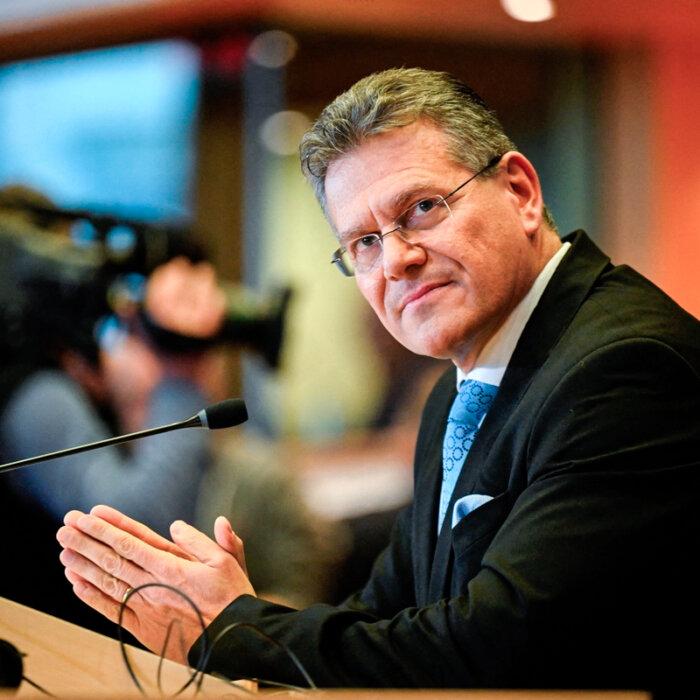
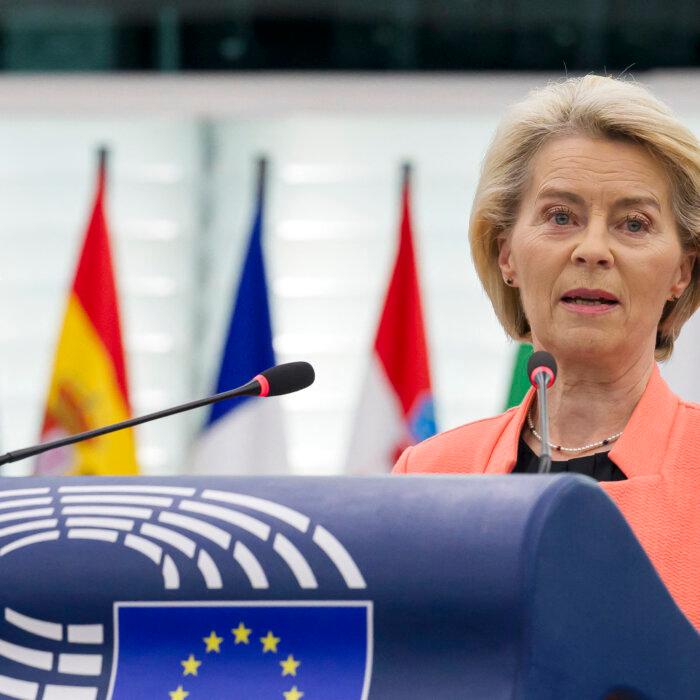
He said European Commission President Ursula von der Leyen has also been involved at the highest level, speaking directly with U.S. President Donald Trump.
Sefcovic told reporters that the effort was worth it, noting that otherwise, the parties wouldn’t have spent three months drafting the agreement in principle and reviewing 1,700 tariff lines, discussing every detail from agriculture to car spare parts, just to have the process end with a single—albeit very important—letter.
He added that EU leadership had been notified beforehand about the tariff letter that it would be getting.
Danish Foreign Minister Lars Lokke Rasmussen, representing the EU presidency, said that the U.S.–EU trade deal has to be on terms acceptable to both sides.
“If no satisfactory solutions can be found, the EU remains ready to react, and that includes robust and proportionate countermeasures if required,” he said. “And there was a strong feeling in the room of unity. So this statement is a statement which unites all of us.”
Broader Trade Agenda
Sefcovic said that ministers are focused on ongoing negotiations to open new markets for the bloc, highlighting a recent deal with Indonesia.Sefcovic also cited negotiations with Thailand, the Philippines, and Malaysia as examples of the EU’s commitment to strengthening ties in the region.
He added that talks with India are progressing, with the goal of reaching a commercially meaningful agreement by the end of the year. He is also set to meet with Thani bin Ahmed Al Zeyoudi, the United Arab Emirates (UAE) foreign trade minister, to continue EU–UAE trade discussions.
The EU is also preparing to launch talks with partners from the Comprehensive and Progressive Agreement for Trans-Pacific Partnership, a free trade area spanning five continents with a combined market of almost 600 million people.
Rasmussen said that China remains both an economic competitor and a systemic rival, but it is also a partner with whom cooperation must be maintained, and possibly even expanded.
Sefcovic said export controls on rare earths remain a key concern, but he reported some progress in fast-tracking applications destined for the EU market. These issues will be on the agenda at the upcoming EU–China summit later this month.