European defense ministers agreed on Sept. 26 to develop a “drone wall” along their borders with Russia and Ukraine to better detect, track, and intercept drones violating Europe’s airspace, a move driven by a recent surge in incursions and hybrid attacks.
“Russia is testing the EU and NATO, and our response must be firm, united and immediate,” European Union (EU) Defense Commissioner Andrius Kubilius said on Sept. 26 after chairing a virtual meeting of 10 countries on Europe’s eastern flank.
Ukrainian and NATO officials also took part.
The EU official said the project could take a year to build and that envoys will soon draw up “a detailed conceptual and technical roadmap,” and the top priority will be the establishment of an effective detection system.
Kubilius said that Europe’s defense industry would be brought on board and that leaders are expected to examine funding in the coming weeks.
“Today’s meeting was a milestone—now we focus on delivery,” he said.
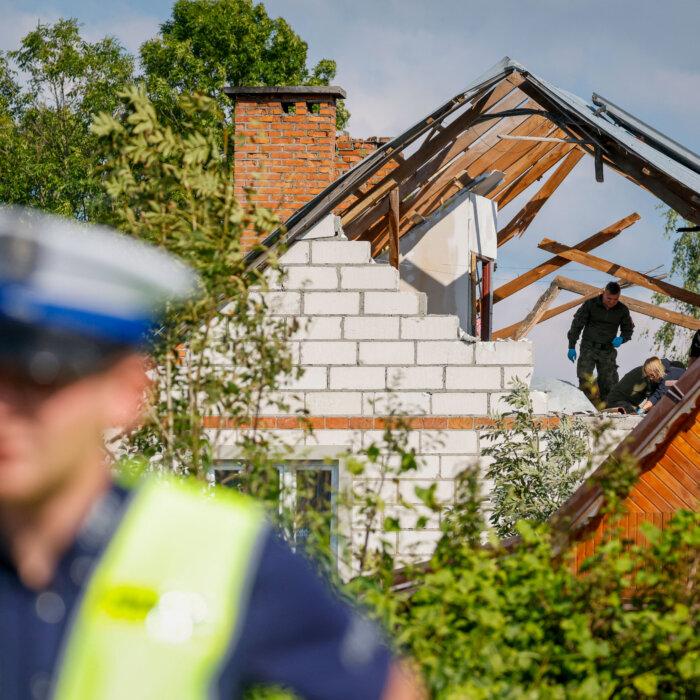

The drone wall initiative follows multiple incidents in recent weeks involving incursions into NATO territory by unmanned aerial vehicles. NATO jets scrambled on Sept. 10 to shoot down Russian drones that entered Polish airspace, while airports in Denmark were temporarily shut this week because of nearby drone flights.
“The hybrid war is ongoing, and all countries in the European Union will experience it,” Polish Defense Minister Wladyslaw Kosiniak-Kamysz told reporters in Warsaw after the drone wall talks.
“The threat from the Russian Federation is serious. We must respond to it in a very radical manner.”
Danish Prime Minister Mette Frederiksen said in a social media post that the drone incidents in her country reflected a new reality facing Europe, in which hybrid attacks were fiercer and more frequent.
“Last night was an unmistakable reminder of the time we live in. That we need to protect our peace and security.”
“This is not an abstract ambition,” she said.
“It is the bedrock of credible defense. It should be a European capability developed together, deployed together, and sustained together that can respond in real-time. One that leaves no ambiguity as to our intentions. Europe will defend every inch of its territory.”
Von der Leyen said 6 billion euros would be earmarked for a drone alliance with Ukraine, which has used unmanned aerial vehicles to inflict major losses on Russian forces.
“Ukraine has the ingenuity,” she said. “What it needs now is scale.”
The plan will be discussed at an EU summit in Copenhagen next week and again in Brussels in October.
After the Sept. 26 meeting on the drone wall, NATO military chiefs gathered in Riga, Latvia, on Sept. 27 to discuss air defense and deterrence measures in the face of intensified Russian provocations.
Latvian Chief of Defense Maj. Gen. Kaspars Pudans said that Russia’s aggression extends beyond Ukraine and is “part of a broader campaign against [the] continent” that is calculated to sow division, weaken NATO’s cohesion, and undermine institutional confidence in European nations.
“This is the time for Ukraine to act,” Trump wrote in a post on Truth Social, stating that he wishes both countries well and that the United States will continue to supply weapons to NATO “for NATO to do what they want with them.”