European Union leaders said after an emergency meeting on Jan. 18 that their nations are ready to defend themselves after U.S. President Donald Trump imposed new tariffs on Europe as pressure in his bid to take control of the North American island.
After the emergency talks, EU Council President Antonio Costa said that member states agree that tariffs “would undermine transatlantic relations and are incompatible with the EU-U.S. trade agreement.”
Costa said that EU leaders had expressed “readiness to defend ourselves against any form of coercion.”
Costa is expected to convene a full summit of EU leaders later this week.
The meeting comes as Trump has ramped up his efforts to gain control of Greenland for the United States, citing the island’s strategic importance, natural resources, and suggesting that adversaries like Russia or China could move in if the United States doesn’t.
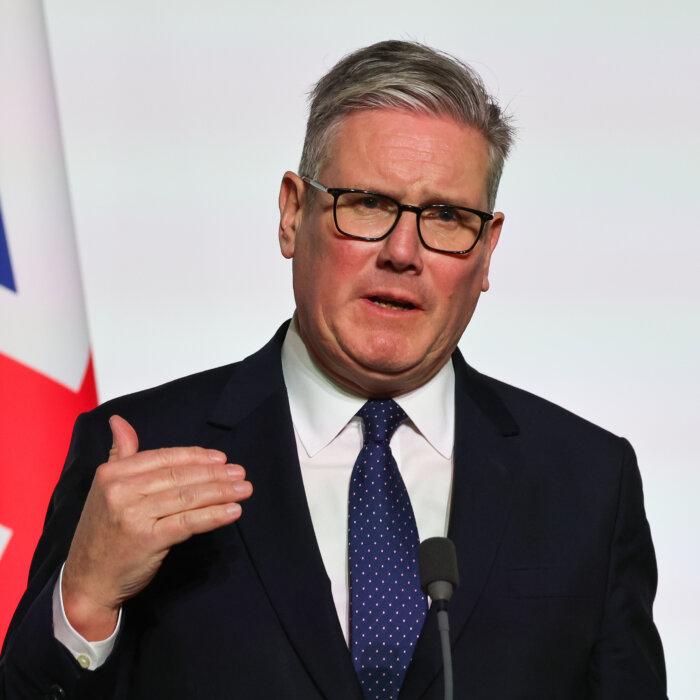
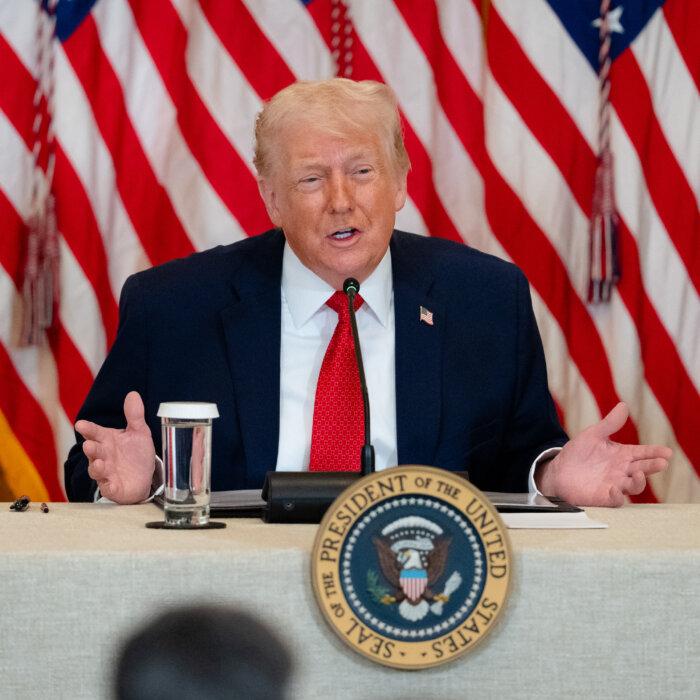
He has said that if the United States doesn’t gain control of Greenland, China or Russia will take it.
Meanwhile, the eight European nations, which are already subject to 10 percent or 15 percent tariffs by the United States, have sent a small military presence to Greenland.
The military deployment is intended to bolster Arctic security “as a shared transatlantic interest” and poses no threat to anyone, the nations said, adding that they are ready for dialogue with the United States “based on the principles of sovereignty and territorial integrity“ that they ”stand firmly behind.”
“We stand in full solidarity with the Kingdom of Denmark and the people of Greenland,” the eight countries said.
“We are committed to upholding our sovereignty.”
According to an English translation of her written statement, Danish Prime Minister Mette Frederiksen said, “Since the U.S. President’s announcement of tariffs, the [Danish] government has been in intensive dialogue with our allies.”
“It is all the more important that we stand firm on the fundamental values that created the European community. We want to cooperate, and we are not the ones seeking conflict,” she said. “And I am pleased with the consistent messages from the rest of the continent: Europe will not be blackmailed.”
Swedish Prime Minister Ulf Kristersson echoed Frederiksen in a social media post on Jan. 17: “Only Denmark and Greenland decide on issues concerning Denmark and Greenland.”
Greenland Governance
U.S. Vice President JD Vance and Secretary of State Marco Rubio met with Danish Foreign Minister Lars Lokke Rasmussen and Greenland’s foreign minister, Vivian Motzfeldt, at the White House on Jan. 14.The U.S. president said on social media that attempts by the United States to “do this transaction” for Greenland date back “over 150 years.” U.S. President Andrew Johnson’s administration first floated the idea of expanding U.S. influence in the Arctic in the 1860s.
Trump has also previously signaled that Greenland would be a wise investment for the United States because of estimates of high quantities of rare-earth element deposits on the Arctic island.
Although the island had been under formal Danish control since the era of colonization in the early 1700s, Greenland was granted self-governance in the 1970s with the creation of a parliament and the Self-Government Act of 1979, expanding the island’s autonomy. However, the island didn’t gain full self-governance until 2009.
On Jan. 9, the officials from Greenland, including Prime Minister Jens-Frederik Nielsen and multiple political party leaders, released a statement reaffirming Greenland’s sovereignty and rejecting any claims that would impede the island’s autonomy.
“We don’t want to be Americans, we don’t want to be Danes, we want to be Greenlanders,” the statement said. “The future of Greenland must be decided by the Greenlandic people. ... No other country can interfere in this.”