Two Toronto hospital patients have become the first Canadian recipients of the Neuralink brain chip created by American tech billionaire Elon Musk’s neurotechnology company.
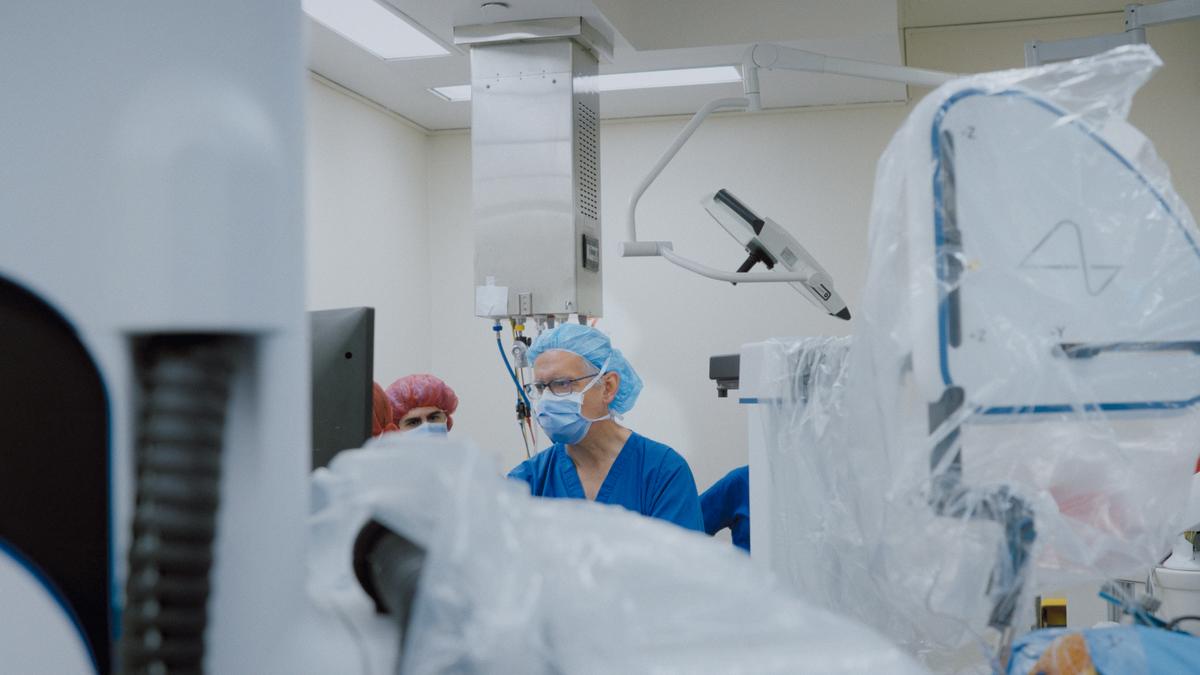
The surgeries carried out on quadriplegia patients were part of a clinical trial known as the Canadian Precise Robotically Implanted Brain-Computer Interface Study and marked the first Neuralink procedures conducted outside the United States.
“It’s a profound honour to be a part of this breakthrough research and to lead Canada’s first Neuralink surgeries,” Dr. Andres Lozano, a neurosurgeon at Toronto Western Hospital, said in the Sept. 4 press release.
“This milestone represents a convergence of neuroscience, engineering, and clinical care.”
The clinical trial began last November to evaluate the safety and functionality of both Neuralink’s surgical robot and the brain chips that allow quadriplegic individuals to operate external devices through their thoughts, the UHN said.
Recruitment is still ongoing, and is open to qualifying patients with restricted or no capacity to use both hands due to cervical spinal cord injury or amyotrophic lateral sclerosis (ALS), the health network said.
The two Canadian patients who have participated thus far are both individuals living with cervical spinal cord injuries, UHN said. They are set to attend follow-up appointments and research sessions as they become familiar with the devices.
How It Works
The Neuralink implant is composed of a transmitter linked to extremely thin “threads” that record neural activity. The device is placed into a patient’s brain by a surgical robot because the threads are so delicate, “they can’t be inserted by the human hand,” according to the neurotechnology company’s website.The implant transmits electrical signals captured by the threads wirelessly to the Neuralink application, which uses machine learning to interpret a person’s thoughts as actions, allowing them to open a phone app or control a mouse on a computer screen with their mind.
Neuralink has been criticized in recent years after the company was accused of questionable research methods involving animals. Media reports surfaced in 2022 and 2023 alleging that the research had harmful effects on monkeys involved in testing and that some of them had been euthanized as a result.
Musk has refuted past allegations of animal cruelty, saying that “no monkey has died as a result of a Neuralink implant.”
The current Neuralink trial has yet to reach that stage and Musk has not confirmed if such plans are in the works for the future.