The Edmonton Police Service is testing new body-worn camera technology powered by machine learning, aiming to help officers in the field identify “dangerous” individuals and those with outstanding arrest warrants for serious crimes.
To do that, the police service said the mug shots of nearly 7,000 individuals have been compiled into a database for officers to assess the real-time effectiveness of the facial recognition body-worn cameras provided by public safety technology company Axon Enterprise Inc.
Edmonton Police Service (EPS) will be the first in the world to test the cameras, says Acting Supt. Kurt Martin, who is part of the force’s information and analytics division. The program launches Dec. 3, with up to 50 officers using the facial recognition-enabled body worn video cameras during their shifts for the rest of the month.
“If this technology can help us identify some of the suspects in our database who are wanted for serious criminal warrants, we want to explore that as an option,” he said. “That’s really what this testing is about. It’s about empowering our officers to be informed about safety risks to themselves and to the public, as well as giving them a tool to help them in real world operations in near real time.”
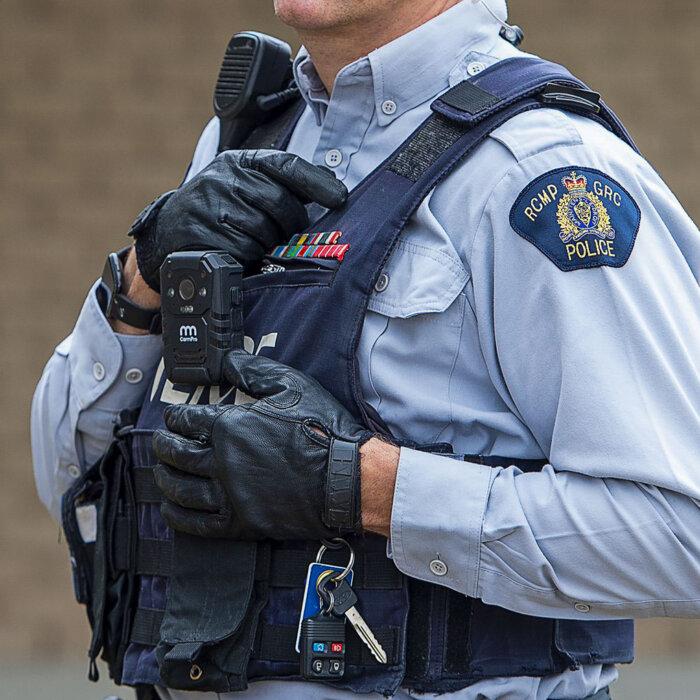

Martin said the mandated cameras enhanced the collection of evidence and documentation, and contributed to successful prosecutions while also promoting transparency and public trust.
He described facial recognition cameras as the next step in using technology to enhance police operations.
“This proof of concept will test the technology’s ability to use EPS mug shots to help make officers aware on-shift of individuals with officer safety flags and cautions that resulted from previous police interactions,” he said, noting that cautions are warnings tied to people to highlight a safety risk that stemmed from a previous police interaction.
How the Software Operates
The 7,000 mugshots uploaded to the software will act as a starting point for the pilot project. The images will be of individuals who have been flagged as a safety risk, as well as those who are wanted on one or more serious warrants, such as for murder or assault.Only officers working the day shift will be testing the new cameras because low light can impact the performance of the facial-recognition software. The officers testing the cameras will use them in “silent mode,” which means the cameras will record and may identify individuals, but won’t inform the officer, Martin said.
Instead, a specialized team of officers with analytics expertise will scrutinize the footage to determine if the facial recognition software is functioning as expected.
That human element will continue if the facial recognition software is implemented for long-term use, Martin noted.
“I want to make it clear that this facial recognition technology will not replace the human component of investigative work,” he said. “In fact, the resemblances that are identified by this software will be human verified by officers trained in facial recognition.”
The pilot project with EPS also serves as a test of the technology for Axon, an American company that develops weapons and technology products mainly for police services and the military.
Axon’s director of responsible AI, Ann-Li Cooke, told reporters the technology has been tested in the lab as well as in simulations, but Edmonton’s officers will be the first to test it in the real world.
Cooke said Axon is using a third-party machine learning model but declined to say which company’s software is being tested because a contract had yet to be finalized.
The press conference included a demonstration of how the facial recognition software will work.
Martin took a photo of Cooke as she stood among other spokespeople and journalists at the press conference. The program only recognized her face, correlating it with a photograph that had been uploaded to the system earlier.
Cooke noted that while the software is a type of artificial intelligence, it is categorized within the machine-learning model segment of the AI spectrum. This means it has been trained using pre-existing data to inform its decisions but is still only meant to be used with “a human in the loop,” she added.
“The human reviewer is a really critical aspect of the entire system,” Cooke said. “The reason for that is because we know that this is a really powerful tool, and these are high severity people that we’re looking for, so we want to make sure that the end-to-end accuracy always includes that human discretion as well.”
Once testing is complete, any still images used for facial recognition will be deleted, but the original video will be retained in accordance with EPS regulations, Martin said. All gathered data will be encrypted and securely stored in a cloud that’s hosted in Canada. He noted that only the police service has access to the data.
EPS has submitted a privacy impact assessment to Alberta’s information and privacy commissioner to ensure the pilot respects “privacy considerations” and the law, Martin said. He added that the force will “welcome any feedback that they would have for us.”
The Epoch Times contacted the Alberta Information and Privacy Commissioner for comment on the pilot project but didn’t hear back by publication time.
The recommendations made by the commissioner following such assessments are generally not disclosed to the public.