With an unwavering pledge to ban new petrol or diesel vehicles by 2035, the European Union’s net-zero future is wed to electric cars and to the all-important batteries that power them.
But the EU’s parallel goal to be able to produce those batteries itself, and to avoid dependence on China, is in jeopardy, according to some analysts.
Europe is mainly dependent on the Chinese Communist Party (CCP) for its batteries, from materials to production.
“Batteries are essential to most of what we do in modern daily life,” Responsible Battery Coalition Executive Director Steve Christensen told The Epoch Times.
Europe Needs to Be ‘Realistic’
Last month, French miner Eramet, which produces metals used in battery production, and the chief executive of Umicore, a specialist in the production and recycling of battery materials, told the Financial Times that a push to develop an entirely autonomous European industry would not work.Christel Bories, who was Eramet’s chief executive until recently, said that Europe needed to be “realistic” because China had spent two decades perfecting its battery technology and was now a “huge” step ahead.
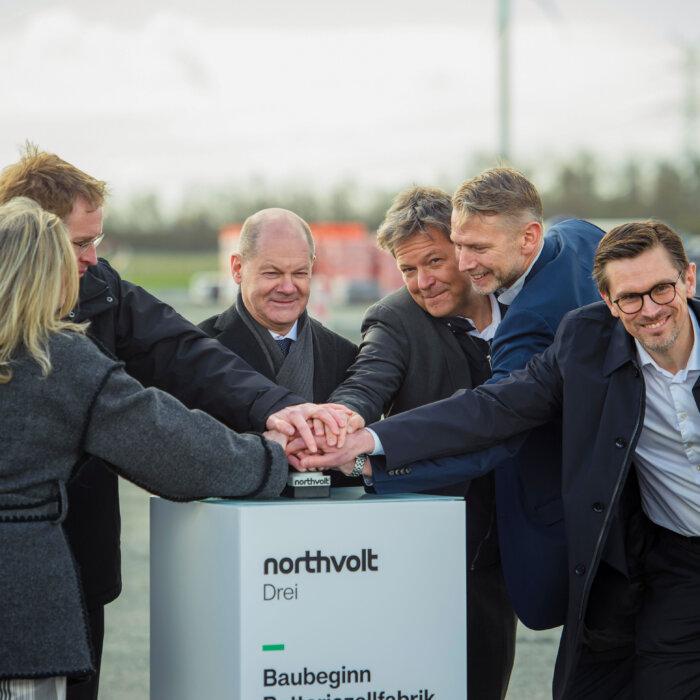
The EU had tried to break reliance on China and had pinned hopes on battery manufacturer Northvolt to light the way.
Lithium-ion batteries, used in a huge range of electronic devices, from smartphones to laptops, are also the dominant power source for electric vehicles (EVs) due to their high energy density, lightweight design, and ability to be recharged.
However, the capital-intensive process of assembling them proved too complex in Europe.
‘The EU Remains On Track’
Despite the bankruptcy, the EU remains committed to its ambitious goals for battery production and electric vehicles.The European Battery Alliance, launched in 2017 by the European Commission, has the political objective of making sure that European manufacturers produce 90 percent of the EU’s annual battery deployment needs in 2030.
A spokeswoman for the EU Commission told The Epoch Times by email that the bloc continues “to make significant progress toward the strategic objective of meeting 90 percent of Europe’s annual battery demand with EU-based production by 2030.”
“Based on current industry announcements, the installed battery cell manufacturing capacity for 2030 is projected to reach 892 GWh. With demand estimated to range between 890 and 998 GWh for the same year, the EU remains on track to achieve this ambitious target,” she said.
‘CCP’s Power Play’
Michael Ashley Schulman, chief investment officer at Running Point Capital Advisors, told The Epoch Times by email that he believed that Europe’s battery dreams just “short-circuited.”“Northvolt’s bankruptcy didn’t just zap a corporate balance sheet, it fried the continent’s flagship fantasy of EV independence,” he said.
“China doesn’t just dominate battery cell production (around 80 to 85 percent), it owns the upstream, midstream, and increasingly the intellectual property stream.
“If oil once gave OPEC [Organization of the Petroleum Exporting Countries] geopolitical swagger, lithium-ion is shaping up to be the CCP’s power play.”
Lithium-Sulfur
One company that says it is up to that challenge is the U.S.-based Lyten, which produces lithium-sulfur battery technology.The battery eliminates the need for foreign-sourced critical minerals nickel and cobalt, which are dominated by Chinese supply chains.
Keith Norman, Chief Sustainability Officer at Lyten, told The Epoch Times that raw materials for lithium-sulfur batteries have the potential to be sourced and produced locally, in North America or Europe.
Norman said that they have acquired some of Northvolt’s assets in California after Northvolt filed for Chapter 11 Bankruptcy.
He said Northvolt’s big value proposition was “independence from China,” which was built on rebuilding the lithium-ion supply chain in Europe.
“So they had to go back into the typical supply chain through China, like everybody else was doing for lithium-ion, with the view of, once they got stood up and going, it would switch over time. But their dependency was there early on,” he said.
‘National Security Issue’
Responsible Battery Coalition Executive Director Steve Christensen told The Epoch Times that while the battery business is a tough one to be in, the wider issue has more to do with what China is doing “to restrict access to the materials than it has to do with any single company or groups of companies that might fail.”EV battery production worldwide draws heavily on lithium-ion, cobalt, and other substances whose mining, processing, and distribution are largely the domain of Chinese firms.
But he said that to create a domestic production, “you’re looking at anywhere from five to 15 years, sometimes 20 years, until that mine starts purchasing an industrial level of material.”
But even if that still happens, the intellectual property needed for processing remains almost entirely in Chinese hands.
He said that if he were advising the EU, he would tell the bloc to designate all materials for all batteries critical “because of how critical batteries are, and we see it as a national security issue.”
Christensen said China has restricted exports of battery materials to the West because it doesn’t want other countries to manufacture them; it wants to sell the finished products instead.
‘How Can We Compete’
John Ellmore, editor and spokesperson for Electric Car Guide, told The Epoch Times by email that the collapse of Northvolt was “a geopolitical wake-up call.”“The West can’t catch up, even when projects like Northvolt do get off the ground, they face higher energy costs, stricter regulations, and investor caution,” he said.
“So how can we compete?”
Northvolt did not respond to The Epoch Times’ request for comment.