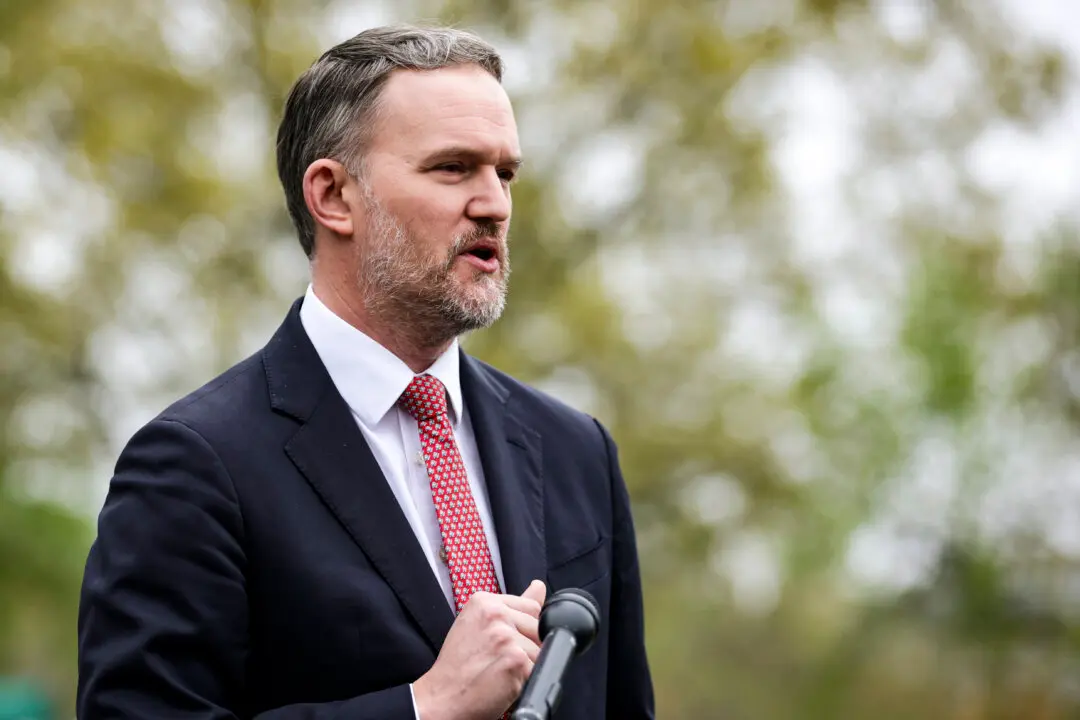
The Canadian government offered to double oil exports to the United States as part of a failed preliminary trade deal, according to U.S. Ambassador to Canada Pete Hoekstra.
Hoekstra made the comments during a discussion at the Pacific Northwest Economic Region’s conference in Edmonton on July 20.
In recent weeks, Hoekstra has shed light on some details of the agreement Ottawa and Washington were negotiating last fall.
Prime Minister Mark Carney had met with U.S. President Donald Trump at the White House in early October 2025.
“I saw our reaction at the White House on October 7 when the prime minister proposed, as part of a preliminary trade agreement, that Canada would be willing to ship 3 to 4 million additional barrels of oil to the United States,” Hoekstra said.
Hoekstra added that members of Trump’s cabinet during the meeting with Carney were very enthusiastic about Canada’s oil export proposal.

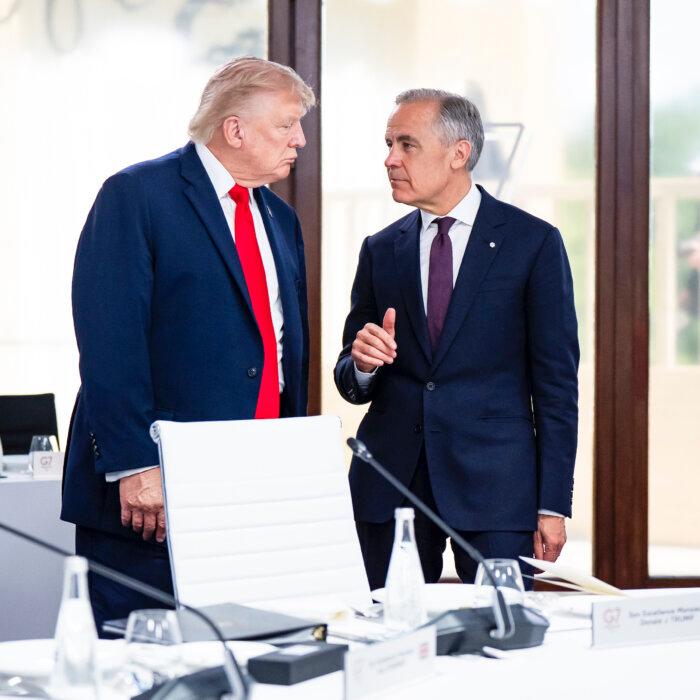
He said Interior Secretary Doug Burgum and Energy Secretary Chris Wright “had to be restrained by the president because they were so eager for getting more oil and getting it from Canada.”
“The president had to advise them that crawling across the table and shaking Carney’s hand was not necessarily the best negotiating strategy,” Hoekstra added.
The ambassador said the United States is seeking to secure an additional four million barrels of oil over the next decade and that Alberta and Saskatchewan are well positioned to make the “most compelling case” to supply it.
Trump has repeatedly stated that the United States doesn’t need anything from Canada, including oil.
Hoekstra elaborated on the statement, noting that when Trump says he doesn’t need Canadian oil he means to say “we need oil, but we don’t necessarily need it from Canada.”
Pipeline company South Bow is leading the proposal to revive the project on the Canadian side. In April, U.S. President Donald Trump granted a permit to Bridger, the project’s U.S. counterpart, to build and operate the pipeline connecting Montana with Canada.
Failed Deal
The deal being worked on between Ottawa and Washington in the fall of 2025 collapsed after Trump cancelled trade talks in late October, in response to Ontario running an anti-tariff TV ad campaign south of the border.Instead, trade talks between Ottawa and Washington were frozen from November 2025 to March 2026.
The latest development on the trade file was the July 1 review of the Canada-United-States-Mexico Agreement (CUSMA). Canada and Mexico sought a 16-year extension to the free trade deal, whereas the United States has rejected a renewal of the agreement “in its current form.”
Negotiations have continued, including the United States and Mexico holding a third formal round of bilateral talks this week.
Hoekstra suggested there will be additional meetings with Mexico in August. “They’re knocking down the issues with Mexico, and so that’s going down one path, and the discussions and negotiations with Canada are at a different point,” he said.
Asked whether there’s a possibility that Mexico and the United States could first reach an agreement, as was the case during the first CUSMA negotiations, Hoesktra responded “not necessarily.”
In any case, the ambassador said Canada and the United States will reach a trade deal as two “large trading partners,” while noting the current situation around CUSMA brings uncertainty.
The absence of renewal of the agreement triggers yearly reviews for the next 10 years, unless the deal is extended or a party withdraws.