This copy is for your personal, non-commercial use only. Distribution and use of this material are governed by our Subscriber Agreement and by copyright law. For non-personal use or to order multiple copies, please contact The Epoch Times Reprints.
Dominican Republic Confirms US Access to Its Airports in Drug War to Last Until April
President Luis Abinader confirmed details of the accord, which forms part of Washington’s wider war on drug trafficking in the Caribbean and Pacific waters.
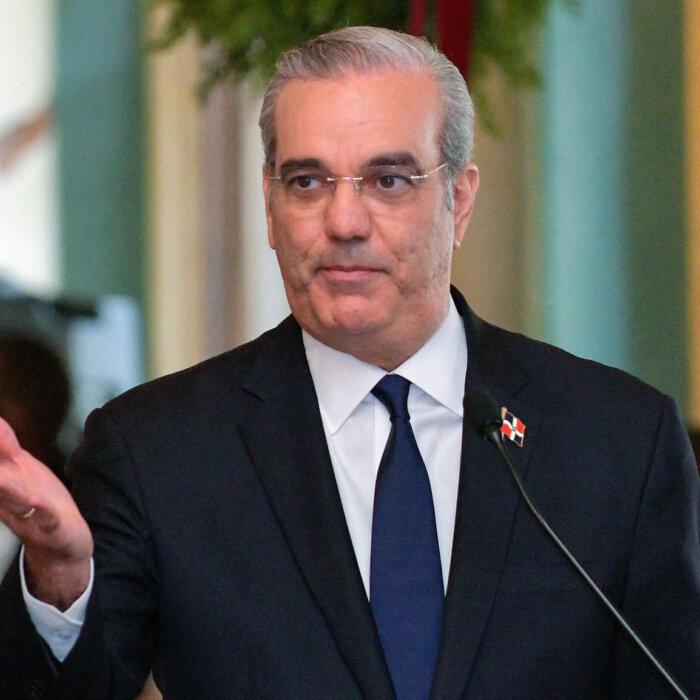
Dominican Republic's President Luis Abinader gestures during a press conference after a meeting with U.S. War Secretary Pete Hegseth at the National Palace in Santo Domingo on Nov. 26, 2025. Felix Leon/AFP via Getty Images
Dominican Republic President Luis Abinader has said that a temporary agreement to allow U.S. anti-narcotics personnel access to restricted airport areas will run until April 2026, clarifying the scope of the deal.
The accord forms part of a wider, more aggressive operation in the war against drugs by U.S. President Donald Trump in the Caribbean, intended to increase pressure on Venezuela to do more to tackle the cartels.
The agreement was reached last week during a visit to the Dominican Republic by U.S. Defense Secretary Pete Hegseth, who described the accord as a “model that we hope to expand with other countries.”
Abinader made his comments on Monday at a press briefing, clarifying that the deal covers restricted zones at Las Americas International Airport and the San Isidro air base.
The permitted activities will be logistical and non-combat, the president stressed, allowing U.S. aircraft to refuel and move equipment in support of regional missions.
Existing Bilateral Framework
Abinader said the deal is built upon an existing bilateral anti-drug framework dating back to agreements from 1995 and 2003.
“This is going to help us a lot, together with the Dominican Navy and with specialized technological information,” Abinader said of the deal.
Trump has beefed up the United States’ military presence in the Caribbean significantly in recent months, with the operations including lethal strikes against suspected drug-trafficking vessels. The attacks have killed more than 80.
The deal between the United States and the Dominican Republic represents the first notable public pact with a Caribbean nation as part of Washington’s enhanced operations against drug smuggling.
Announcing the accord, Hegseth vowed to respect Dominican sovereignty and laws, while Abinader described the measures as “technical, limited, and temporary.”
Tenfold Rise
“The purpose is clear: to strengthen the air and maritime protection ring maintained by our Armed Forces, a decisive reinforcement to prevent the entry of narcotics and to strike a more decisive blow against transnational organized crime,” Abinader said.
He noted an almost tenfold rise in annual drug seizures in the past five years, attributing this to U.S. collaboration.
“Our country faces a real threat, a threat that knows no borders, no flags, that destroys families, and that has been trying to use our territory for decades,” he said. “That threat is drug trafficking, and no country can or should confront it without allies.”
Hegseth described it as “a model that we hope to expand with other countries that want to associate with us to ensure that the drug terrorists ... receive this message that we are associating with more countries, with more elements to stop them.”
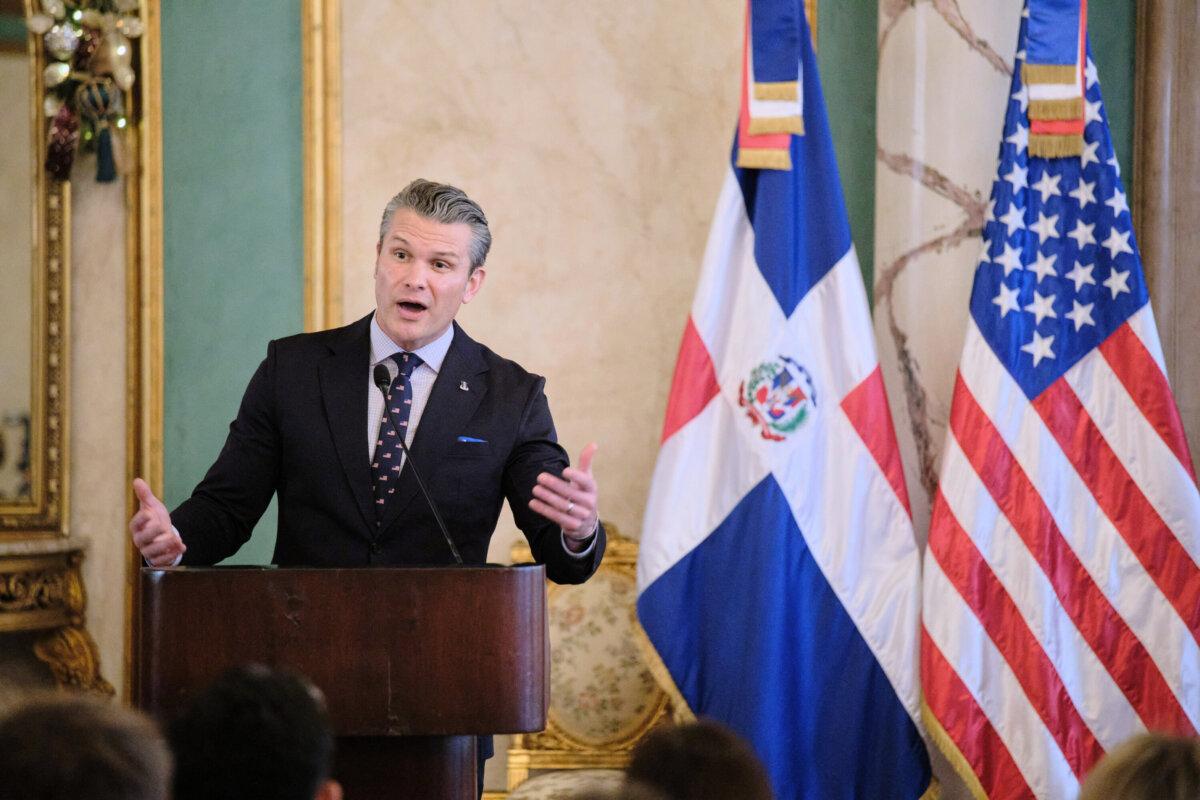
U.S. Secretary of Defense Pete Hegseth speaks during a press conference after a meeting with Dominican Republic President Luis Abinader at the National Palace in Santo Domingo, Dominican Republic, on Nov. 26, 2025. Ricardo Hernadez/AP Photo
Hegseth’s visit followed a meeting between U.S. Joint Chiefs Chairman Gen. Dan Caine and Trinidad and Tobago Prime Minister Kamla Persad-Bissessar to discuss the war on narcotics crime.
Persad-Bissessar supports the U.S. strikes on drug boats and has said of the drug traffickers that the United States should “kill them all violently.”
Persad-Bissessar said in September: “Our country has been ravaged by bloody violence and addiction because of the greed of the cartels.
“The slaughter of our people is fueled by evil cartel traffickers.”
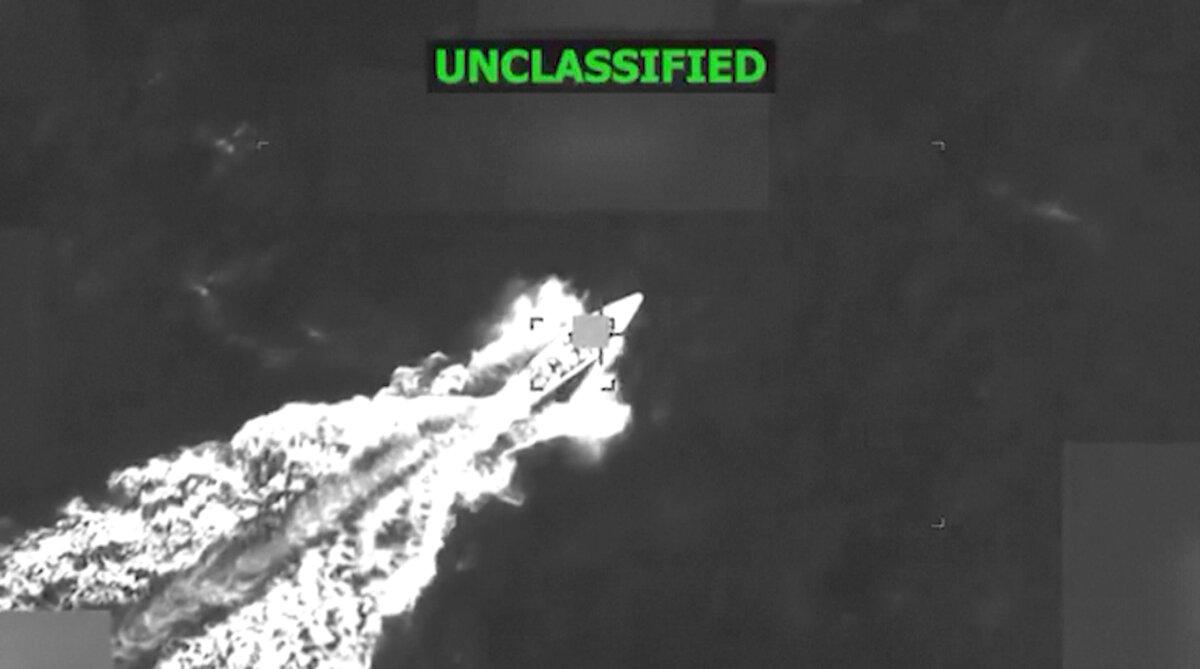
A still from footage of a strike on an alleged drug boat in the Caribbean on Nov. 6, 2025. @SecWar/X
‘Very Poor Young People’
Other leaders of Caribbean and Latin American countries affected by Washington’s operations against narco-terrorism have been more critical of the boat strikes.
Colombian President Gustavo Petro questioned the U.S. operations following a boat strike in the Caribbean that killed 11.
Petro said it should be possible to intercept maritime drug shipments without attacking a vessel’s occupants. He said that Colombia prefers to capture the smugglers, since those transporting the drugs “are not the big drug traffickers,” but rather, “very poor young people” from the region.
“In the speedboats, narco-terrorists do not go. The narcos live in the USA, Europe, and Dubai,” he wrote.
“Bombing the boat violates the universal principle of proportionality of force and results in murder,” the president said on X.
In his crusade against the cartels, Trump has not ruled out action inside Venezuela, which is used as a major transit corridor for drugs into North America.
Trump confirmed on Sunday that he held a call with Venezuelan President Nicholas Maduro after a New York Times report that the conversation happened earlier in November, but told reporters he did not want to comment on what was discussed.
Washington’s designation of the Cartel de los Soles as a foreign terrorist organization took effect on Nov. 24, with the State Department identifying Maduro as the leader of the group. Maduro has denied the accusation.
Rachel Roberts is a London-based journalist with a background in local then national news. She focuses on health and education stories and has a particular interest in vaccines and issues impacting children.