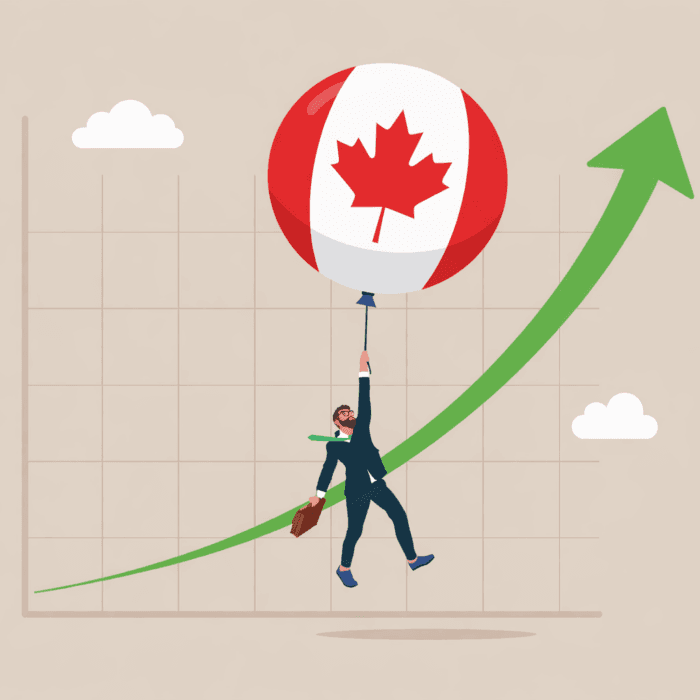
A new report by Deloitte projects that Canada’s economy will grow by 1.5 percent in 2026, after projecting 1.7 percent growth for this year back in September.
“It is unreasonable to expect governments to stimulate this structural transition quickly which means that the economy is likely to remain in a slow growth mode until the latter part of 2026. Consumer and business confidence will need to be restored,” the report said.
The upcoming review of the United States-Mexico-Canada Trade Agreement (USMCA) in July is expected to be a “pivotal event,” and the report said exemptions to tariffs for Canadian goods have been “keeping Canada’s economy from faltering.”
“Changes to the agreement that restrict or eliminate this access to the US will have dire consequence,” the report said, adding that this is a risk but “not our base case.”
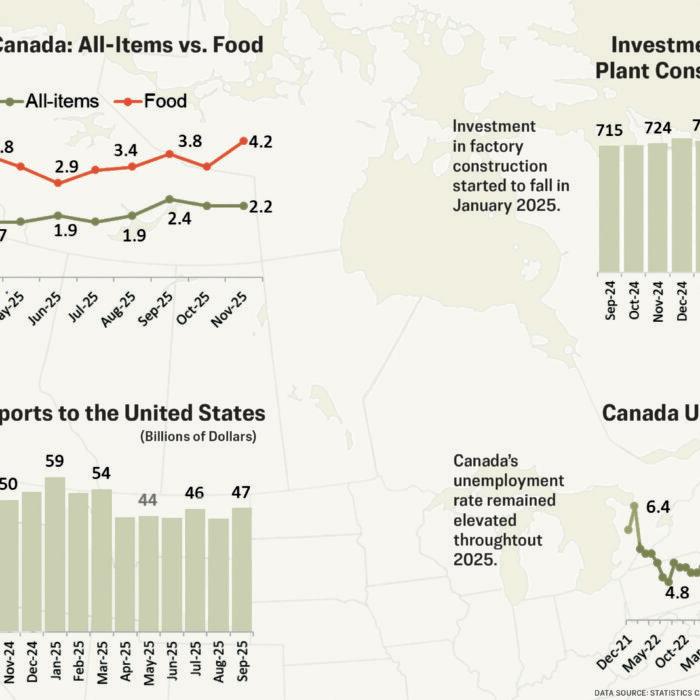
Canada’s exports saw a 25 percent decline in the second quarter of 2025, while the third quarter saw a 0.7 percent increase. Sectors hit by U.S. tariffs like automobiles, steel, and aluminum “continue to struggle,” according to Deloitte.
By contrast, the report said sectors exempted from U.S. tariffs have “gained a competitive edge in the US market” and outperformed exporters from other countries that do not enjoy the same exemptions.
Economic uncertainty will “persist through 2026” as the United States reviews its participation in the USMCA, the report said, but “greater clarity is expected after the July review, which could mark a turning point for investment decisions.”
The report added that employment declined in the third quarter of 2025, but job growth resumed in October and November and employment is expected to rise in the last quarter of the year to offset earlier losses. The employment rate is expected to continue falling after climbing to 7.1 percent in September 2025, according to the report.
The report states that increased government defence spending and assistance for sectors damaged by U.S. tariffs will provide some support for Canada’s economy, but the “uncertain backdrop” will keep consumer and business spending lower. A decrease in immigration is also likely to keep consumer spending subdued.
However, the housing market is expected to recover, according to the report, with government policies meant to support housing construction set to kick in. Inflation pressures are also likely to align with the Bank of Canada’s target, which will allow policy to remain “accommodative” and contribute to increasing housing market activity.