An Australian parliamentary committee has heard that the Department of Defence is working to clean up PFAS contamination at 28 sites nationwide, with efforts directed at eliminating the sources of pollution.
PFAS, also known as “forever chemicals,” are a group of thousands of synthetic chemicals used to make products resistant to heat, stains, grease, and water.
They can be found in a wide range of consumer and industrial goods, including non-stick cookware, food packaging, waterproof clothing, cosmetics, firefighting foams, and electronics.
Due to their extremely stable molecular structures, PFAS are hard to break down and can remain in soil and water for decades or centuries.
PFAS Management Program
At a recent inquiry hearing, Celia Perkins, a deputy secretary at the Department of Defence, stated that they are prioritising the removal of PFAS contamination at sites where firefighting foam has been the primary source.The majority of these are airbases and barracks managed by the department.

“The Defence’s remediation approach is to remove the PFAS contamination at source,” Perkins told the Select Committee on PFAS.
“The remediation has taken a couple of forms, first of all, to treat soil and water on site and to remove PFAS from our use.”
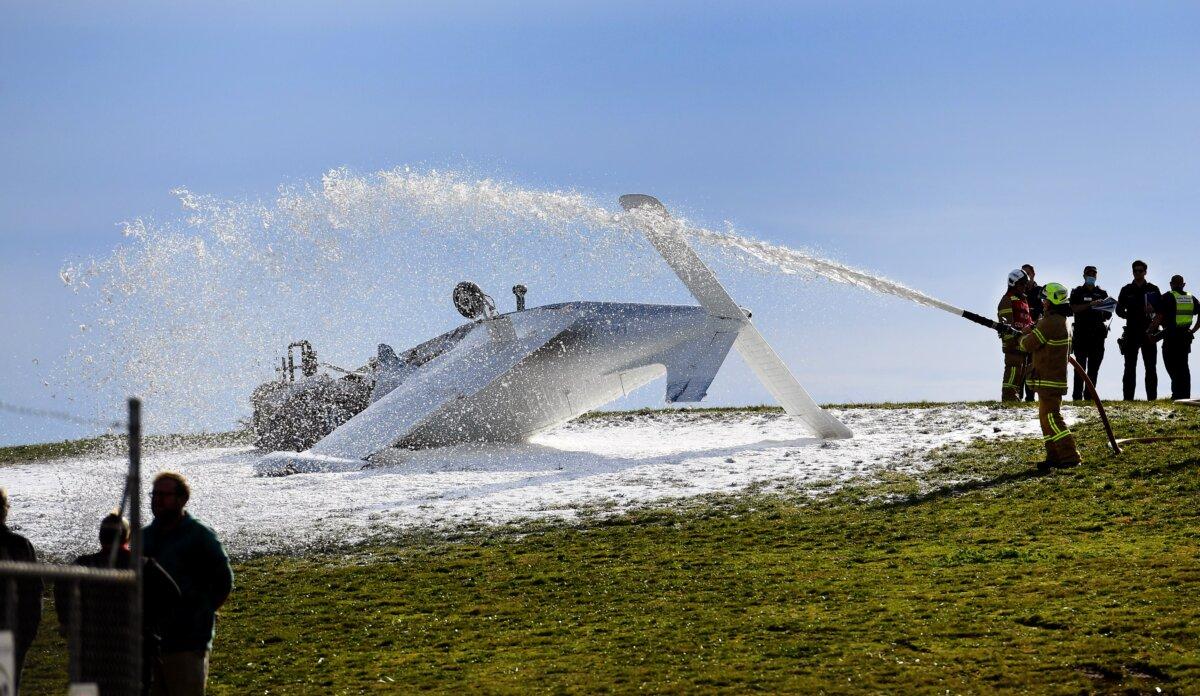
The deputy secretary also noted that the department has mostly phased out PFAS from firefighting foam used in fire trucks and fire suppression systems in aircraft hangars and other defence buildings.
The only exception is firefighting foam on Navy ships, where there are no suitable alternatives.
Regarding the remediation process, Kathleen Leane, an assistant secretary at the defence department, said there were different methods for soil and water decontamination.
“If the soil is particularly contaminated, that can be taken off-site and incinerated. That is the main way we destroy high concentrations of PFAs and restore soil stabilisation,” she said.
“In terms of water treatment, it is a combination of pump and treat, using filters and resin to remove the PFAS that stick to it, and then the clean water can flow through.
“We are also trialling a passive environmental barrier. When we put that in waterways, it flows through rather than a pump and treat through a water treatment plant.”
In addition, Leane pointed out that the defence department implemented a monitoring network at the contaminated sites to evaluate the success of the remediation program.
“We have an extensive monitoring network across the estate around those 28 sites, and that monitoring is undertaken typically twice a year,” she said.
“Those monitoring results are then interpreted by our experts to provide an interpretive report, which we do publish on our defence website, so over time, we can see the trends.
Not Realistic to Completely Remove PFAS
Amid Defence’s remediation efforts, Perkins noted that the main goal is to reduce the level of PFAS present in groundwater as much as possible, as it is not realistic to completely remove its contamination.“What we’ve learned over the 10 years we’ve been doing this is [PFAS] is a really highly persistent chemical, so realistically we’re looking over time for the size of the plumes to decrease and the concentration of PFAs in them to be lower,” she said.
Perkins’s comments were echoed by Leane.
“The main goal is to break those exposure pathways to communities,” she said.
“We aren’t expecting zero [contamination], and we aren’t expecting to remove PFAS from the environment, but to really reduce the risk to communities, and we do that through both remediation and providing alternative water supplies.”