Community members in the City of Kawartha Lakes, Ont., have expressed various concerns about the upcoming Department of National Defence radar transmit site in the area, ranging from health concerns to light pollution and effects on property value.
The Department of National Defence (DND) held public engagement sessions on Sept. 9 in Coboconk, Ont., for its new Arctic Over-the-Horizon Radar (A-OTHR) transmit site. The sessions featured a presentation about the project and a question and answer portion, which aimed to discuss the project and address the community’s concerns surrounding it.
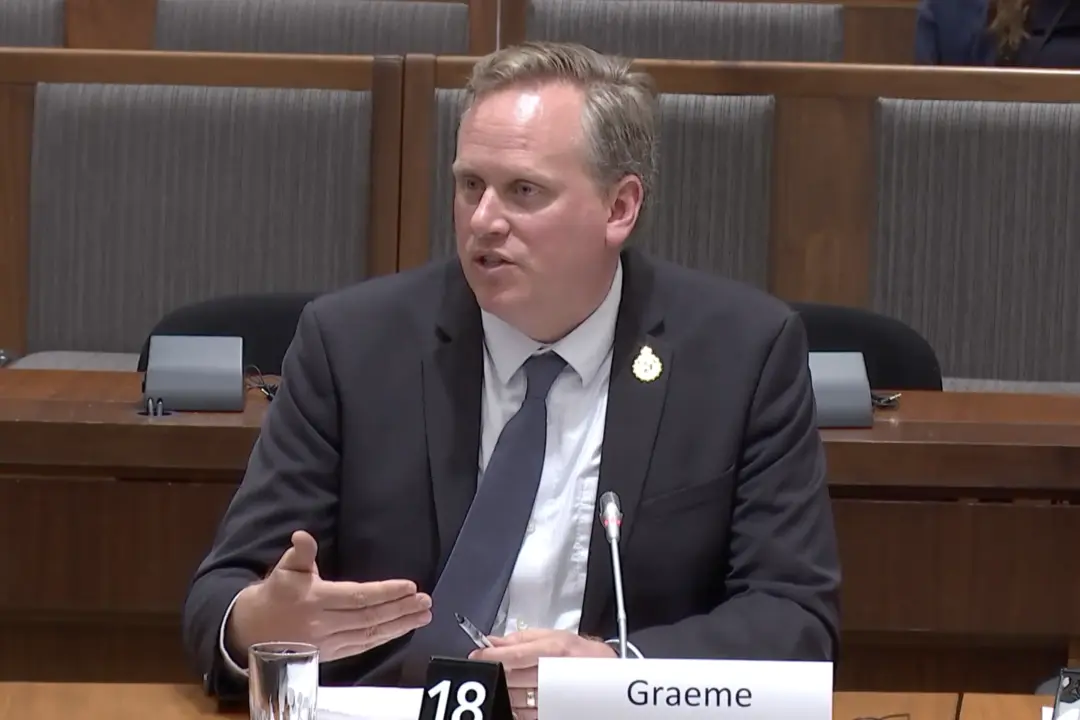
“The idea here is to find a way to discuss and address your concerns as much as possible,” a DND representative said. “Now I can’t say that we’re going to address them all, but certainly we want to look into the matter and see what we can do.”
Much of the community’s feedback centred around concerns about the potential for the project to have negative impacts on the health of the community members who live in the area, citing dangers of radiofrequency electromagnetic field exposure associated with the radar technology.
The DND representatives told the community that no further testing on radio waves will be carried out for this project as “the science is well established in that area,” and the department will follow Health Canada’s guidelines to ensure safety standards are met. They said there will be no negative health effects for anyone that is beyond the fenced perimeter of the high-power site.
The site will go through testing before it is “brought online” to ensure all safety codes are met, and the site could undergo periodic auditing by the government once it’s in operation to ensure the site continues to meet safety standards, officials said.


“This is happening all the time on many other radio installations across the country, and it’s a well known type of technology that we’ve been using since the Second World War very effectively in a number of different applications,” a DND representative said.
Light Pollution, Property Value
Community members expressed concern about light pollution created by the site due to its need to be well lit at night for security purposes. Residents in the area noted that many people come to the area to be away from light pollution, which can also have negative impacts on wildlife.While the DND representatives didn’t mention specific solutions, they said the department will take the community’s concerns into consideration when designing the lights for the project site, and will look for ways to curb light pollution as much as possible.
Others asked how the project will affect their property values and their ability to sell their homes, noting that people may not want to move to the area because of the transmit site. However, the representatives said that changes to property values are “very much outside the scope of the project,” and that it was unlikely the department would speculate further on the matter.
Some community members also raised concerns about commercial and private airplanes flying in the area as there are some residences that can only be accessed by floatplane that usually fly over the area the transmit site will occupy. The department said it intends to continue to engage with the public on the issue and take into consideration where community members fly their planes as it creates a no-fly zone.
Radar Tracking
The DND announced in July that it had acquired two sites for its new A-OTHR project, including one transmit site and one receive site, as part of Canada’s commitment to modernizing its NORAD contributions. The project aims to improve Canada’s ability to detect objects approaching and entering Canadian airspace from the north by providing early warning radar coverage and threat tracking.The department told the Kawartha Lakes community that it plans to begin clearing trees this winter to prepare for construction at the transmit site, which will begin “towards the end of 2026.” The construction phase is expected to last until the end of 2028, and will include creating a flat area that will be 1 kilometre long and 450 metres wide, which is required for the installation of the project’s 45-metre-high antennas. The site will also require small buildings to house electronics and vehicles to maintain the site, as well as storage buildings, a perimeter fence, and perimeter security features.
Community engagement sessions were also set to be held on Sept. 10 in Creemore, Ont., for community members to provide feedback regarding the Clearview Township receive site.