An appeal court has ruled in favour of a passenger whose flight was cancelled by WestJet one hour ahead of departure, upholding a compensation of $1,000.
The Federal Court of Appeal found that WestJet’s decision to cancel a passenger’s 2021 flight from Regina to Ottawa due to a crew shortage was within the airline’s control and was not required for safety purposes as the airline had suggested. The court found the passenger was entitled to $1,000 of compensation for the inconvenience he experienced as a result of the 21-hour delay.
WestJet cancelled passenger Owen Lareau’s July 18, 2021, flight from Regina to Toronto, from where he would fly to his final destination of Ottawa, less than an hour before the flight’s departure due to a staffing shortage, the court document says.
The airline rebooked Lareau on a flight to Calgary later that day, where he stayed overnight using vouchers provided by WestJet for his food and accommodation, and then flew to Ottawa the next day. He arrived at his final destination roughly 21 hours later than he was originally scheduled to.
Lareau requested compensation from WestJet for the flight disruption. However, the airline declined his request, saying the disruption was due to crew member availability and was required for safety purposes.
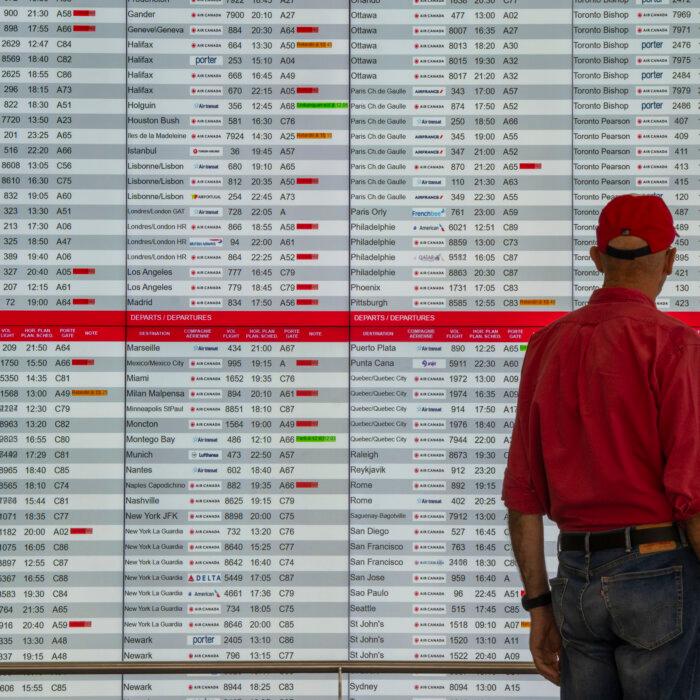
Three days later, Lareau submitted a complaint to the Canadian Transportation Agency (CTA), noting that he had to miss a day of work and if he had been made aware of the cancellation further in advance, he could have made alternate arrangements to arrive at his destination on time. Lareau said he was seeking monetary compensation for his lost income at work.
Air Passenger Protection Regulations
Established in 2019, Canada’s Air Passenger Protection Regulations outline the obligations of airlines to ensure that passengers complete their itinerary, to meet the minimum standards of treatment, and in some circumstances, to pay passengers compensation for inconveniences incurred as a result of a flight disruption, the court document says.It adds that an airline is only responsible for compensating passengers for disruptions that are “within its control,” and not for disruptions that are required for safety purposes or those that are “outside its control.”
However, it specifies that disruptions for safety purposes must be those that “cannot be foreseen nor prevented,” and cannot include those that result from a crew shortage, unless the airline proves that the disruption could not have been prevented or was not a result of the airline’s actions or inactions.
The CTA found that the flight cancellation was within WestJet’s control, and that it wasn’t required for safety purposes as the airline had argued, as the agency found that WestJet did not provide evidence to prove that it had taken action to prevent the disruption, such as having replacement first officers available in the event of a crew shortage. Therefore, the agency ordered the airline to pay Lareau $1,000 in compensation for the inconvenience caused by his 21-hour flight delay.
‘Airlines, Not Passengers, Should Bear the Cost’
WestJet sought to appeal the CTA’s order, arguing that the CTA had error in its interpretation of the regulations. The airline said that no compensation had to be given to passengers for flight disruptions that resulted in response to safety issues, even if the airline failed to take “reasonable measures” to mitigate the disruption.The airline also said that if airlines had to compensate passengers for disruptions that arose due to safety issues, it would put pressure on airlines to operate flights unsafely to avoid paying passengers compensation.
Meanwhile, the Federal Court of Appeal ruled that the CTA “did not err in interpreting and applying the Regulations,” and said that WestJet had “insufficient evidence” to prove that it implemented a “reasonable” contingency plan to mitigate the flight disruption caused by the first officer’s absence.
“The [Court of Appeal] found that airlines must plan and conduct their day-to-day operations in such a manner as to avoid safety-related flight disruptions, including by establishing and following reasonable contingency plans, and that failing to do so would trigger compensation for inconvenience being owed to passengers,” a spokesperson for the CTA told The Epoch Times in an Aug. 28 email.
“The decision clarifies that airlines, not passengers, should bear the cost of the inconvenience associated with safety related flight disruptions over which airlines could exercise control.”
The Epoch Times reached out to WestJet for comment but didn’t hear back by publication time.