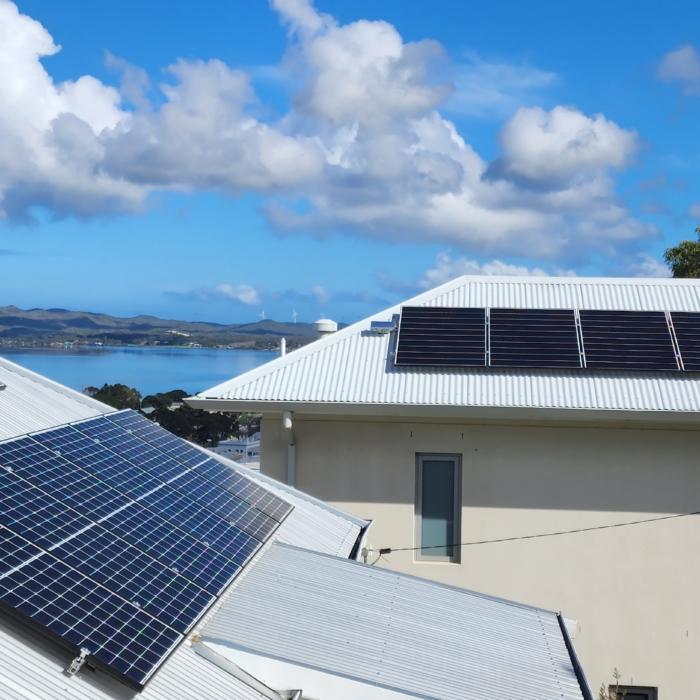
A 100 megawatt solar farm on 165 hectares of grazing land near Canberra will go ahead after a court ruled in its favour amid opposition from community members and the local council.
The appeal brought forth by Wallaroo locals Ben Faulks and Johnny Roso alleged that the solar farm would have an adverse impact on the “scenic quality, landscape character, and visual amenity” of the small town.
In their appeal against the project, Faulks and Roso also claimed the site was not suitable because it contravened the Yass Valley Council’s Settle Strategy 2036, which recommends a five kilometre buffer zone from the New South Wales-ACT border be maintained as productive rural land.
With approval, the project, which was green-lit by the New South Wales Independent Planning Commission in 2024, could be functional from 2026.
Arguments from Residents and Council
During the hearings from Sept. 1 to 4 last year, the court heard the Yass Valley Council agreed with concerns around the project conflicting with the Yass Valley Settlement Strategy, as well as concerns regarding harm to rural character, and the environmental risk posed by potential battery contamination.Faulks and Roso argued the development failed key visual amenity principles under local government guidelines, including that the site wasn’t chosen to specifically minimise its impact, that the topography was not adequately considered, and that proposed vegetation designed to provide “screening” would be “largely ineffective.”
They also argued it breached a five kilometre “buffer zone” rule for sprawl along the NSW-ACT border with the applicants arguing the solar farm would be inside the “bowl” of the zone with nearby residents living on the “lip.”
The Decision
Land and Environment Court Commissioner Susan O'Neill ultimately determined the solar farm was in the broader public interest, rebutting suggestions its placement was out of character for the town plan.O'Neill said the council’s planning was organised around intensive urban development and did not capture renewable projects.
“Renewable energy projects are of quite a different character to speculative development projects because renewable energy projects invariably have the necessary agreements substantially in place prior to the development application, such as a land use agreement with the landholder, an agreement with an investor, a power purchase agreement with an operator, and so on,” she said.
Resident to Keep Finding Avenues
Meanwhile, one applicant Faulks said he would continue to look into legal avenues to challenge the project.“It’s mainly inhabited by young families who have chosen that lifestyle and an industrial development of this nature is not aligned with this area,” he told AAP.
“There’s a lot of emotion wrapped up in it because that’s where people’s homes are, just the thought of trucks barrelling down a country lane while children are catching buses.”
Faulks called for clear government guidelines on such projects as well as consideration of the effect on communities.
The Epoch Times contacted Wallaroo Solar Farm parent company New Energy Development for comment.