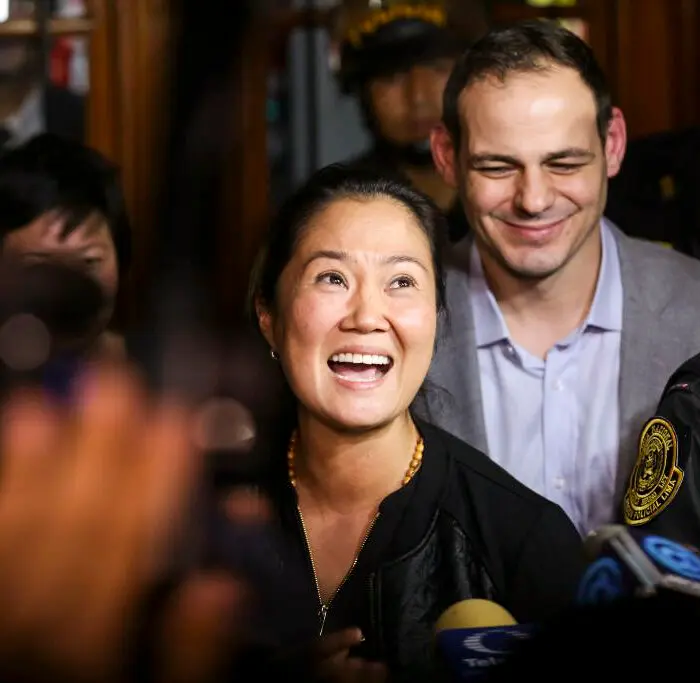
Keiko Fujimori finished first in Peru’s presidential runoff after electoral authorities completed the vote count on June 30.
Fujimori, a conservative, defeated leftist Congressman Roberto Sánchez on Tuesday by fewer than 50,000 votes when the country’s ONPE electoral authority finished tallying 100 percent of the vote. It was the latest victory by a conservative candidate in Latin American elections.
Fujimori, the daughter of former President Alberto Fujimori, faced Sánchez in an election dominated by the issues of crime, inequality, mining, and Peru’s deep urban-rural divide.
The final tally showed Fujimori with a lead of 50.135 percent to Sanchez’s 49.865 percent.
In a June 29 post on X, Fujimori said she would “await the national electoral jury’s announcement with great humility, prudence, and responsibility. We are getting closer and closer to embarking on a path of order and hope for all Peruvians.”
Sánchez said he will challenge the result by petitioning the Inter-American Commission on Human Rights. He has accused authorities of changing the electoral rules mid-game for overseas votes.
“We are convinced of the serious harm to the electoral process and to the intangibility of electoral regulations by changing the rules of the game in the second round in the elections conducted by consular offices,” Sánchez said in a June 30 post on X.
“We have the legal and legitimate right to appeal to this instance,” he added.
Sánchez ran on a left-wing reform platform to reform the mining sector, which accounts for nearly 12 percent of GDP in Peru, a major global supplier of copper, gold, and silver.
“Thirty years of mining and the mining towns are still the poorest in our country,” Sánchez told Reuters on June 5.
Keiko Fujimori’s father, Alberto Fujimori, was a Japanese Peruvian politician who served as president of Peru from 1990 to 2000.
Supporters credit him with crushing the Maoist Shining Path communist insurgency and stabilizing the country, while critics accuse him of authoritarian rule and human rights abuses.
He was convicted in 2009 and sentenced to 25 years in prison over human rights abuses, including responsibility for the death-squad murders of 25 people, as well as corruption-related charges.
He was not found to have personally ordered the 25 death-squad killings for which he was convicted, but he was deemed responsible because the crimes were committed in his government’s name.
He was released in 2023 after a pardon was reinstated, and he died the following year at the age of 86.
Keiko Fujimori is riding a conservative wave that is sweeping Latin America, with recent elections in Argentina, Chile, Ecuador, Costa Rica, and Colombia.
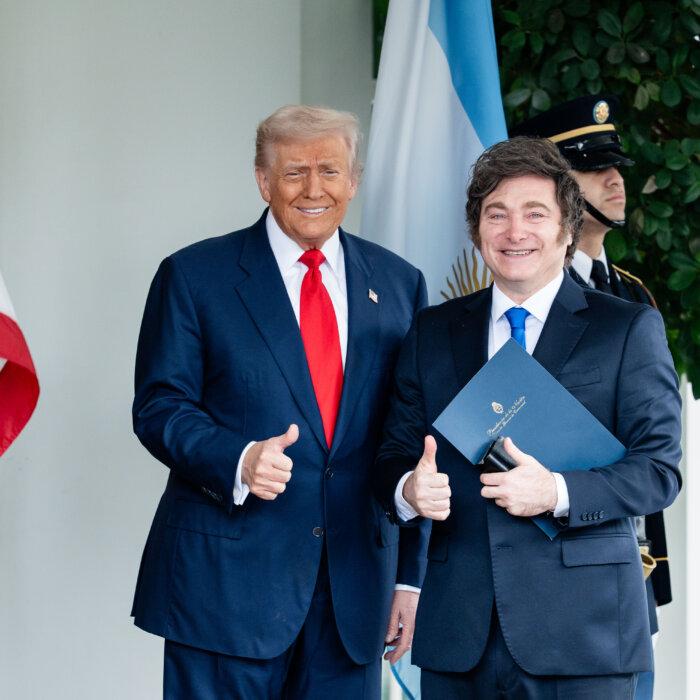
Argentina elected self-proclaimed anarcho-capitalist Javier Milei in 2023 on a chainsaw-wielding promise to slash the state and reduce astronomical inflation. Milei congratulated Fujimori on her win. “Peru escapes socialism,” he wrote in a June 30 post on X.
“The Peruvian people join Colombia and have sent a clear message: the region wants to return to the path of freedom and security,” he said.
“The Peruvians rejected the communist debacle proposed by Roberto Sánchez and told totalitarianism socialism never again. Freedom advances throughout Latin America and there is no turning back,” Milei added.
Chile elected conservative José Antonio Kast in 2025 against a communist candidate, in the same year that Bolivia’s election ended two decades of socialist dominance. Ecuador’s center-right President Daniel Noboa won reelection in April this year on a tough-on-crime platform.
In June, U.S. President Donald Trump endorsed conservative Colombian presidential candidate Abelardo de la Espriella, who beat leftist Sen. Ivan Cepeda Castro in a runoff election on June 22.
“The results of this election are very important to the future of Colombia and its relationship to the United States,” Trump wrote in a June 3 post on Truth Social.
Trump called Cepeda a “Radical Left Marxist.”
De la Espriella has promised to build 10 mega-prisons, drawing comparisons to Salvadoran President Nayib Bukele.
Under Bukele, El Salvador has rounded up alleged gang members, including those belonging to the notorious MS-13 (Mara Salvatrucha) gang, and put many of them in a 40,000-inmate mega-prison called the Terrorism Confinement Center.
Melanie Sun contributed to this report.