Parliament’s opening day has delivered bipartisan support for a bill expanding Defence Housing Australia’s remit to include foreign military personnel stationed under the AUKUS pact.
The legislation, first introduced in July, will allow U.S. and UK submarine crews and other allied officials to be housed alongside Australian Defence Force (ADF) members and their families.
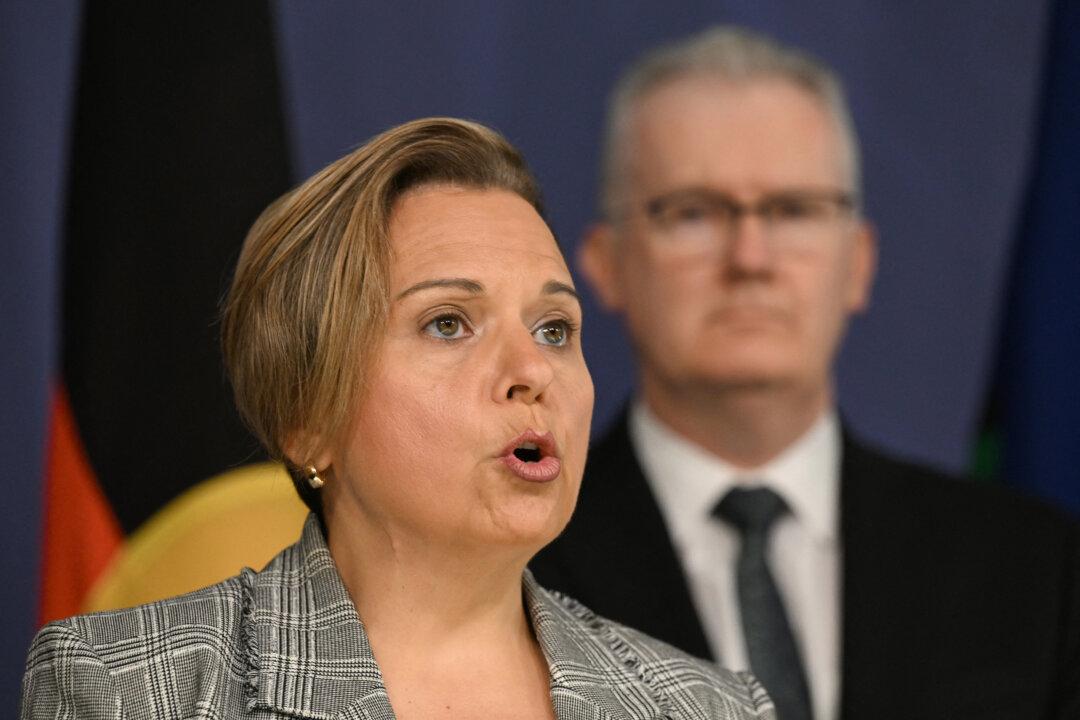
Speaking in the Senate, Shadow Minister for Defence Industry of Australia, Senator Jacinta Nampijinpa Price, confirmed the Coalition’s backing.
What Does the Bill Do?
Since its creation in 1987, Defence Housing Australia (DHA) has provided accommodation for ADF members, defence staff, contractors, and their families.The new bill significantly broadens that mandate, enabling DHA to also house members and families of foreign militaries, as well as officials and contractors.
In practical terms, the change paves the way for DHA to accommodate U.S. and UK submarine crews rotating through Australian bases as part of the AUKUS agreement.
Security Risks Highlighted
While endorsing the bill, Price raised concerns about the security implications of giving a wider range of individuals access to defence facilities. She noted warnings from the director-general of security that Australia’s defence sector is a top target for foreign intelligence.“Under this bill, more people will be able to access our defence facilities, and with more access comes more risk,” Price said.
Housing, Jobs, and Industry Benefits
Labor Senator Raff Ciccone, chair of the Senate Foreign Affairs, Defence and Trade Committee, argued the bill would provide practical benefits for both the defence sector and the wider economy.“The U.S. and UK personnel will also be working alongside our ADF men and women, so it is imperative that we support them properly.”
He added that utilising DHA will ensure that housing meets defence standards, and that overseas personnel aren’t competing with the local housing market.
He also highlighted the broader economic gains of AUKUS, estimating the partnership will create 20,000 direct jobs across Australia.
‘Public Housing for US Troops’: Greens
The Greens have vowed to oppose the legislation, with Senator David Shoebridge calling it a misuse of public funds.He said it was “utterly astounding” that the Albanese government’s first public housing bill in more than three years was directed at U.S. personnel rather than Australians.
The bill should have been referred to an inquiry, Shoebridge argued, adding that “the Australian public might have an interest in whether or not it was a sensible use of public money.”
He criticised the government for providing no costings or clear funding source.
China and Regional Threats
Price also framed the debate within the broader strategic environment, warning that the Chinese Communist Party’s (CCP) rapid military build-up demanded stronger deterrence.She cited CCP leader Xi Jinping’s stated aim of reunifying Taiwan—by force if necessary—as evidence of Beijing’s ambitions.
“There has been a noticeable reluctance to call out the Chinese Communist Party’s hostility,” Price said, accusing the Albanese government of downplaying threats.
“It’s not fearmongering to point out irrefutable facts.”
She criticised Albanese’s recent visit to China, accusing him of drawing a “false equivalence” between Chinese naval drills in the Tasman Sea and Australian operations in the South China Sea.
In February 2025, China’s navy held live-fire drills in the Tasman Sea, disrupting Australia–New Zealand flights after giving little advance notice.
Price warned that such framing risked misleading Australians and undermining support for stronger defence measures.
She further urged the government to prioritise alliance management, urging Albanese to secure a meeting with U.S. President Donald Trump.
“[Albanese] must put his personal qualms about the president to one side, just as past presidents and prime ministers have done, he must act in our national interest and re-energise the alliance,” she said.
In June, Trump cancelled a planned meeting with Albanese at the G7 summit in Canada, citing an emergency linked to the Israel-Iran conflict.