This copy is for your personal, non-commercial use only. Distribution and use of this material are governed by our Subscriber Agreement and by copyright law. For non-personal use or to order multiple copies, please contact The Epoch Times Reprints.
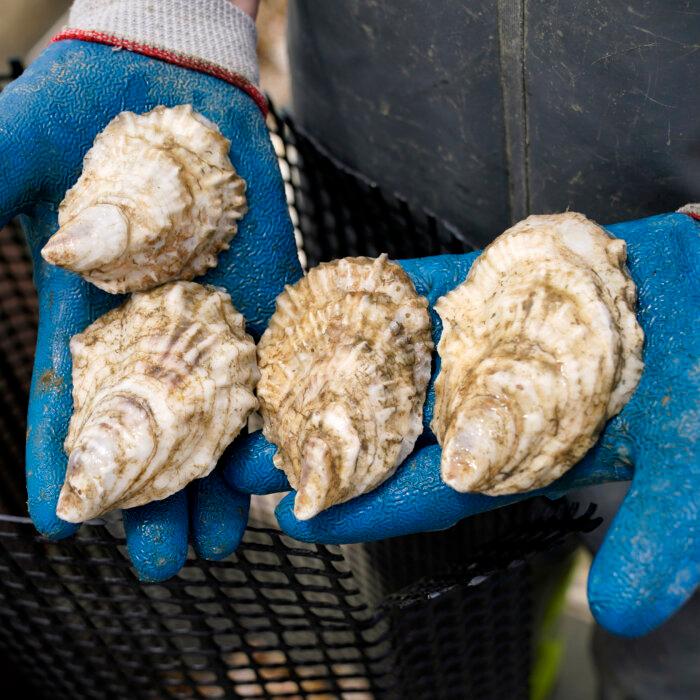
Canada’s food inspection agency has detected the first confirmed cases of the aquatic animal disease dermo in oyster samples collected in Quebec and Prince Edward Island.
Oyster samples taken in Egmont Bay, P.E.I., were found to have dermo, also known as perkinsosis, says a July 4 statement from the Canadian Food Inspection Agency (CFIA). This is the first confirmed case in the province.
“Dermo does not pose a risk to human health or food safety, but it can cause increased oyster mortality and decreased growth rates,” the federal agency said.
Dermo is a “serious” disease in both cultured and wild oysters that is caused by the parasite Perkinsus marinus. The disease usually infects oysters between the ages of 1 and 3, and can kill the oysters, with mortality rates typically varying from 50 percent to 70 percent, according to a CFIA fact sheet on dermo.
Additionally, the CFIA confirmed dermo and another aquatic animal disease, multinucleate sphere unknown (MSX), in oyster samples collected in Chaleur Bay, Quebec, which are the first confirmed cases in that province, according to a separate July 4 statement.
MSX causes “significant mortality” in both juvenile and adult oysters. Those over the age of 2 are more affected, while juvenile oysters can be infected with MSX spores. The disease is caused by the parasite Haplosporidium nelsoni, and mortality rates can reach from 90 percent to 95 percent, a CFIA fact sheet on MSX says.
Similar to dermo, MSX does not pose a risk to human health and is not a food safety concern, the federal agency says. The CFIA says the testing conducted for these diseases is not for food safety purposes.
One month prior, the CFIA had confirmed the first verified case of dermo in Newfoundland and Labrador in oyster samples collected in Notre Dame Bay, a June 5 statement says.
The CFIA says it is working together with Fisheries and Oceans Canada (DFO), the provinces, and partners to monitor the dermo and MSX situation, manage the diseases, and gain insights into the presence of the diseases in the regions. The agency says this joint effort is part of the federal government’s One Health approach to managing animal diseases.
The response measures will include applying movement controls to oysters in the specified areas and further investigating the potential source of the diseases, the agency says. Additionally, the CFIA says the partnership will engage with scientists, producers, and harvesters to continue to monitor mollusc health, and that the agency will ensure detection and movement control information is available to producers.
Dermo and MSX do not affect other bivalve molluscs in the region, such as mussels, scallops, and clams, the CFIA says. However, dermo can be passed from oyster to oyster or from water that has been contaminated with the parasite.
First Cases in Canada
The first confirmed case of dermo in Canada was found last year in oyster samples collected in Spence Cove, New Brunswick, the CFIA said in a statement on Nov. 21, 2024. The agency also found the first confirmed case of MSX in New Brunswick in the same oyster sample.
Less than a week later, the first confirmed case of dermo in the province of Nova Scotia was found in oyster samples collected in Merigomish, the CFIA said in a statement on Nov. 27, 2024. This was the second confirmed case in Canada.
MSX was first detected in a sample of wild oysters in Bedeque Bay, P.E.I., according to a CFIA statement on July 13, 2024. Less than two weeks later, the federal agency confirmed cases of the disease in additional locations on P.E.I., including areas between Lennox Island and Freeland, a July 24, 2024, statement says.
The CFIA says a primary control zone (PCZ) was declared for the Bedeque Bay area on July 20, 2024, in order to limit the spread of MSX. The agency describes a PCZ as “a defined area where the disease was reported or confirmed, and is declared using authorities contained in the Health of Animals Act.”
“The movement of any designated animals (in this case, bivalves), things (such as boats and equipment), and marine plants that have been in contact with oysters and may be capable of spreading disease can only be moved into, out of, within and through a PCZ with a permit issued by the CFIA,” the statement says.
Three more PCZs were established on July 23, 2024, where MSX had been confirmed, which included an area in Boughton River, an area in Southwest River/New London Bay, and an area between Lennox Island and Black Banks.
The CFIA said ongoing collection, sampling, and testing of oysters from other bodies of water in P.E.I. were being carried out.