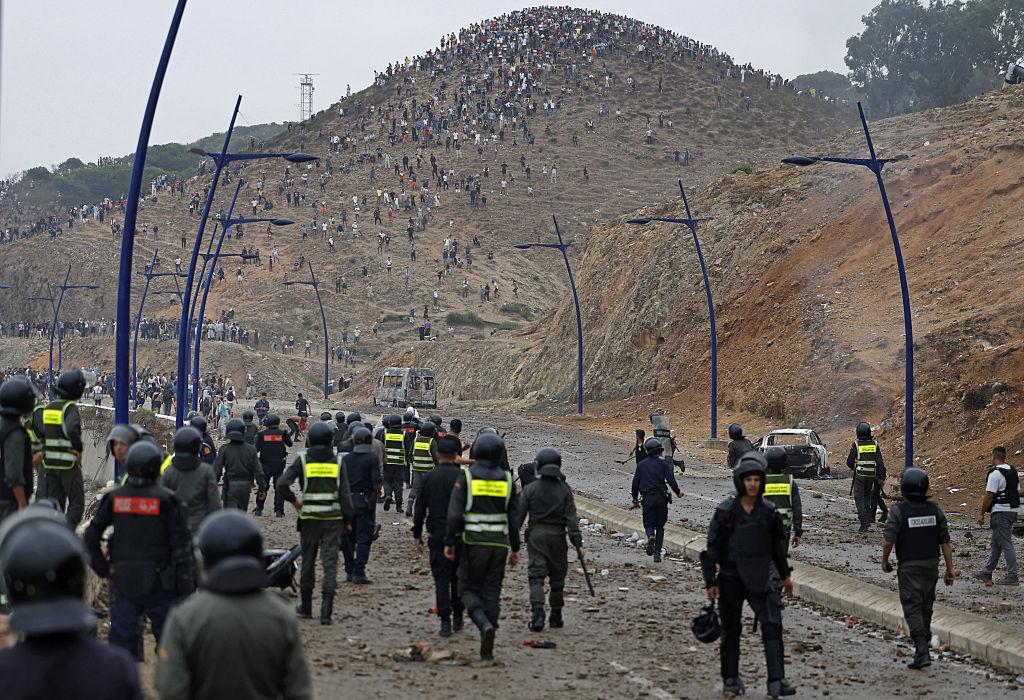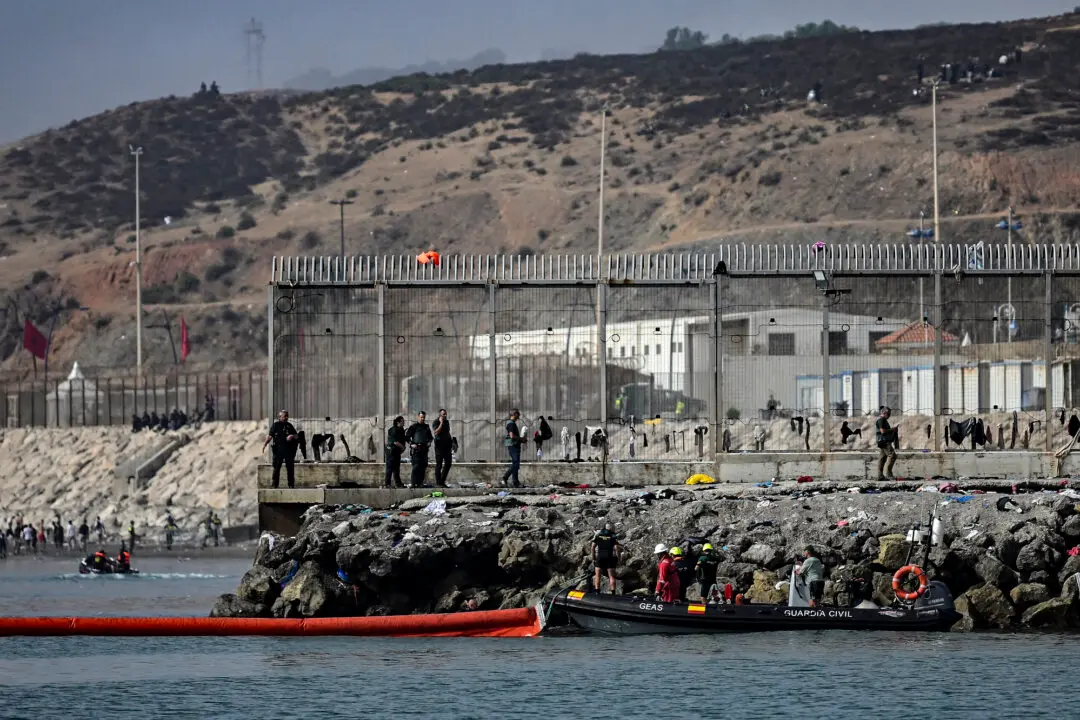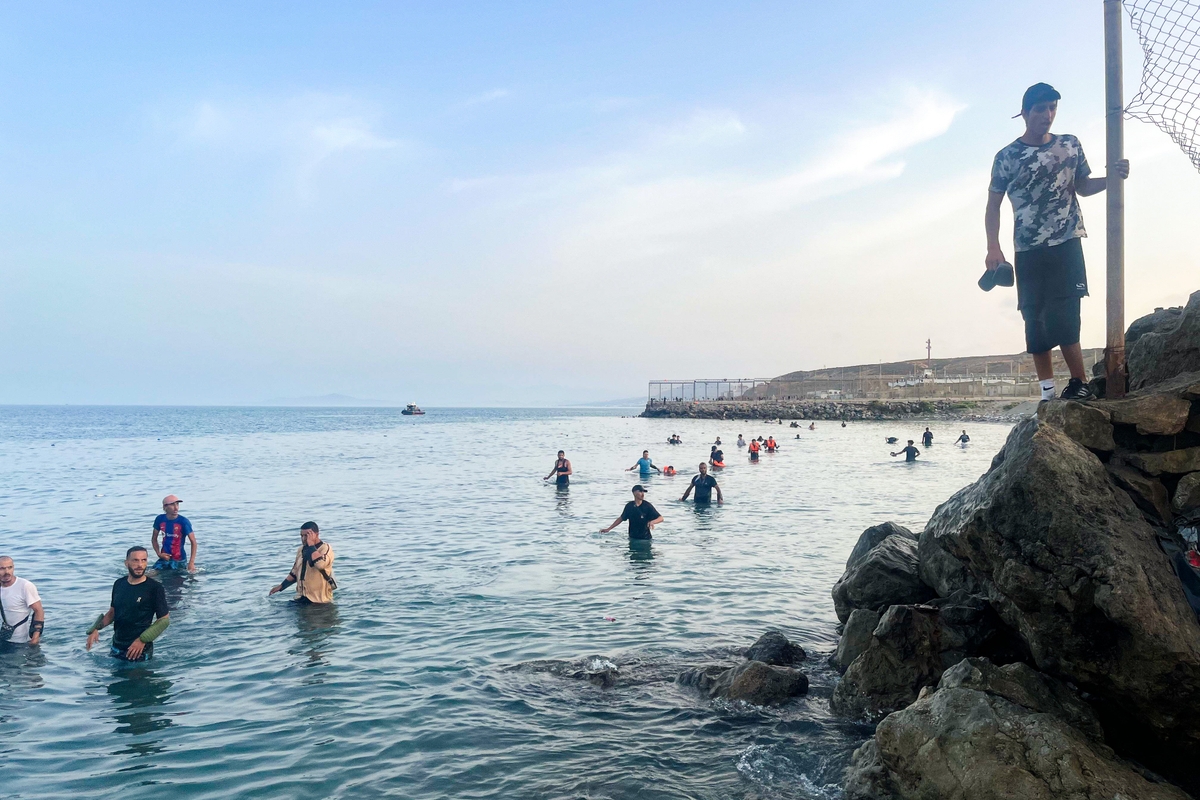

The death toll from last week’s mass influx of illegal immigrants into the Spanish exclave of Ceuta rose to at least 72 on Sunday after authorities said five more bodies were found washed ashore.
A Spanish government representative in Ceuta, Miguel Ángel Pérez, who provided the update on the number of fatalities in remarks to reporters on Aug. 2, said that more than 1,000 people had received medical treatment during the crisis.
The situation has improved substantially, Pérez said, while cautioning that more work remained before the North African exclave could return to normal.
Spanish authorities said some migrants drowned while attempting to swim into the territory, while others were crushed during chaotic attempts to climb a breakwater and border fence.
The latest Spanish toll was significantly higher than figures released Sunday by Morocco’s Interior Ministry, which said 11 people had died—mostly by drowning while trying to reach Spanish territory—and that it was still verifying reports of additional deaths on the Spanish side.
The unprecedented surge began on July 30, when more than 50,000 people crossed into Ceuta by land and sea, according to Spanish authorities. Ceuta, together with Melilla, forms the European Union’s only land borders with Africa.
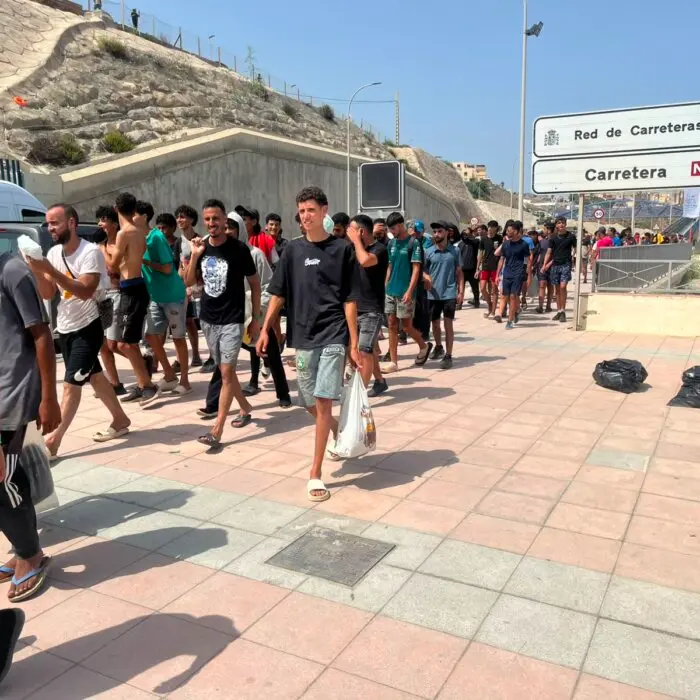
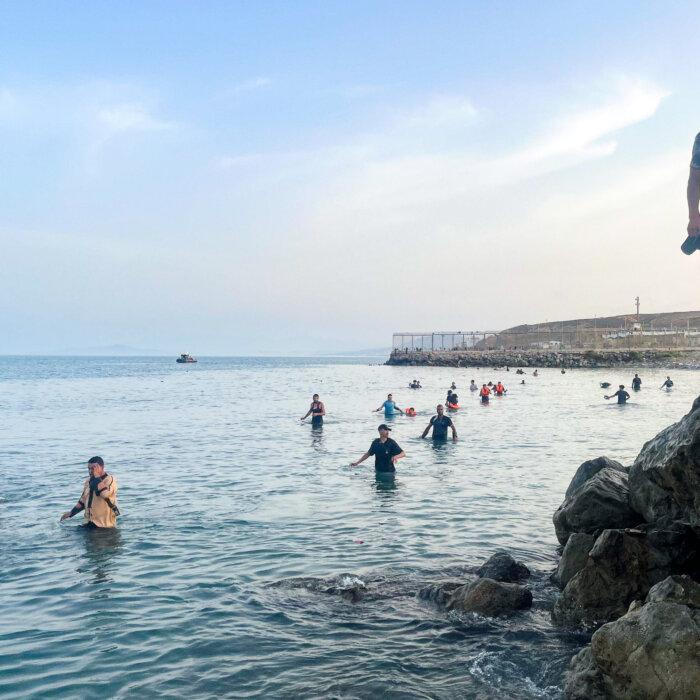
Ceuta’s regional government has put the total number of illegal entrants at nearly 60,000, equivalent to roughly three-quarters of the city’s population of about 83,000.
Members of the Spanish military deployed to the exclave told The Epoch Times that managing the crisis was “extremely challenging,” but said they had seen growing numbers of migrants voluntarily returning to Morocco in an orderly fashion.
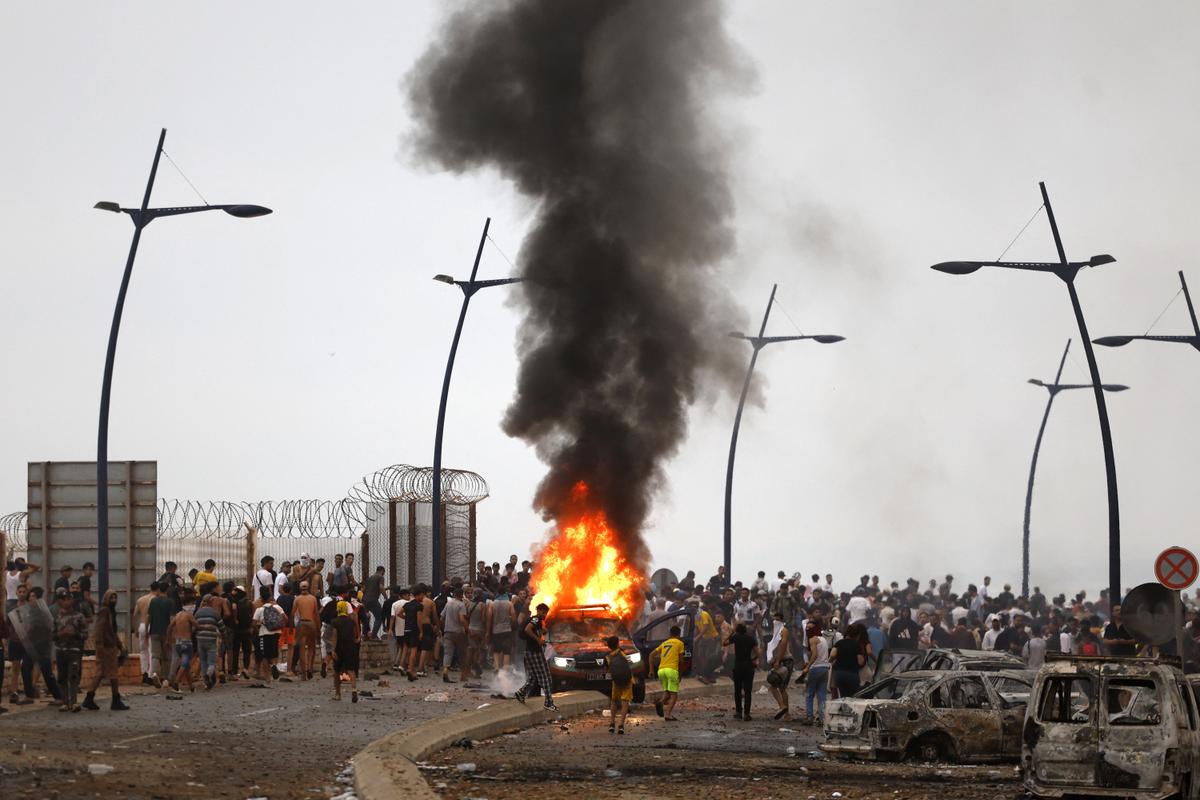
A member of Spain’s military told The Epoch Times that the Civil Guard was maintaining constant surveillance to prevent new crossings and reduce the risk of additional drownings.
One of the migrants, a 21-year-old man who gave only his first name, Mohammed, told The Epoch Times that it took him less than half an hour to swim to Ceuta.
Several border-crossers told The Epoch Times that they had entered Ceuta in hopes of finding better economic prospects in Europe. Mohammed said he planned to continue on to the Spanish mainland and then head to France to become an MMA fighter.
Immigration Debate Intensifies
Morocco’s Interior Ministry blamed the mass movement on social media misinformation, human trafficking networks, and what it described as widespread misinterpretation of a recent Spanish court ruling limiting the immediate return of migrants intercepted at sea.
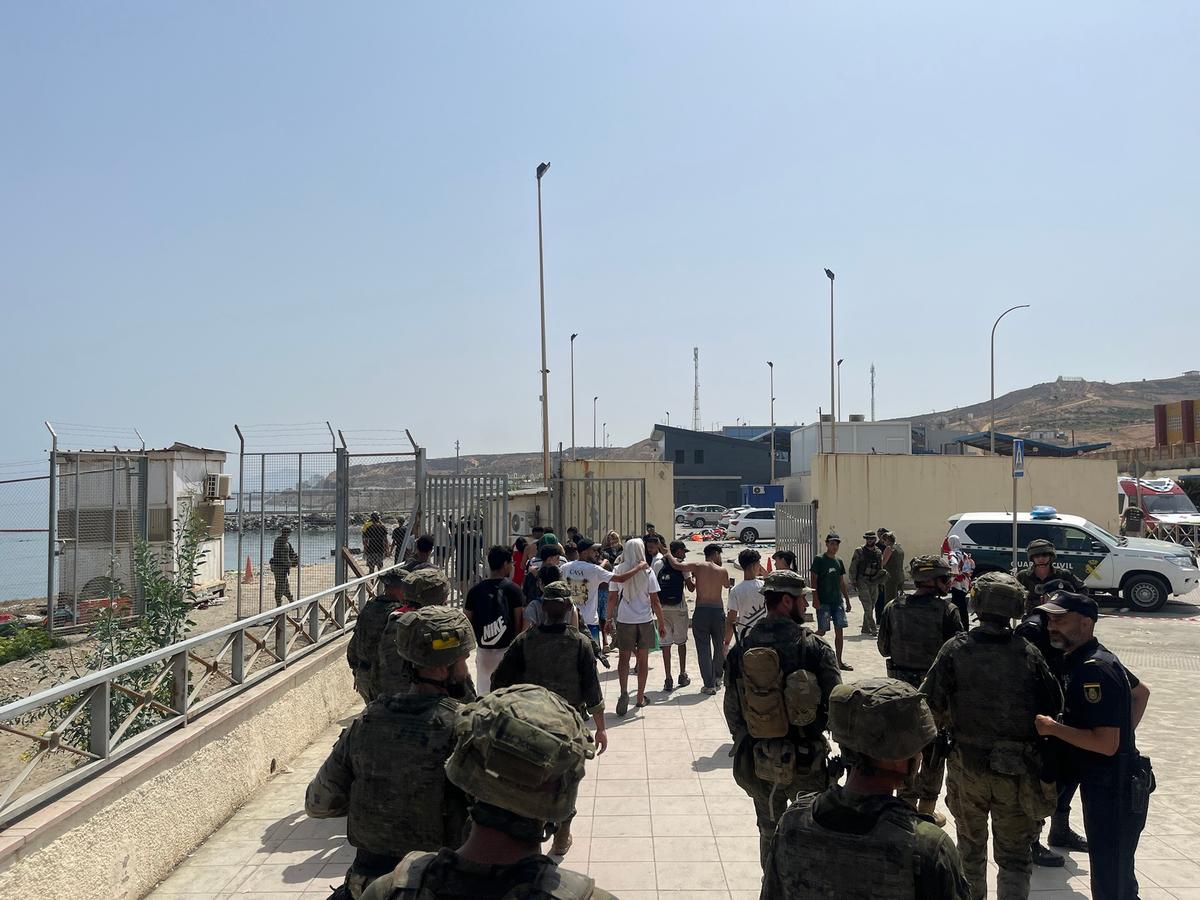
The government said applicants under the program must prove they were already living in Spain before Jan. 1 and had remained continuously in the country for at least five months, meaning those arriving during the Ceuta crisis would not qualify.
Juan Sergio Redondo, president of the conservative political party Vox Ceuta, disputed government claims that the crisis had largely passed, arguing many migrants remained in the city.
“The migrant crisis here has not been solved,” Redondo told The Epoch Times, accusing Sánchez’s government of failing to reinforce the border despite repeated warnings.
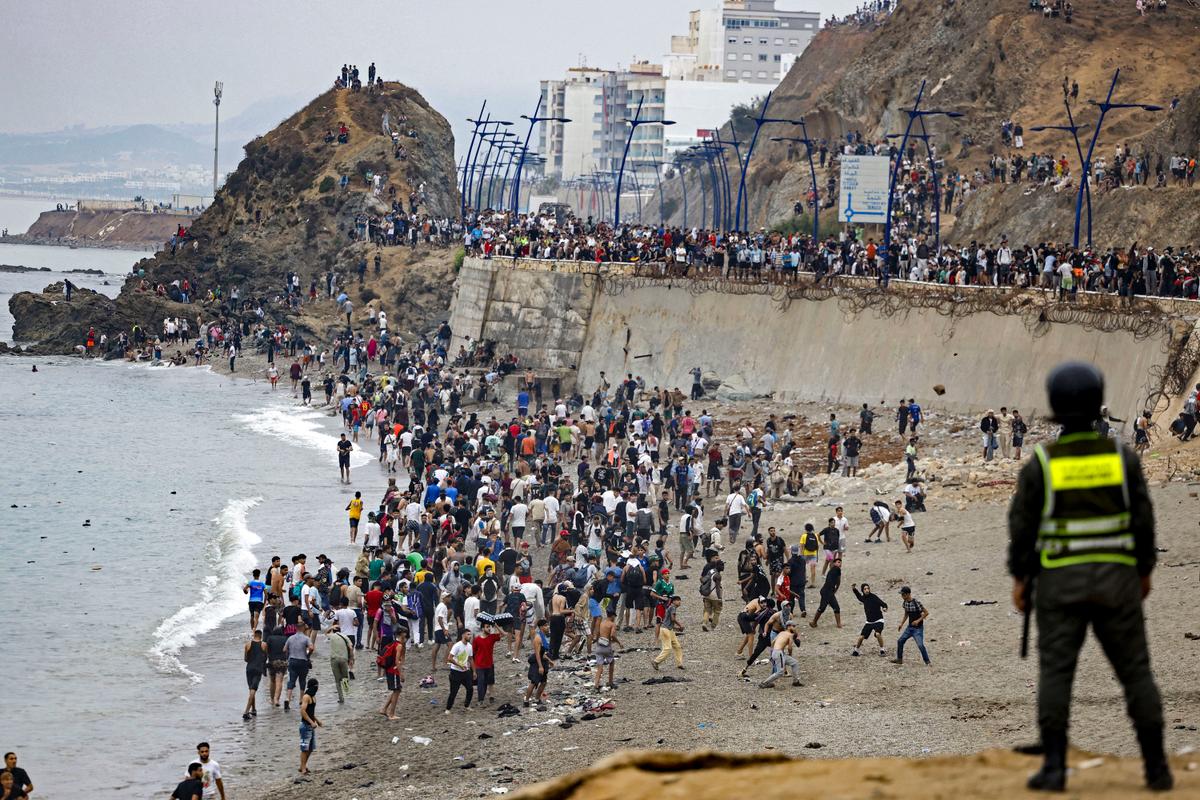
“My political group, Vox, has asked countless times for the border to be reinforced, for the breakwaters to be extended, and for real containment barriers to be installed,” he said. “The formula for stopping this is well known, yet they have done absolutely nothing.”
The events in Ceuta also drew attention overseas, with U.S. President Donald Trump describing the migrant surge as an “invasion of a country.”
“I watched the catastrophe that took place,” Trump said at a July 31 Cabinet meeting in Washington. “That same thing’s going to happen to us if the Republicans don’t get elected, except worse.”
Trump said the surge reflected “weak law, bad management,” and “very liberal” legislation, adding that illegal border-crossers had been encouraged by recent changes in Spanish immigration policy.