Prime Minister Mark Carney provided insight into his relationship with U.S. President Donald Trump and the status of trade negotiations between the two nations during year-end interviews with several media outlets.
Carney’s interviews with the media touched on several 2025 developments, such as the United States imposing a series of tariffs on Canada, Conservative MPs crossing the floor to join the Liberal Party, and the resignation of former Environment Minister Steven Guilbeault from cabinet. The prime minister also talked about what could be in store for 2026.
Carney told TVA he believes Trump wants to see Canada in a state of dependence on the United States. “And me, I never accept dependency,” he said during the Dec. 17 interview.
The prime minister said Trump is “very friendly” in private, asks many questions, and tells “jokes... all the time.”
He was asked whether Trump brings up the idea of Canada becoming the 51st state, but Carney said he doesn’t “allow discussions on that.”
“That’s not a joke,” he added.
Carney also discussed trade talks with the United States coming to an end on Oct. 23 after Ontario ran an anti-tariff ad on American networks. He told Radio-Canada in a Dec. 16 interview it was “absolutely clear” that it was the reason Trump cancelled the negotiations.
“There was almost a deal. We needed to get signatures, but it was almost there,” Carney said. “The president changed his attitude at that moment.”
Carney said it was “possible” these trade talks could pick up again, but added that it’s almost time to start the review of the United States-Mexico-Canada Agreement (USMCA).
“I think the [USMCA] will change, but it’s not necessarily in danger. But it will change, like all the other trade deals and relations involving the Americans,” he said in French.
Carney also touched on his meeting with Trump and Mexican President Claudia Sheinbaum in Washington on the sidelines of the FIFA World Cup draw earlier this month. He said discussions between the three leaders revolved around the upcoming USMCA review, adding that there was no sign Trump intends to tear the agreement up.
Carney told CBC News the sectoral tariffs on steel, aluminum, and vehicles will “necessarily be part of the negotiation.” The White House will need to make a “choice” about whether it gains benefits from the free movement of items like steel, lumber, and automobiles across the Canada-U.S. border, Carney added during his Dec. 17 interview with the outlet.
Floor-Crossers, Snap Election
Carney told Radio-Canada he was not interested in calling a snap election in the new year to try for a majority. The Liberals are now one seat shy of a majority government after two Tory MPs crossed the floor in recent weeks to join their ranks. The party’s seat count now sits at 171.When asked whether he wants to ask Canadians for a stronger mandate by going into an election, Carney said, “I don’t want to.” He added that he wants Parliament to “function” and that he does not believe Canadians want to see another election so soon after the last one.
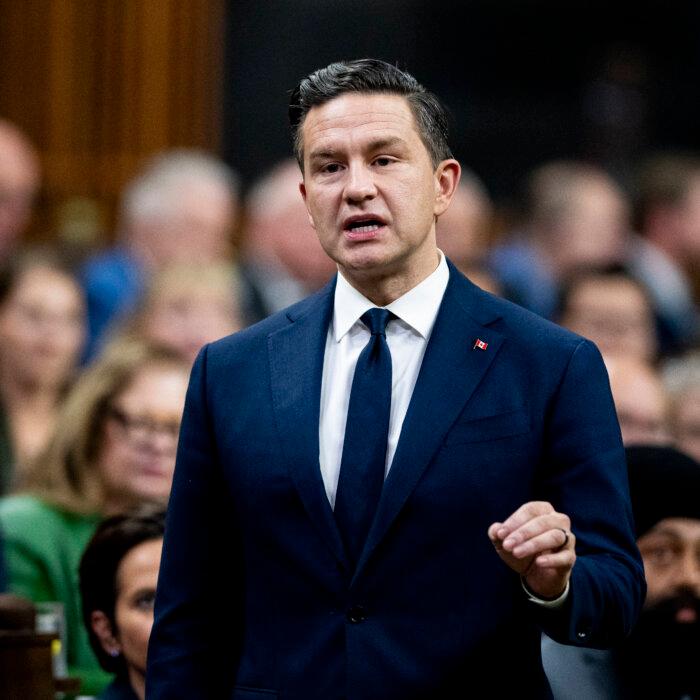
CBC News asked Carney about Conservative Leader Pierre Poilievre’s recent comments that the prime minister should obtain a majority government through an election, and not through “dirty backroom deals.”
Carney said his government needs enough votes in the House of Commons to pass legislation, and that MPs and premiers are “attracted to what we’re doing.”
Carney rejected the assertion that he was “courting” MPs to join his party in a separate interview with Global News, saying that they are simply “attracted by what we are doing.”
Poilievre has accused Carney of attempting to “manufacture a majority” by getting MPs from other parties to join the Liberals.
Rumours About Ambassador Appointment
Carney was also asked about rumours that he will appoint his friend and former BlackRock manager Mark Wiseman as the next Canadian ambassador in Washington. Carney said it’s “not official, but it’s a possibility, yes.”Wiseman is a member of Carney’s Canada-U.S. relations advisory council, and was formerly a chief executive of the Canada Pension Plan Investment Board.
Wiseman is also the co-founder of the Century Initiative, which aims to increase Canada’s population to 100 million by 2100 through immigration. The Carney government said in its Budget 2025 it was “taking back control” of the immigration system after population growth via immigration in recent years strained housing and social services.
The prime minister was asked about Wiseman’s views on Canada’s supply management system, but Carney said he’s the one in charge “who decides.”
Guilbeault’s Resignation
Carney was asked by TVA about Steven Guilbeault resigning from his cabinet role as culture minister on Nov. 27. The former environment minister’s announcement came hours after Carney and Alberta Premier Danielle Smith signed a memorandum of understanding that could pave the way for the building of a new oil pipeline to the B.C. coast.“We have our differences, but Mr. Guilbeault and I—along with other members of the Liberal Party at the federal level—share the same values when it comes to the environment and Canada’s prosperity,” Carney told TVA.
Carney said the differences pertain to Guilbeault favouring regulations containing bans, whereas he favours “actions and investments.”
Carney also said Guilbeault can “absolutely” remain in the Liberal caucus, even though he has been very vocal in criticizing the Ottawa-Alberta deal on energy, and has done media interviews criticizing the Carney government’s policies on net-zero emissions issues.
“I respect Mr. Guilbeault. He has done a lot for Canada and the party,” Carney said, adding that the policies that were put in place by the Trudeau government have not worked well to reduce greenhouse gas emissions.
“The results are not good, it’s not enough, we have to change policies,” Carney said.
On the same theme, Carney told Radio-Canada earlier this week that it’s “clear” Canada will miss its targets for emissions reduction in 2030 and 2035 with current policies.
The Conservatives have said that instead of the government helping select projects chosen by the government to fast-track through the regulatory process, such as the deal with Alberta on a potential West Coast oil pipeline, regulations like the Impact Assessment Act and the industrial carbon tax should be removed to allow a level playing field across the industry and to attract investment.