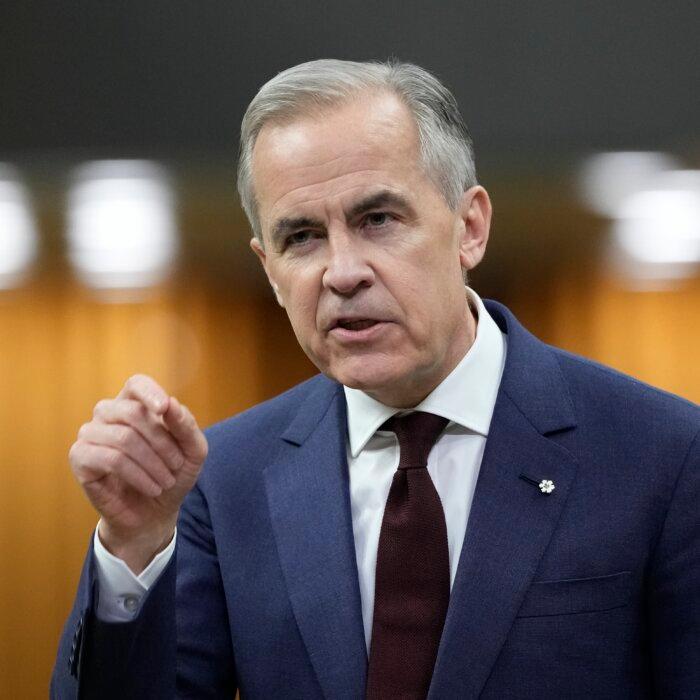
On at least 17 occasions, Prime Minister Mark Carney had to be kept out of government discussions and decisions due to potential conflicts of interest.
The information was disclosed in letters provided by the Privy Council Office (PCO) to the House of Commons ethics committee.
PCO has been giving quarterly updates to the ethics committee on situations where the screen has been applied since it was established. The letters have been obtained by The Epoch Times.
In the latest letter, dated May 15, PCO Deputy Secretary to the Cabinet Mala Khanna told the ethics committee clerk that Carney’s screen has been applied in 17 situations.
Details of some of the circumstances have not been provided, as the issues aren’t in the public domain.

“The Conflict of Interest and Ethics Commissioner has been clear that the Prime Minister should not learn when his Screen has been applied until a decision has been finalized and made public,” says the letter.
The situations disclosed involve changes to tax measures or insurance rules that could affect companies subject to the screen.
Asked by reporters on June 26 to comment on the application of the screen, Carney called the process “robust.”
“We have several things in this government: one is robust conflicts of interest and ethics screens, which we follow, and I follow, and I respect that process fully,” he said.
17 Instances
At the request of the ethics committee, PCO started providing information on situations where the screen was triggered in November 2025. This followed Clerk of the Privy Council Michael Sabia’s appearance before the committee where he committed to provide information on a regular basis.The prime minister’s screen is managed by Sabia and Carney’s chief of staff, Marc-André Blanchard.
Sabia told MPs there is no requirement in the Conflict of Interest Act to provide such information but said it could help improve public confidence.
The first situation where Carney’s screen was applied involved technical amendments to the Income Tax Act that were included in Budget 2025. The changes involved rules on cross-border payments and trusts.
PCO says the screen was applied because a company covered by the screen had direct engagement with the Trudeau government on the matter.
A second situation involved a measure considered during the budget process that would have affected the depreciation and taxable income of some developers and property owners. The measure could have disproportionately impacted or benefitted companies subject to the screen. The measure was ultimately not adopted.
In a February letter to the ethics committee, PCO noted the application of the screen in relation to other Budget 2025 measures on housing, such as increasing the total amount that the Canada Mortgage and Housing Corporation (CMHC) can provide for mortgage-backed securities.
Another situation involves the minister of finance providing CMHC up to $3.1 million out of the Consolidated Revenue Fund to help the housing agency with its multi-unit mortgage loan insurance business.
In both cases, the screen was applied because of the “possibility of a disproportionate benefit/impact to Companies subject to the Screen,” said PCO.
The May letter from PCO to the ethics committee discloses other measures on housing that triggered Carney’s ethics screen, again in relation to changes to mortgage insurance rules.
Brookfield owns Westinghouse, a major nuclear energy company that competes against Canada’s CANDU reactors.
The Epoch Times contacted PCO for comment but didn’t hear back by publication time.
Conservatives have raised concerns that Carney could enrich himself by way of his decisions given the size of the portfolio placed in the blind trust.
Tories have also noted that Sabia himself sold his shares in Brookfield in order to manage Carney’s ethics screen.