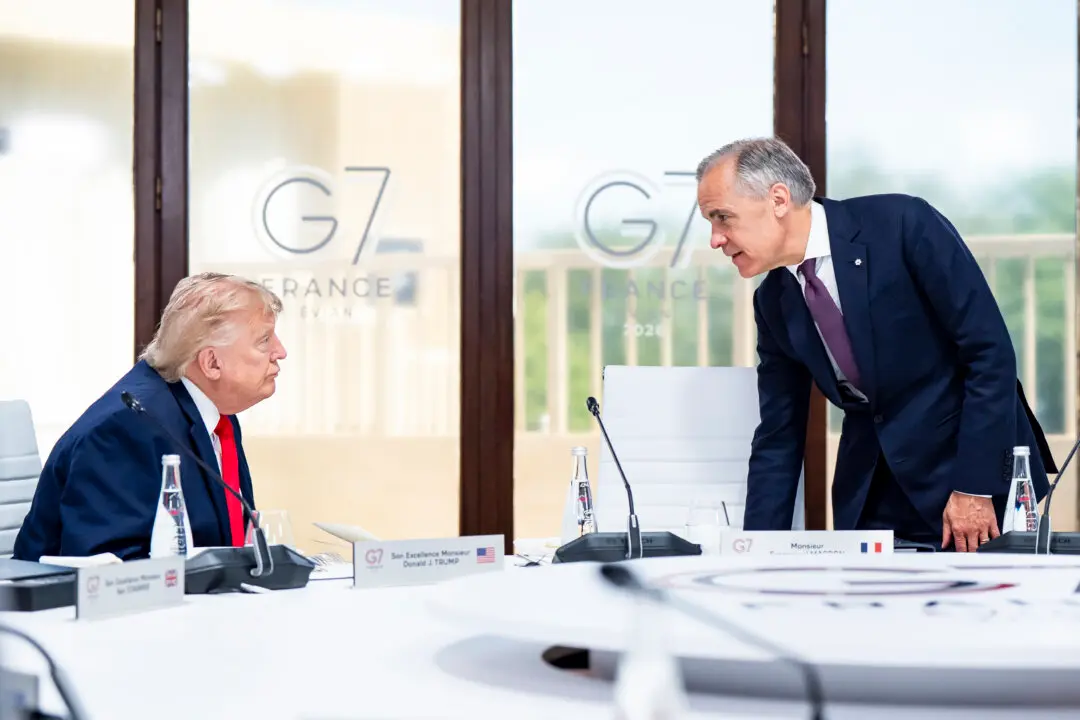
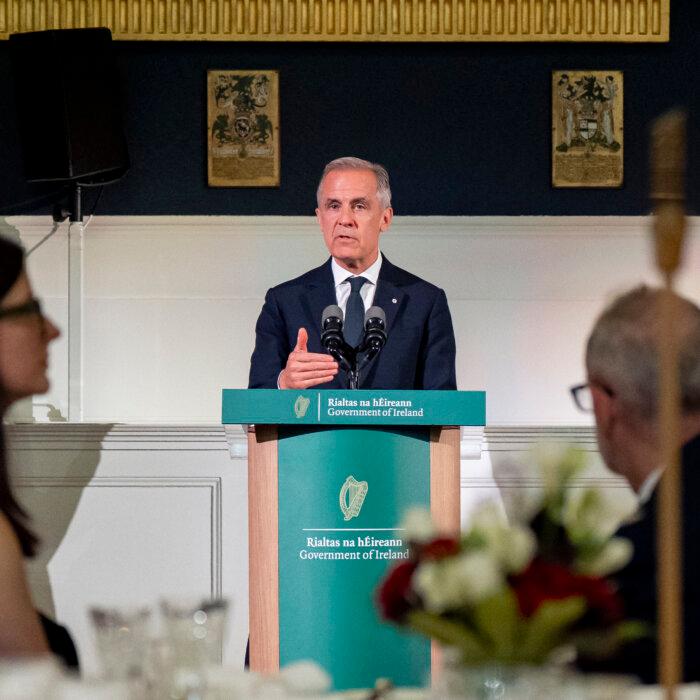
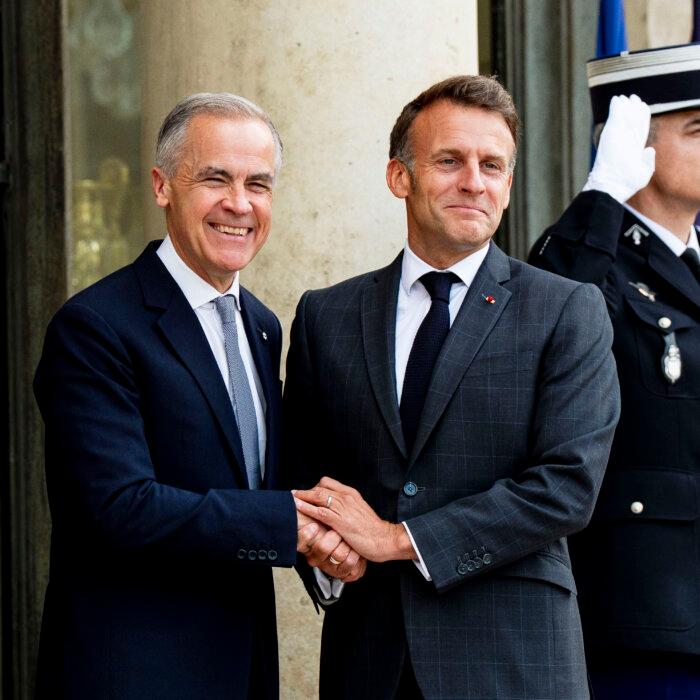
Prime Minister Mark Carney says no single country or institution can provide all the answers in a changing world order, while speaking to reporters in Ireland ahead of the G7 Summit in France.
Carney framed the “new world order” as one shaped by countries choosing what they are willing to support and build together.
“You have to know what you want, what you need, how to serve your citizens, and then go out and get it.”
He noted that the upcoming summit will include countries other than the main G7 nations, such as Brazil, India, Egypt, and Gulf states. He said this will bring a “broader perspective and a broader element of the solution.”
“It’s a recognition that the G7, if it ever did run the world, no longer runs the world or pretends to,” Carney said.
His June 14 remarks came in response to a question about where the United States fits into the “new world order” that Carney has spoken about.
“We will take steps. Not everyone around that table will,” he said. “In some of those circumstances, the United States will be foursquare behind, and in many cases lead, but not all.”
Carney has previously described recent global developments as part of a shifting international order. During his visit to China in January, Carney said Ottawa’s new “strategic partnership” with Beijing “sets us up well for the new world order.”
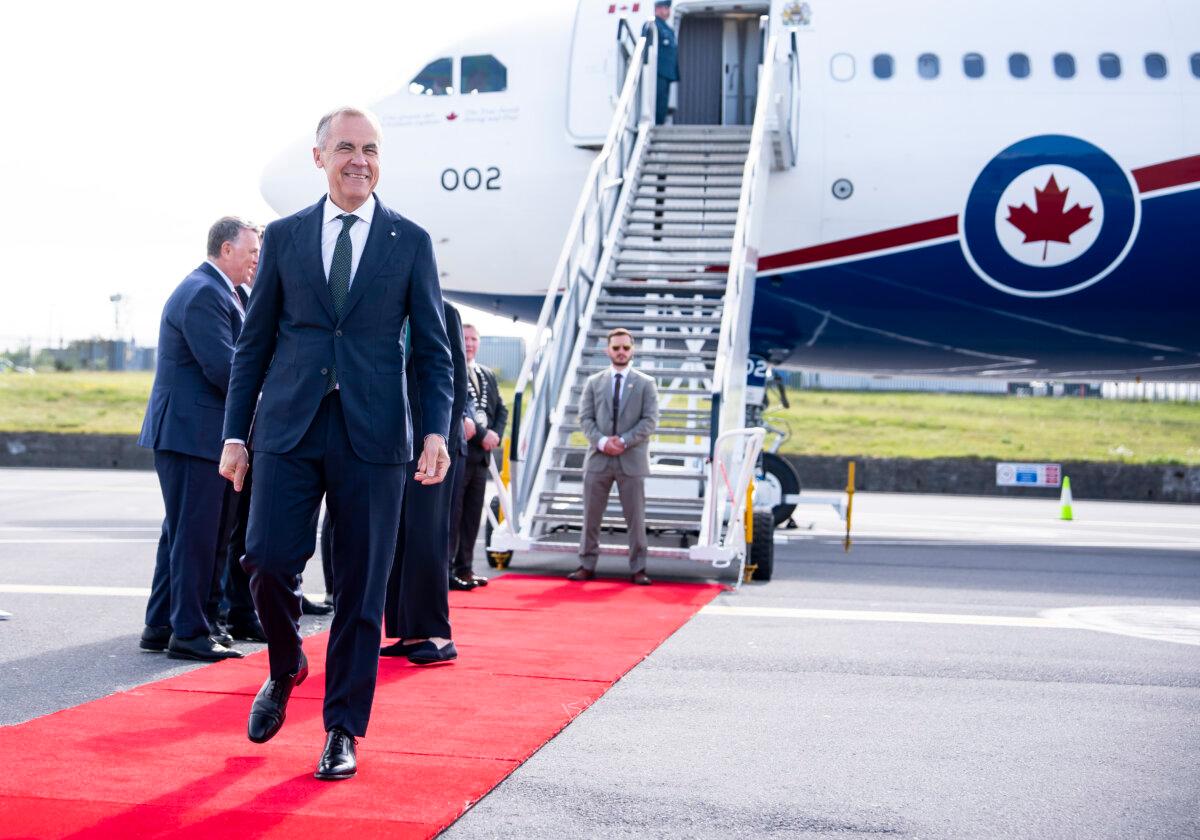
Ireland Visit
On June 14, Carney visited County Mayo, where his grandparents were from before immigrating to Canada in the early 1920s.He also attended and delivered remarks at a civic reception hosted by Mayo County Council, where he spoke about his heritage and Canada’s ties to Ireland.
Carney had also received a plaque from the deputy commissioner of the national police and security service of the Republic of Ireland before he left Dublin for County Mayo on the morning of June 14. His grandfather was one of the first men to join the force when it was established in 1922.
The trade deal provisionally entered into force in 2017 but has not yet been ratified by all EU member states, including Ireland.
Carney’s visit to Ireland came ahead of Ireland assuming the six-month rotating presidency of the European Union.
The Conservatives criticized Carney’s Ireland trip, saying Canada “already has trade with Ireland.”
“Making expensive trips to sign fake agreements and advance another country’s trade with other countries does not help the steel, aluminum, forestry and autoworkers who are losing their jobs in Canada right now,” a spokesperson for Conservative Leader Pierre Poilievre’s office said.
Carney justified his Ireland visit to reporters on June 14, saying the trade deal with Ireland does not have full ratification and he sees “significant opportunity” with Ireland and the EU more broadly.
The prime minister is set to attend the 2026 G7 Leaders’ Summit in Évian, France, from June 15 to June 17.