Prime Minister Mark Carney says Ottawa will announce the second set of projects recommended for approval under the Major Projects Office (MPO) this week.
Carney told reporters in New Brunswick on Nov. 10 that the province, which did not have any projects approved under the first announcement of five projects in September, is “very much part of this.”
“It’s not one round of projects, and then we move forward with those. This is a living list,” Carney said, noting that the next round of projects will be made public on Nov. 13.
Ottawa has also unveiled the Wind West Atlantic Energy “strategy,” aimed at harnessing wind power in Nova Scotia and linking it to eastern and Atlantic Canada. The government indicated that this initiative may include interconnections between New Brunswick and Nova Scotia, transmission cables between Prince Edward Island and New Brunswick, and further development of Churchill Falls and Gull Island in Quebec and Newfoundland and Labrador.
The two provinces have entered into a Memorandum of Understanding (MOU) to expand and upgrade the Churchill Falls facility and build a new, large-scale power plant at Gull Island, a project that will be carried out by Hydro-Quebec.
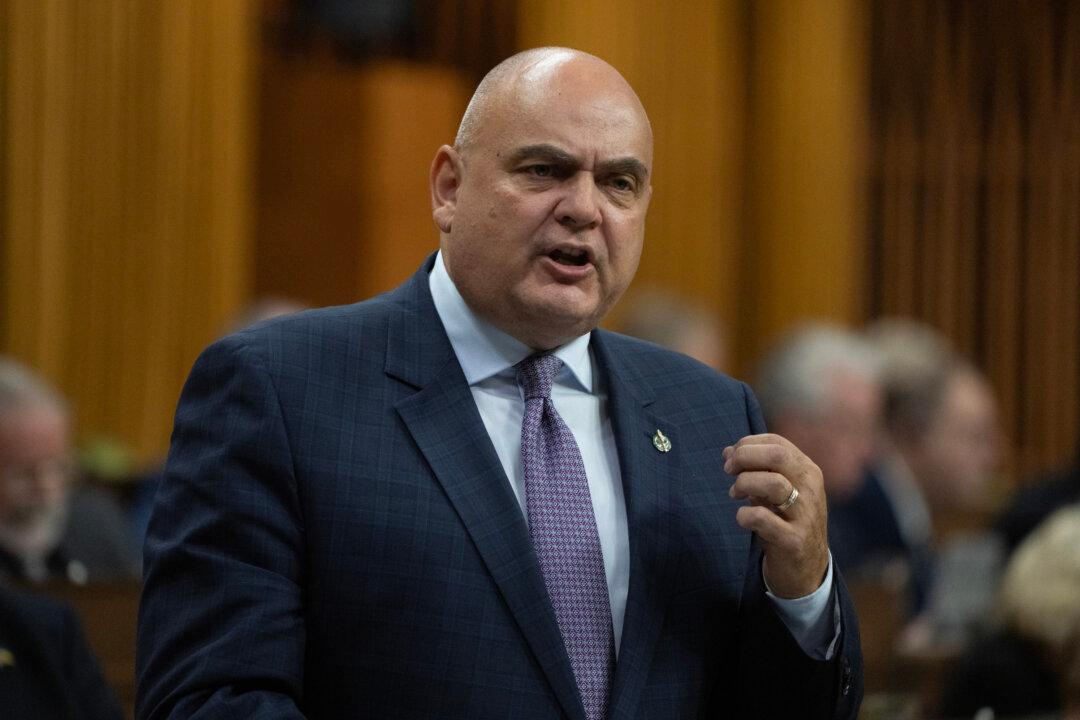
“Carney’s solution to too much government blocking our resource projects is to create another government department ... my answer would be that the shortest distance between two points is a straight line,” Poilievre said on Nov. 7. “Get rid of the bureaucracy that’s blocking the projects in the first place.”
Energy CEOs’ Suggestions
Carney was asked during the Nov. 10 press conference about Budget 2025 not including any of the five relief measures that Canada’s top energy CEOs asked for in an open letter penned in April. The leaders of 38 companies said that the country’s oil and gas sector would create jobs and increase tax revenue for government, but it must be allowed to grow.Carney told reporters that for Canada to become an “energy superpower,” it would need to produce and export multiple forms of energy, such as hydro, oil and gas, nuclear, and other forms of renewable energy. The prime minister also said the budget includes “enormous incentives” for energy companies, such as a “productivity super-deduction” that will allow businesses to write off the cost of new capital investments more quickly.
Carney also noted that Canada exported LNG to Asia for the first time in June, and it will ship 50 million tons of oil to the continent by 2030.
“Part of what’s happening with the major projects is we are making that possible,” he said. “We’re making the speed with which we can do that possible.”
The Conservative Party and Alberta have criticized the Liberal government for not appealing the Impact Assessment Act, which adds regulatory requirements to energy projects, or the oil tanker ban on B.C.’s north coast.