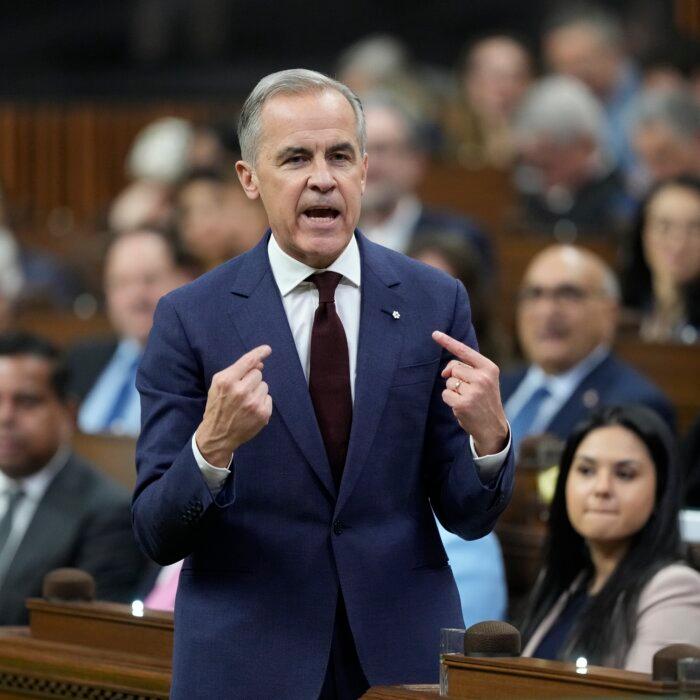
Prime Minister Carney says Canada needs a “good deal” with the United States on tariffs and will not pursue a “small” agreement if it disadvantages Canadians.
Carney suggested a favourable tariff deal could be achieved in the near term, but further progress is needed from the U.S. side.
In an interview with CBC News aired on April 27, Carney said Canada is prepared to work with Washington on a trade and tariff agreement, but progress would depend on whether U.S. President Donald Trump has the “bandwidth and the inclination” to move forward.
The United States continues to impose high sectoral tariffs on some Canadian goods, including steel, aluminum, and autos.
Carney noted the U.S. president has “very strong and very long-held views” that certain sectors. such as automobiles and steel, should be produced in the Untied States. He said Trump remains the central decision-maker on trade matters, but Canada must be strategic in its approach.
“Canada needs a good deal at the right time,” he said, adding that Ottawa does not need to be “chasing a small deal that disadvantages us for the bigger deal.”

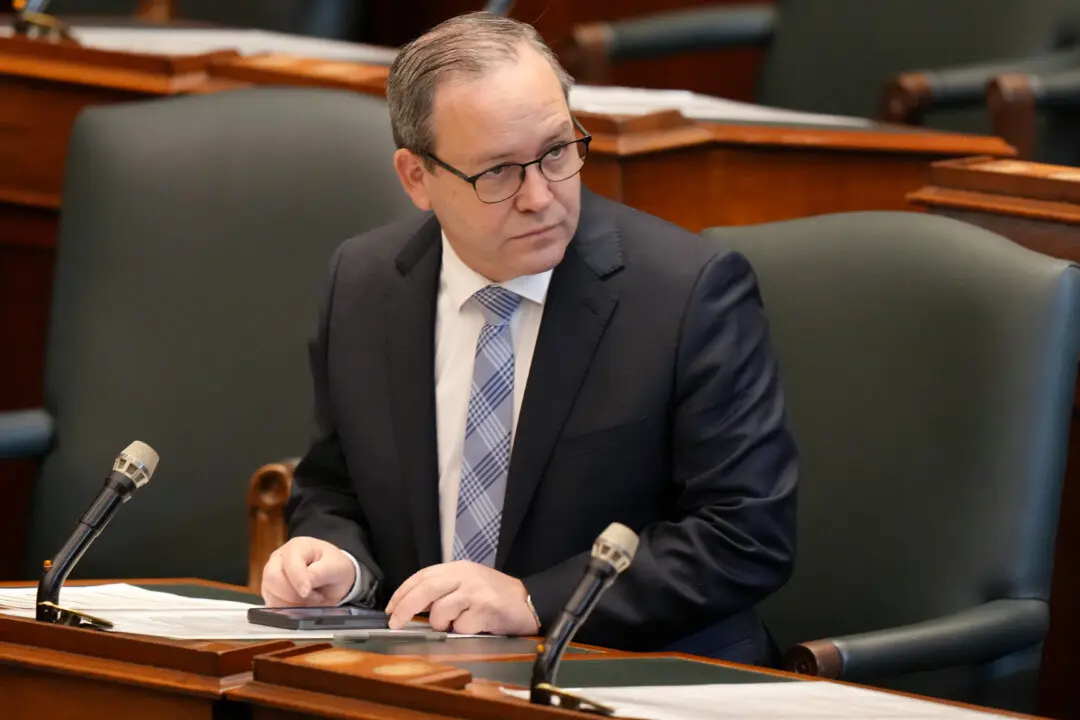
Canada and the United States were making progress toward a deal on steel, aluminum, and energy last October, but Trump cancelled talks after the Ontario government ran an anti-tariff TV ad campaign in the United States.
Meanwhile, Mexico has moved forward in trade talks with the United States, ahead of the July 1 review of the Canada-United States-Mexico Agreement (CUSMA) on free trade.
Mexican President Claudia Sheinbaum last week met with U.S. Trade Representative Jamieson Greer, the White House’s lead trade negotiator, who reports directly to Trump. The two sides agreed to begin formal bilateral talks on CUSMA in late May. No comparable development has been announced between Canada and the United States.
Carney told CBC that several unspecified countries quickly entered into agreements with the United States, which they later privately acknowledged were unfavourable.
“They weren’t really worth the paper they were written on,” Carney said.
Countries including the United Kingdom, Japan, and South Korea reached deals with the Trump administration to secure a lower tariff rate, in exchange for dropping some trade barriers or pledging to invest billions of dollars in the United States.
Carney’s remarks come amid renewed attention to Canada’s broader trade strategy.
In a nearly 10-minute video address released on April 19, Carney said Canada’s close economic integration with the United States had shifted from a strength to a “weakness” that needed to be addressed.
While pitching trade diversification in his remarks on April 27, Carney also said there are benefits to North American economic integration.
“The combination of our three countries makes those industries, the U.S. auto industry, more competitive. We’re all better off together,” Carney said.
Carney said high-level discussions between Canadian and U.S. officials are continuing.
“There’s engagement this week and there’s engagement today, actually, at a very senior level — not me and the president, but a very senior level,” he said.
“So these conversations are going on. But, you know, in the end there is going to need to be a real sprint, if you will, for the deal,“ he said. ”When that firing gun is set remains to be seen. We don’t have the starter pistol.”
Speaking during testimony before the U.S. House of Representatives Ways and Means Committee on April 22, U.S. Trade Representative Jamieson Greer said Canada has done a “little bit” on protecting its steel market from certain goods from countries like China and Vietnam, but is signing deals with other countries.
He also criticized Canada for pursuing a different trade strategy than the United States.
“They’re doubling down on globalization when we’re trying to correct for the problems of globalization,” Greer said. “So those are two models that don’t fit together very well.”
Separately, during a conversation on April 22 with the Council on Foreign Relations, a U.S. think tank, Deputy U.S. Trade Representative Rick Switzer said Canada and certain other countries have chosen to make their disputes with the United States “personal,” to their detriment.
Switzer, who works under Greer, attributed Mexico’s greater progress in trade talks to Sheinbaum, saying she recognizes the importance of the U.S. economic relationship and is willing to work through issues to avoid jeopardizing ties.
The formal joint review of CUSMA is set to launch on July 1, 2026. However, Canada’s chief trade negotiator to the United States, Janice Charette, has said that it’s unlikely issues will be resolved by then.