The House of Commons returned from its summer break on Sept. 15, and from clashes between the main party leaders to debates over consequential legislation, there were many developments worth noting.
Additionally, the Liberal government said it would be dealing with a “substantial” budget deficit, and the ethics commissioner defended Prime Minister Mark Carney’s conflict-of-interest screen.
Poilievre’s Return
Sept. 15 marked the first day Conservative Leader Pierre Poilievre returned to Parliament, as the MP for the Alberta riding of Battle River—Crowfoot. During the April 28 election, Poilievre lost his Carleton seat to Liberal candidate Bruce Fanjoy. Poilievre, who had held the riding for more than two decades, received 45.8 percent of the vote compared to Fanjoy at 50.8 percent.Poilievre subsequently ran in Tory MP Damien Kurek’s riding after he offered to vacate his seat. Poilievre won the Aug. 18 byelection with 82.8 percent of the vote.
“My mother taught me never to be late, so please forgive me for my late arrival to this session. I’ve had some meetings with extremely important people in east central Alberta,” Poilievre said when rising for question period on Sept. 15.
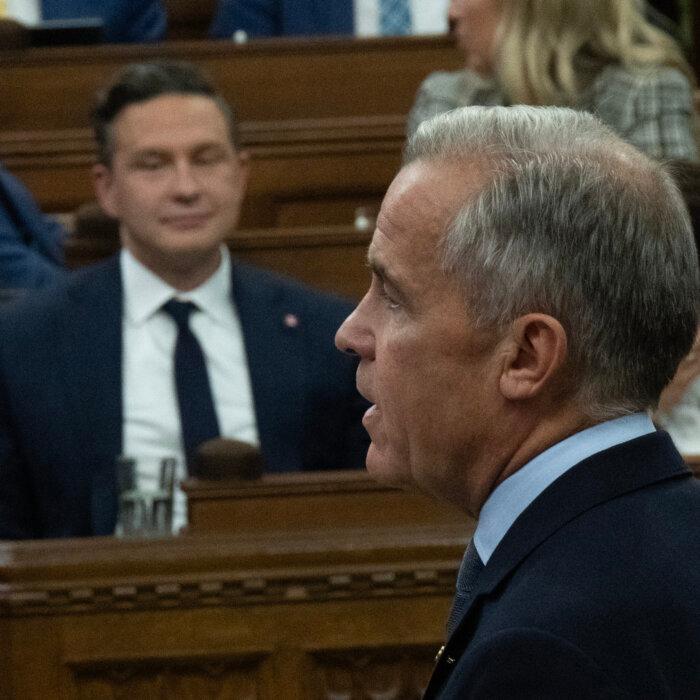
Poilievre said he was “honoured” to have been elected by the people of the riding and gave thanks to Kurek for stepping aside. Poilievre also thanked Carney for calling a “prompt” byelection to allow him to return to the House of Commons.
Poilievre and Carney Face Off
The first debate between Poilievre and Carney began in a friendly manner, with Poilievre asking Carney if he agreed that MPs should work toward a Canada where “hard work is rewarded, where food and homes are affordable, where streets are safe, where borders are solid, and we’re all united under a proud flag.”Carney welcomed Poilievre back to the House of Commons and said he agreed “entirely with the sentiment and objectives of the Leader of the Opposition.”
Poilievre then accused Carney of “breaking promises, making excuses, running massive deficits, with costs, crime, and chaos out of control,” and he questioned when Carney would match the “grand promises” he made during the last election.
Carney said Poilievre had “missed” the government passing tax cuts for 22 million Canadians, referring to his government’s bill to cut 1 percentage point from the tax rate of the lowest personal income tax bracket, as well as eliminating federal barriers to internal trade under the recently passed One Canadian Economy Act. Poilievre responded that Carney had promised the strongest growth in the G7 and lower costs for food, which the Opposition leader said had not happened.
Poilievre also said while Carney had promised to “spend less” during the election, the Liberals were now spending 8 percent more than the government under former Prime Minister Justin Trudeau. Poilievre also said the deficit for 2025 may be double that of last year, and asked, “Has there ever been a prime minister who has successfully doubled the deficit without even introducing a budget?”
Tories Focus on Cost of Living
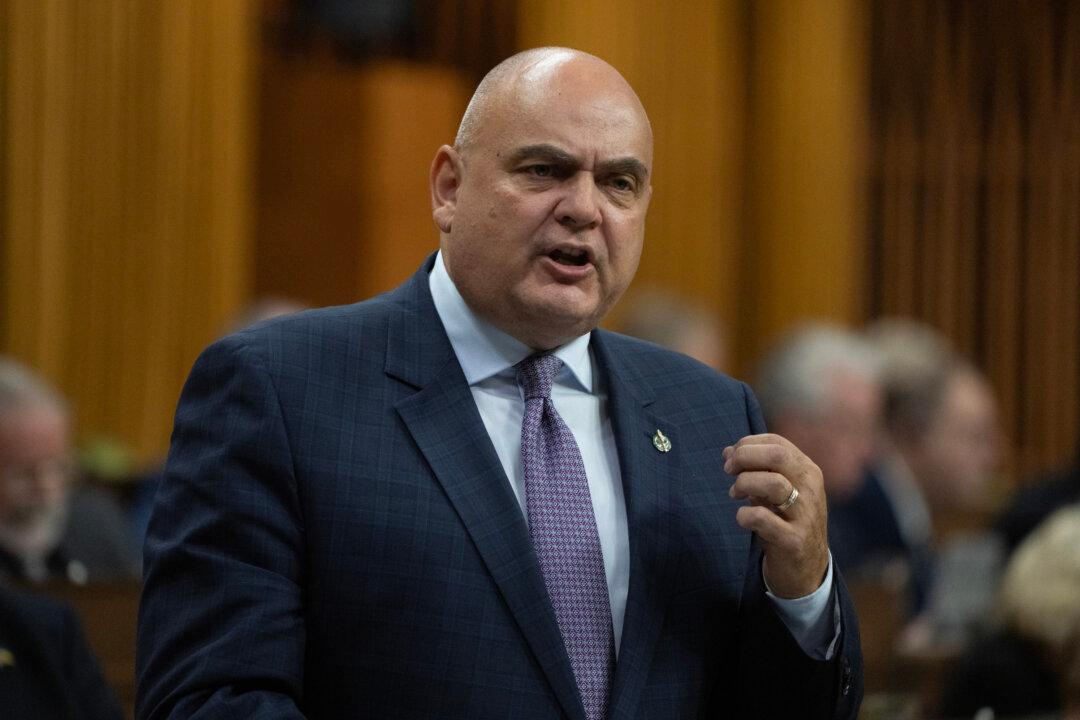
Question period was focused around the cost of food and on housing issues. Conservative MP Melissa Lantsman said that while Carney had previously said the government’s record should be judged “by the prices [Canadians] pay at the grocery store,” food inflation is currently 70 percent above target.Conservative MP Luc Berthold said that since Carney had become prime minister, the cost of stewing beef had risen by 22 percent, the price of potatoes was up by 20 percent, and the price of onions was up 11 percent.
Finance Minister François-Philippe Champagne said the government listened to Canadians’ concerns around the cost of living and responded by tabling legislation reducing the tax rate for 22 million Canadians.
Carney Texting With Trump
The prime minister’s dealing with U.S. President Donald Trump also became a subject of discussion during question period, with Bloc Québécois Leader Yves-François Blanchet questioning whether Carney would be able to end the trade tensions with that country.Carney repeated his point to Blanchet that Canada had the “best deal with the U.S. worldwide,” since more than 85 percent of exports to the country are covered under USMCA. Blanchet responded that such a statement would “not live up to economic analysis” and asked if Carney could get the countries’ trade relationship back on the right track.
Liberals’ Legislative Priorities, ‘Substantial’ Budget Deficit
Prior to question period, Government House Leader Steven MacKinnon told reporters that he hoped the opposition parties could cooperate on legislation in the new session.MacKinnon said the Liberals’ legislative agenda will include Bill C-3, which would amend the Citizenship Act to grant citizenship by descent to people born outside Canada to a parent who is a citizen; Bill C-2, which would reinforce border security, tighten immigration, and give more powers to security agencies to obtain currently protected private subscriber data; and Bill C-4, giving Canadians tax cuts, which already came into force through the adoption of a ways and means motion in the spring.
MacKinnon said the government will also table bills to increase community safety and tackle crime, with Justice Minister Sean Fraser previously saying there will be legislation to reform Canada’s bail system amid a wave of violent crime by people out on bail.
Ethics Commissioner and Carney’s Conflict-of-Interest Screen
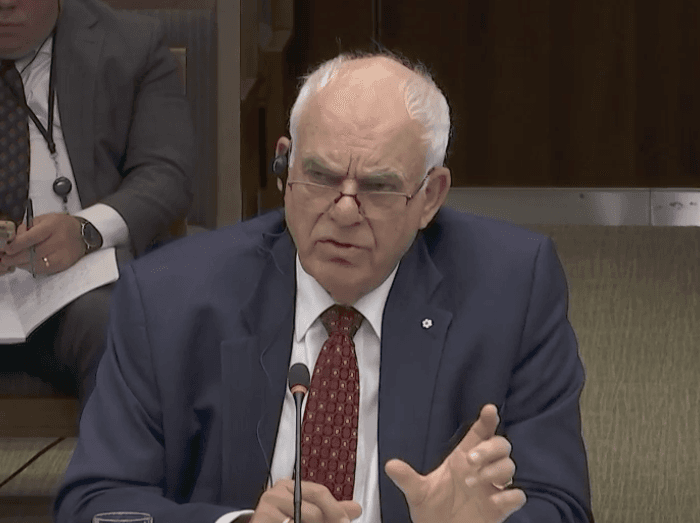
Canada’s Ethics Commissioner Konrad von Finckenstein attended the House ethics committee during the day to provide a briefing on conflict-of-interest screen put in place to shield the prime minister, who served on the board of several companies before becoming a politician.Von Finckenstein was asked by MPs whether there could be an issue with the conflict-of-interest screen being managed by Carney’s top two political appointees: his chief of staff Marc-André Blanchard and Clerk of the Privy Council Michael Sabia.
The commissioner said the screen relies “on the integrity of the senior people in government acting in accordance with the law.” He added that because their interest is the same as Carney’s, they do not want to see the prime minister “run afoul of conflict of interest.”
Tribute to Charlie Kirk
Prior to question period, Conservative MP Rachael Thomas gave a tribute to former Trump adviser and Turning Point USA founder Charlie Kirk, who was fatally shot on Sept. 10 while speaking at Utah Valley University.Thomas said Kirk was an “outspoken advocate for faith, family, and freedom” and that he was assassinated “in an attempt to silence his voice.” Thomas said freedom of speech is an important part of a free society, and silencing voices that may offend others is “never the answer.”
The Conservative MP said that political violence destroys dialogue, undermines democracy, and breeds “fear instead of understanding.”
“May we fiercely defend the right of our opponents to speak freely, and may we join our hearts with Charlie’s family, his wife, Erika, and his two young children,” she said.
The Conservatives and Liberal ministers and some other MPs gave Kirk a standing ovation following Thomas’s tribute to him.