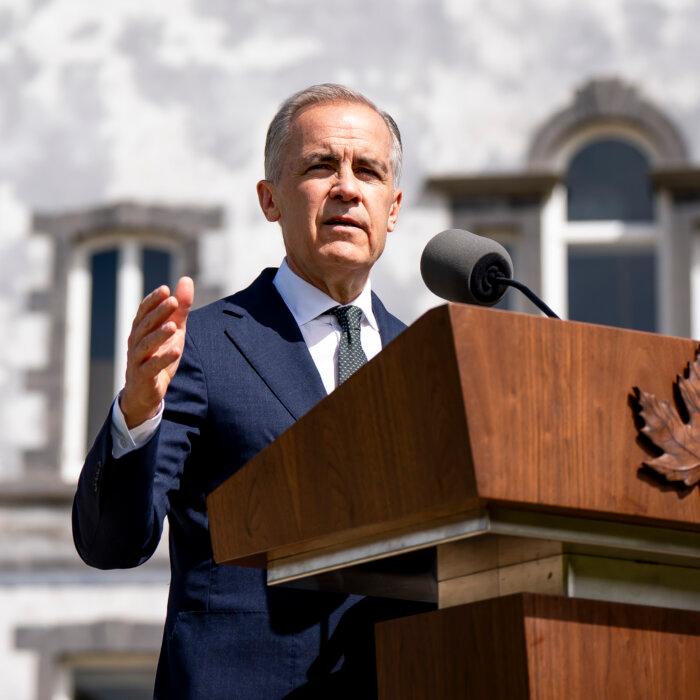
Prime Minister Mark Carney says he has reviewed a copy of the tentative peace deal negotiated by the United States with Iran and is describing it as a “game changer.”
“I have to say it exceeded my expectations,” Carney told CNN during a June 16 interview on the sidelines of the G7 summit in France. “We’re very pleased with the deal that’s been struck. It sets the groundwork to ensure Iran doesn’t have a nuclear weapon.”
Carney also said the war with Iran—a country he described as the biggest exporter of terror—was “worth it” if it means the Middle Eastern country is stripped of all nuclear capabilities.
Iran was “hell-bent…on getting a nuclear weapon, and the force multiplier on that was terrible,” Carney said. “But moving to this position, where that’s been taken off the table. Yes, that’s worth it.”
The U.S.-Iran war began on Feb. 28, when the United States and Israel executed coordinated surprise airstrikes and a naval blockade targeting Iran’s military facilities and command structure.
The United States and Iran announced a memorandum of understanding to cease hostilities after more than 100 days of fighting. A tentative deal was announced by the two nations over the weekend, which will extend the ceasefire for another 60 days, allowing all sides to negotiate the details of a final agreement.
The agreement has not yet been disclosed to the public, but is said to outline an initial ceasefire and the immediate termination of the naval blockade in the Strait of Hormuz. U.S. President Donald Trump has said the proposed deal includes a provision to reopen the passage by June 19.
The two sides are now expected to negotiate matters such as sanctions and the Iranian nuclear program, particularly regarding the management of its enriched uranium stockpile.
Carney did not elaborate on how he acquired the copy he examined, simply stating that his government has “sources,” but he said the deal is a “reasonable length” that “sets out a series of conditions, and what will happen when they are fulfilled.”
The prime minister’s endorsement of the agreement comes on the heels of his fluctuating position on the conflict.
He later shifted his position on the armed conflict, saying on March 4 that he didn’t agree with how the United States and Israel have conducted the operation. He emphasized Canada’s desire for de-escalation and called on all sides of the conflict, including the United States, to “respect the rules of international engagement.”
Canada’s Role
“Regional countries” are backing the American-led deal, Carney said, and noted that Canada could do its part by helping to keep the Strait of Hormuz open.The Strait of Hormuz serves as a critical path for oil transit globally, with roughly 20 percent of the world’s traded crude oil and liquefied natural gas flowing through it each day. The supply was interrupted during the 100-day conflict, causing gas prices to soar.
Carney has previously said Canada could help with mine removal in the strait, but he told CNN there are additional areas where the country can provide support once the agreement is finalized.
“One of the big lessons here is don’t be held hostage to one chokepoint in the global economy,” Carney said.
Possible Model for Russia-Ukraine Conflict
Carney said all countries should play a role in making sure the peace deal is successful and hinted that it could be a model for other current and future conflicts.“It’s well structured,” he said. “I think it’s a game changer, not just for this situation but it allows us… to step back and look anew at the Ukraine situation.”
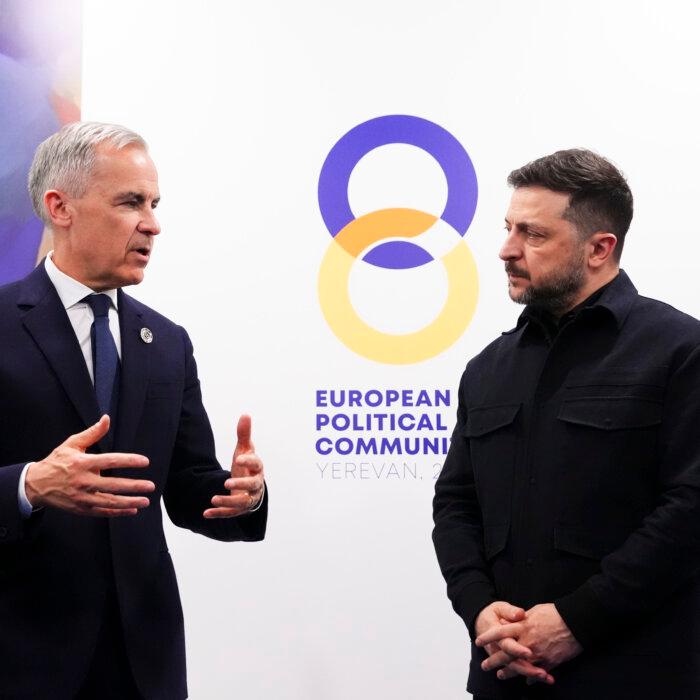
Carney said G7 talks turned to Ukraine after leaders saw the Iran agreement and said the conversation was “constructive.”
Carney has previously said he believes Ukraine will be victorious in its conflict with Russia and was asked by CNN during the interview if Trump seems to share that opinion.
Carney didn’t answer the question directly, saying, “I think it’s a view that is held strongly by those who are very active” in supporting Ukraine.
“We, the Germans, the UK, the French, all are of the view that the tide has turned in this war,” he said. “It is a matter of time. Putin is going to lose this war, and from now until the point where he realizes that or accepts that it is absolutely senseless slaughter.”