This copy is for your personal, non-commercial use only. Distribution and use of this material are governed by our Subscriber Agreement and by copyright law. For non-personal use or to order multiple copies, please contact The Epoch Times Reprints.
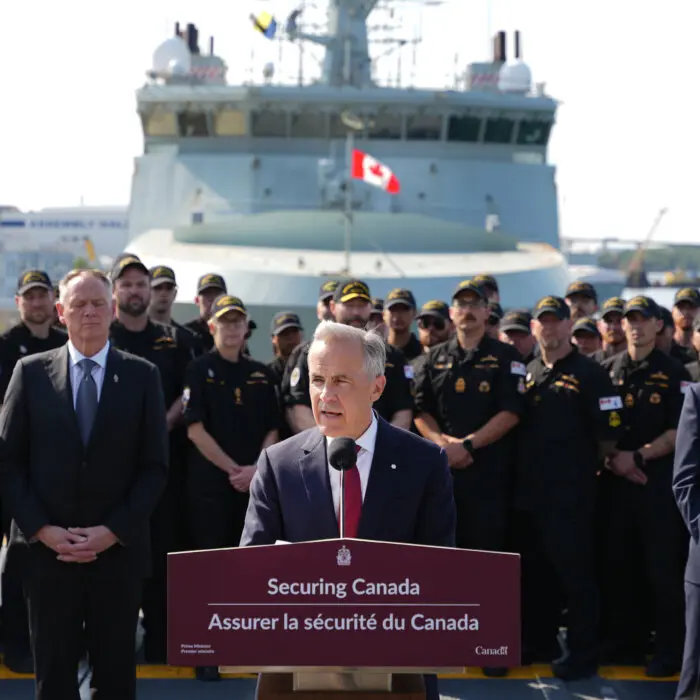
Prime Minister Mark Carney says the latest U.S. strikes on Iran were an “appropriate” response to its attacks on commercial shipping in the Strait of Hormuz.
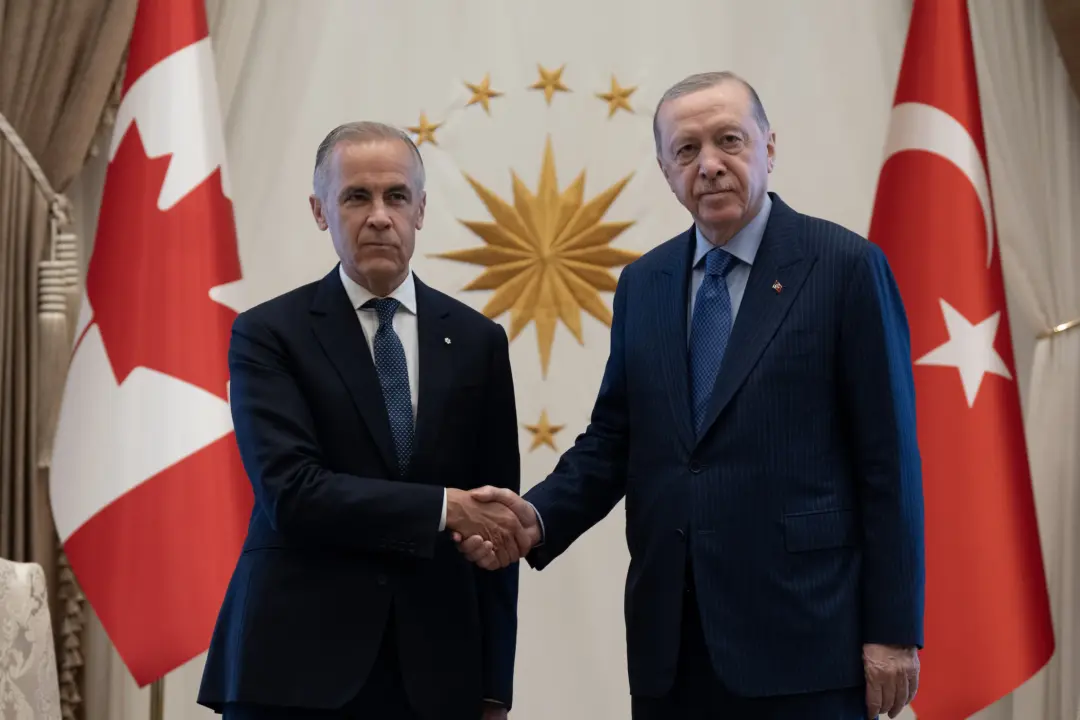
“It’s not pretty, but it’s okay,” Carney said of the U.S. strikes, while speaking to reporters in French while in Turkey on July 8 for a NATO summit.
Iran launched attacks on three commercial vessels transiting the Strait of Hormuz on July 7, prompting the United States to launch strikes hours later on more than 80 Iranian targets, including air defence systems, command-and-control networks, coastal radar sites, anti-ship missile capabilities and more than 60 Islamic Revolutionary Guard Corps (IRGC) small boats.
In response to the U.S. strikes, Iran’s IRGC targeted 85 U.S. military sites located in Bahrain and Kuwait on July 8.
Carney said that despite the ceasefire memorandum of understanding (MOU) signed weeks earlier, Iran had attacked energy infrastructure in Qatar and Saudi Arabia in March and had “threatened shipping again” in recent weeks.
“That’s irresponsible, it’s not right, and the United States has responded as appropriate, to look to stop this behaviour and put in place the conditions to re-establish the ceasefire,” he said.
Washington and Tehran signed the MOU on June 17 to formalize the ceasefire and establish a framework for negotiating a broader agreement to end the war that began with U.S. and Israeli strikes in late February. However, disagreements have emerged over issues including Israel’s military campaign in Lebanon, the unfreezing of Iranian assets, the disposition of Iran’s nuclear material, and the reopening of the Strait of Hormuz.
The MOU states that the Strait of Hormuz, which Iran effectively closed at the start of the war, would remain open for 60 days while Iran and Oman negotiated the waterway’s “future administration and maritime services.” Iran has argued that ships transiting the Strait close to Oman’s coastline should instead use the shipping lane nearer the Iranian coast and obtain Iranian permission before transiting.
Trump told reporters on July 8 that it was a “waste of time” negotiating with Iran, and that the United States would likely attack the country again that same night. Trump added that he would let U.S. negotiators continue speaking with the Iranians, but that he believed the MOU was “over.”
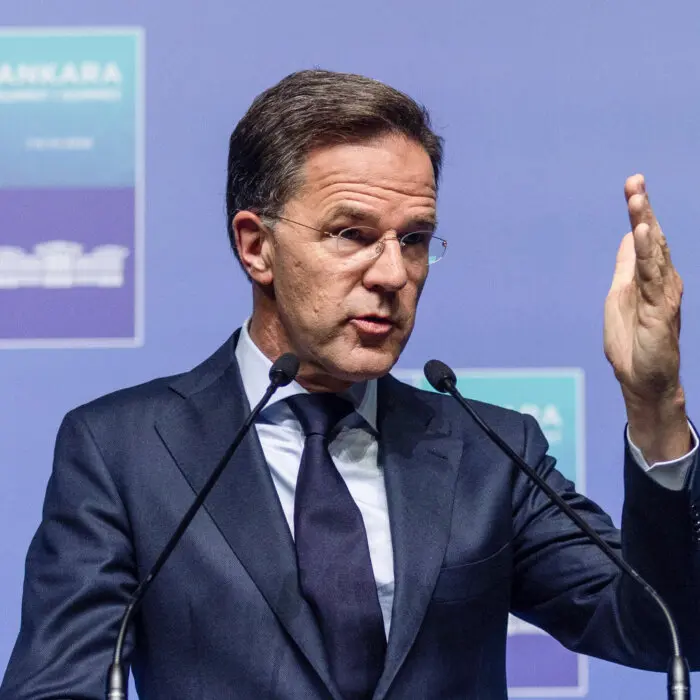
NATO Secretary-General Mark Rutte told reporters at the summit on July 8 that Washington’s strikes on Iran were “absolutely necessary” and a “very strong response” to Iranian attacks. Rutte added that Trump’s pressuring of NATO countries had forced Canada and Europe to spend a combined $215 billion more on defence in the last three years than they did in 2024.NATO estimated that Canada spent $38.3 billion on defence in 2023 and $44.2 billion in 2024, but that number rose to $62.7 billion in 2025 after Carney announced in June of that year that Ottawa would increase defence spending by $9 billion by the end of the fiscal year.
Carney told reporters earlier in the day that Trump had “won the argument” that NATO countries other than the United States need to spend more on defence. However, Carney said NATO is a defensive alliance, not an offensive one, and Canada did not want to join the war in Iran and did not “have the capabilities to do so.”