Supply management is driving up the price of milk, eggs, and poultry, and is costing the average Canadian consumer an extra $244 per year, a new study suggests.
The economic think tank MEI Academy compared the prices of dairy products, eggs, and poultry in Canada to those in similar markets in the U.S. Midwest. Milk is priced 171 percent higher in Canada than in the comparable U.S. markets, while Canadians pay 46 percent more for eggs, and 29 percent more for chicken, according to the findings.
The effect is felt most acutely by lower-income Canadians, according to the study. The extra expenses represent 1.25 percent of disposable income for households in the lowest quintile, and 0.33 percent for those in the highest quintile.
“For families struggling to make ends meet, it’s clear that having a few hundred more dollars in their pockets at the end of the year would make a big difference.”
Canada’s supply management system, which uses production quotas and import tariffs to control the supply of dairy, eggs, and poultry, has existed in its present form since the 1970s. It was introduced to stabilize prices and guarantee farmers a fair return.

The system “artificially raises” the prices of many essential goods, making its impact on poverty “equally clear,” the report’s authors wrote.
A family is classified as low-income if it must spend at least 20 percent more of its budget than the average household to meet its essential needs, the authors said. An estimated 41,279 Canadian households, representing 120,083 people, live below the low-income threshold as a result of these increased expenses, according to the study.
Supply Management
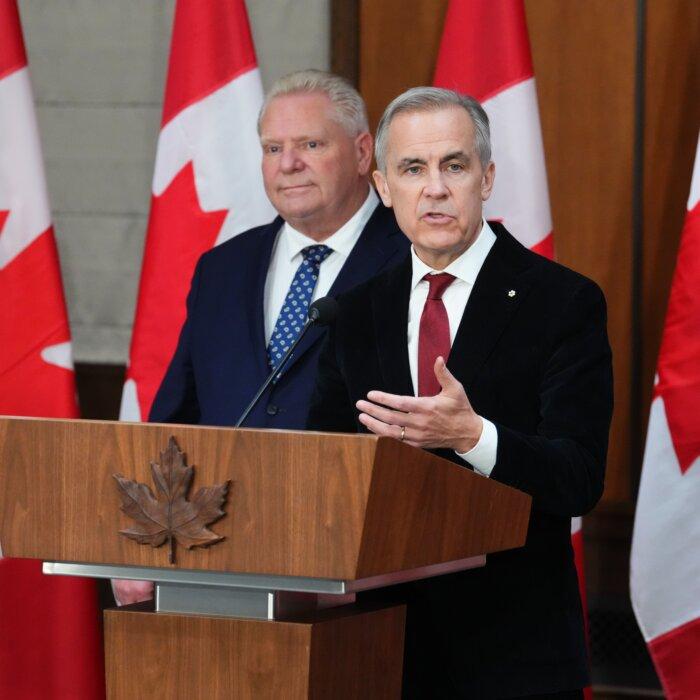
Prime Minister Mark Carney has maintained that preserving supply-managed industries—such as dairy, poultry, and eggs—is essential for Canadian food security, rural vitality, and predictable pricing.He has repeatedly said that Canada will never enter discussions to dismantle supply management, emphasizing the system will not be part of Canada-United States-Mexico Agreement (CUSMA) talks or any other tariff or trade negotiations with the United States.
Canada’s supply management system has long been a point of contention in trade talks, with successive U.S. administrations describing it as a trade irritant.