Canada’s most decorated Olympian, swimming champion Penny Oleksiak of Toronto, has been notified by the International Testing Agency (ITA) of an apparent anti-doping rule violation.
The ITA says Oleksiak has been notified of the rule violation and has voluntarily accepted a provisional suspension while the case is ongoing.
“She has the right to provide her explanations as to the circumstances of each whereabouts failure,” the ITA said.
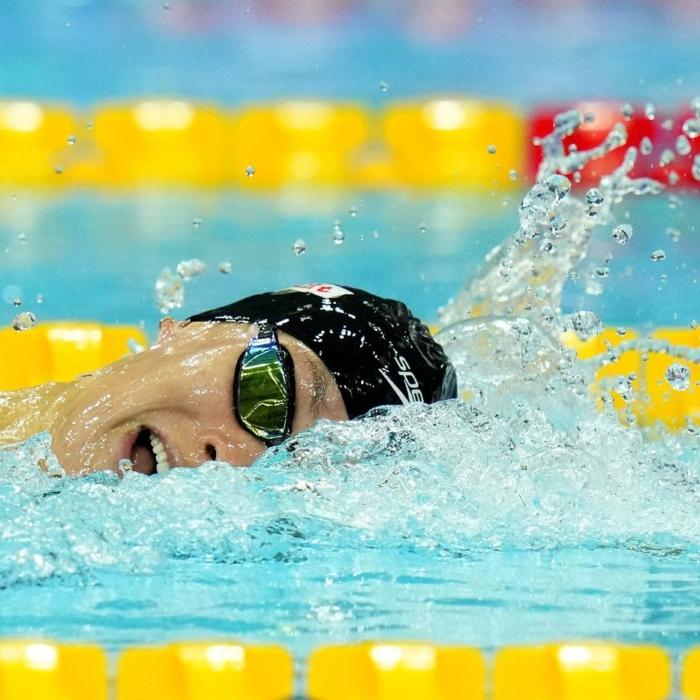

In a now-deleted Instagram post from two weeks ago, Oleksiak announced that she was withdrawing from the world championship team and accepting a voluntary provisional suspension. Any eventual period of ineligibility as a result of the case would be reduced by the amount of time she was suspended under the voluntary provisional suspension.
“I am and always have been a clean athlete,” Oleksiak said in the post, adding that the case “does not involve any banned substance; it’s about whether I updated my information correctly.”
“We understand that Penny has been notified she did not keep her whereabouts information fully up-to-date as required by World Aquatics anti-doping rules,” Swimming Canada CEO Suzanne Paulins said.
“She has explained to us that it was inadvertent and that in no way is she involved in the use of banned substances. We support her decision and believe she is a clean athlete who made an administrative mistake.”
Anti-Doping Rules
Athletes who are members of the Registered Testing Pool, which is the highest-tier group of national and international level athletes, are required to submit whereabouts information that is accurate and up-to-date about where they are at all times, according to World Aquatics.“It is vital that athletes keep their whereabouts information up-to-date so that anti-doping organisations can locate athletes for testing at any place, at any time, with no advance notice,” the organization says.
An athlete may receive an anti-doping rule violation and a potential two-year ban from sport if they receive three whereabouts failures within a 12-month period, which could include filing failures or missed tests.
Paulins has reminded athletes about their responsibility to complete whereabouts and submit their filings on time to comply with anti-doping rules and avoid violations, Swimming Canada’s July 4 statement said.
Most Decorated Olympian
Oleksiak, 25, is known as Canada’s all-time most decorated Olympian as she has won seven Olympic medals, including one gold, two silver, and four bronze medals.She won four of her medals at the Rio 2016 Olympics, which was a record-setting Olympic debut for 16-year-old Oleksiak at the time. She became the first Canadian athlete to win four medals at a single summer Olympics and Canada’s youngest Olympic gold medallist ever, among several other records. Oleksiak won three more Olympic medals at the Tokyo 2020 Olympics.
Shortly after Oleksiak won four medals at the 2022 World Aquatics Championships, she dealt with a major knee injury involving a torn meniscus. She returned to competition in May 2023 but then decided to continue her rehabilitation and not compete at the 2023 World Aquatics Championships. She suffered another knee injury that required another surgery in November 2023, and moved her training base to southern California that fall.