This copy is for your personal, non-commercial use only. Distribution and use of this material are governed by our Subscriber Agreement and by copyright law. For non-personal use or to order multiple copies, please contact The Epoch Times Reprints.
Members of the Canadian Armed Forces stand to attention during a Remembrance Day ceremony in Montreal on Nov. 11, 2024. The Canadian Press/Graham Hughes
Canada’s military welcomed 6,706 new regular force members in the 2024-2025 fiscal year, marking a 55 percent increase from the previous year, to exceed its recruitment goal of 6,496.
The Canadian Armed Forces (CAF) has experienced “significant growth” in recruitment of regular force members compared to the 4,313 members gained in 2023-2024, and the 3,927 members gained in 2022-2023, the Department of National Defence told The Epoch Times in a June 10 email.
The number of regular force members grew by approximately 2,000 members from April 1 last year to March 31 this year when accounting for attrition, the department said. The CAF had 65,154 regular force members and 23,561 primary reserve members on April 30, and it anticipates reaching 71,500 regular force members and 30,000 primary reserve members by 2032.
Personnel shortages have plagued the CAF in recent years, with former Defence Minister Bill Blair calling it a “death spiral” in March 2024. New recruitment policies have been implemented since then, including a probation period for new members while their medical and security assessments are being completed.
While intake has increased, the CAF has faced issues retaining the new members, according to a leaked military report obtained by CBC News and covered in May. The attrition rate of new members is double that of the rest of the force, with recruits expressing frustration about the lengthy wait prior to receiving training.
One the biggest complaints among departing recruits is the perceived misalignment of the organization’s focus on cultural change rather than on operational requirements, the report noted. It also said an office to focus on retention had been defunded.
“The available resources to support the Retention Strategy have not changed,” the department’s spokesperson Derek Abma said when asked to comment on the CBC report. “The Retention Program Office no longer exists, but its finances and staff were reassigned to support overarching CAF reconstitution efforts.”
Increased Military Spending
The increase in new CAF members comes at a time when Canada is focusing on strengthening its armed forces and decreasing its reliance on U.S. defence.
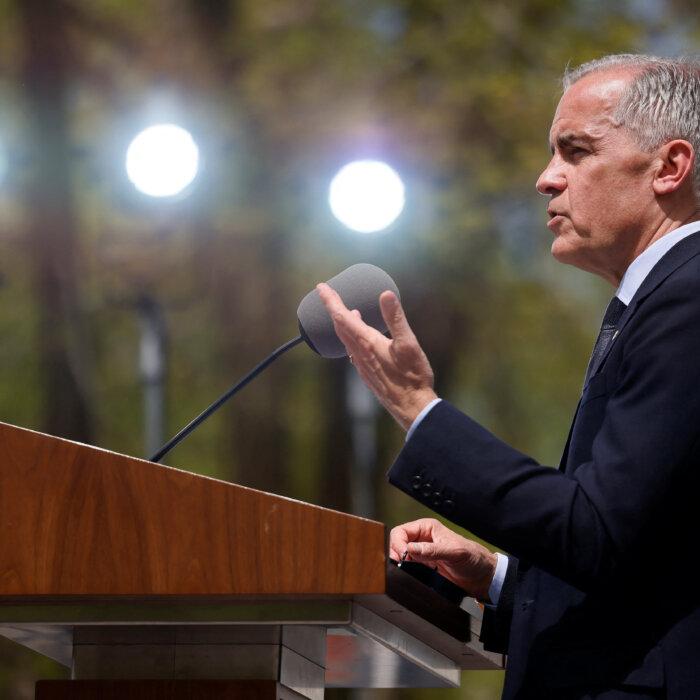
Prime Minister Mark Carney announced at a June 9 press conference that Canada will increase military spending by $9 billion this year, which in turn will meet NATO’s defence spending target of 2 percent of the country’s GDP.
“Canada’s new government will rebuild, reinvest and rearm the Canadian Armed Forces with a strategy that rests on four pillars—investing in the foundations of defence, the women and men who serve, and the equipment and infrastructure that they use; second, we will enhance and expand our military capabilities; third, we will strengthen Canada’s defence industry; and we will diversify Canada’s defence partnerships,” Carney said.
The prime minister said his government’s plan is to ensure Canada is “strong at home” and “reliable abroad,” adding that Canada should no longer send 75 percent of its defence spending to the United States.
Carney said while the United States had long been Canada’s closest ally and trading partner, the country has recently begun to “monetize its hegemony” through tariffs. He also said “rising powers” are now competing with the United States, while foreign governments and non-state actors threaten Canada’s sovereignty.
“This [increased military spending] builds on the commitments made last year in Canada’s defence policy, Our North, Strong and Free (ONSAF), to strengthen Canada’s sovereignty, security, and prosperity, and drive economic growth in this pivotal moment,” a June 9 news release on the announcement says.
The federal government’s throne speech delivered by King Charles III in Ottawa last month placed an emphasis on protecting Canada’s sovereignty by “rebuilding, rearming, and reinvesting in the Canadian Armed Forces.”
“[The government] will boost Canada’s defence industry by joining ReArm Europe, to invest in transatlantic security with Canada’s European partners,” the king said. “And it will invest to strengthen its presence in the North, which is an integral part of Canada, as this region faces new threats.”