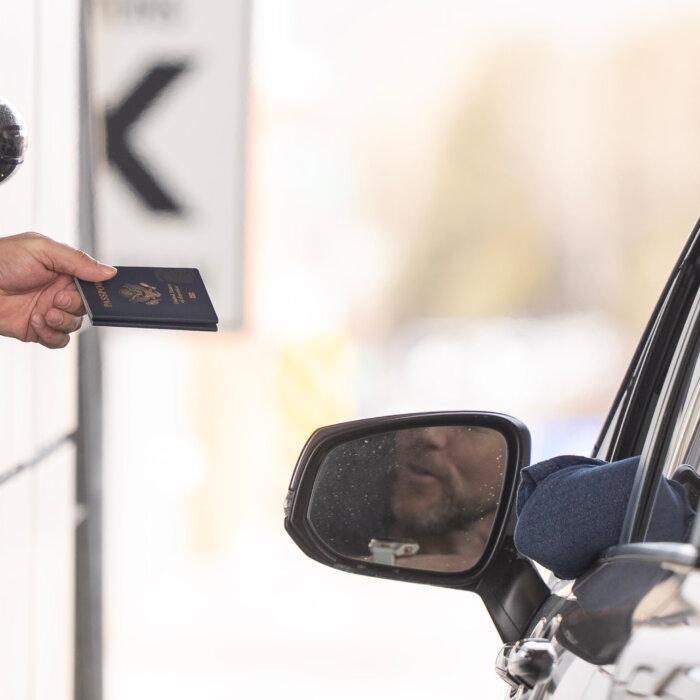
Ottawa has updated its travel recommendations for the United States, advising all First Nations people to carry both a passport and a status card when crossing the border.
First Nations people in the past could “freely” cross into the United States for employment, study, retirement, investing, or immigration with a status card, but the federal government is now warning that may no longer be enough to guarantee entry.
The government’s travel advice for the United States was updated on Feb. 19 to warn that while a Secure Certificate of Indian Status (SCIS)—also known as a secure status card—is generally accepted at land and sea crossings, the final decision lies with U.S. authorities.
Acceptance of all status cards is “entirely at the discretion of U.S. officials,” the website says.
The government began the distribution of secure status cards in 2009, gradually discontinuing the previous versions of laminated, paper, or plastic status cards and started to issue cards with a machine-readable field in 2019.
Ottawa urged all travellers to carry a valid machine-readable secure status card as well as a valid passport.
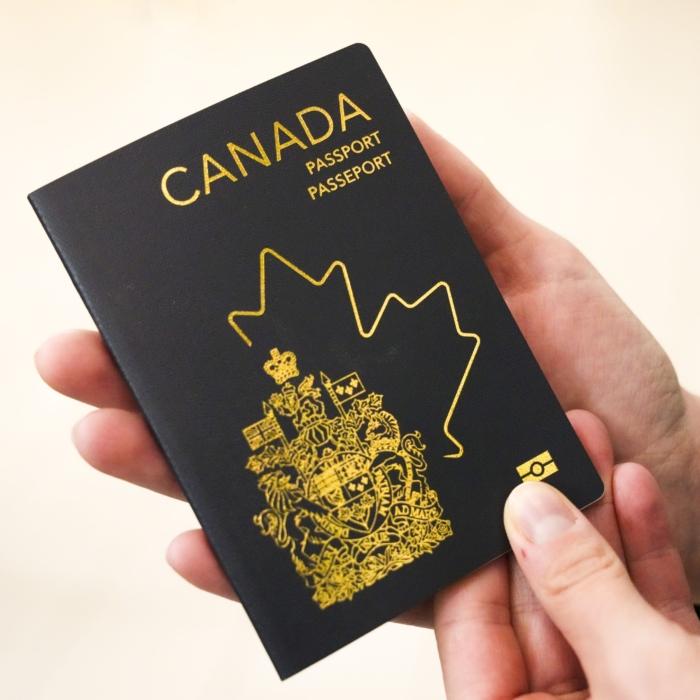
“While you may have previously crossed the Canada-U.S. border with only a secure status card, ISC now strongly recommends also carrying a valid passport when travelling outside of Canada,” Indigenous Services Canada said on its website.
Individuals registered under the Indian Act who are entering the United States for residence or employment may also be required to present documentation to “prove the percentage of Indian blood required under U.S. law,” the government says.
The Assembly of First Nations (AFN) cautioned First Nation peoples last month to exercise caution when crossing the border into the United States, citing immigration enforcement raids and the detention of some indigenous individuals.
“Recent reports indicate that some First Nations members are experiencing increased scrutiny by U.S. Immigration and Customs Enforcements (ICE),” the advisory posted on Facebook reads. “The AFN strongly condemns these actions and reaffirms its commitment to defend First Nations’ inherent and Jay Treaty rights to cross-border mobility.”
Several First Nations, including Mississaugas of the Credit First Nation, Six Nations of the Grand River near Hamilton, and Garden River First Nation near Sault Ste. Marie, Ont. have warned their members to be prepared if they plan to cross the border.
The Jay Treaty Alliance, an organization that represents tribal governments and First Nations communities on either side of the border, is urging First Nations individuals who are crossing into the United States to make certain they have their familial lineage letter, status card, long-form birth certificate, and government-issued photo identification.
U.S. tribal members are being encouraged to carry their tribal IDs, state-issued IDs or driver’s licences, or a U.S. passport.
The Canadian Press contributed to this report.