A small team of explorers led by the Royal Canadian Geographical Society have become the first people to lay eyes on Sir Ernest Shackleton’s last ship since it sank in the Labrador Sea in 1962.
John Geiger, the society’s chief executive officer, travelled with private astronaut Mark Pathy on Tuesday to the wreck of Quest in the DSV Alvin, the first submersible to take people to the Titanic shipwreck.
Piloted by Bruce Strickrott with the Woods Hole Oceanographic Institution, the Alvin crew were able to see the ship’s deck, which is where Shackleton died of a heart attack in a small cabin in 1922.
Looking at the deck, Geiger says he felt connected to the famed Anglo-Irish explorer, whose death on the ship marked the end of what historians consider the “heroic age” of Antarctic exploration.
The dive was part of an effort by the geographical society to make a digital, three-dimensional model of the wreck that the public can explore.
The team is also heading to the waters off Greenland to survey the shipwreck of the Terra Nova, upon which explorer Robert Falcon Scott sailed to the Antarctic in 1910. Geiger says the project links Canada to two of the greatest polar explorers ever known.

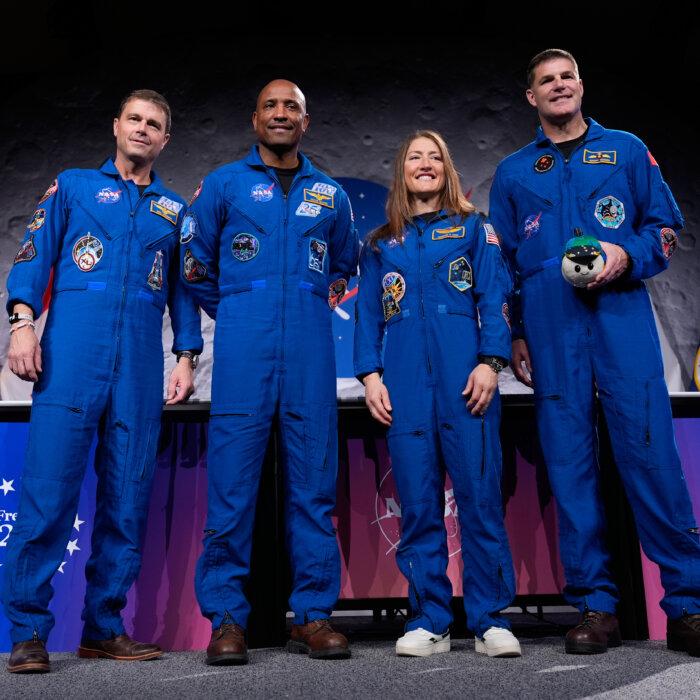
“We’re hoping to excite interest in exploration, especially among young people,” he said in an interview. “It was unbelievable to go down in the most famous submersible on the planet, Alvin, and look at the last ship of Ernest Shackleton.”
Shackleton is perhaps best known for his 1914 exploration trip to the Antarctic region aboard the Endurance, which got trapped in the ice and was eventually crushed. He and his crew survived on ice floes and then made their way to Elephant Island, off the east coast of Antarctica.
Shackleton and a few of his crew then set out in a whale boat to find help, and over the course of the next four months, he made several trips back to rescue his entire team.
He was 47 when he died on Quest.
In 2024, Geiger led a successful expedition to find Quest, which now sits on the sea floor at a depth of 390 metres, about 80 kilometres off the coast of southern Labrador.
The Terra Nova was discovered in 2012 by the Schmidt Ocean Institute, which is headquartered in California.
Geiger says Quest was heavily damaged when it slammed into the sea floor, but it has since become a “biological island,” home to many fish and other life forms.
He was dismayed to find three lost fishing nets had settled over the wreck, and he took it as a grim reminder that oceans must be better protected.
“We have to look after our oceans,” he said. “The fact that a heroic-age wreck has got fishing nets covering parts of it was surprising and disturbing for us.”
Quest became a sealing vessel after Shackleton’s death, working off Newfoundland and Labrador. The Terra Nova also became a sealer, and was based in St. John’s, N.L., according to the Woods Hole Oceanographic Institution.