Canada’s merchandise trade deficit grew to $6.32 billion in August from $3.8 billion in July as exports fell faster than the increase in imports, new data from Statistics Canada says.
Metal and non-metallic mineral product exports, such as unwrought gold, silver, platinum group metals, and their alloys, decreased the most in August, with a drop of 7.6 percent, which represents the third month in a row these exports have declined.
“The August decline was almost entirely due to a drop in exports of unwrought gold to the United States,” StatCan said.
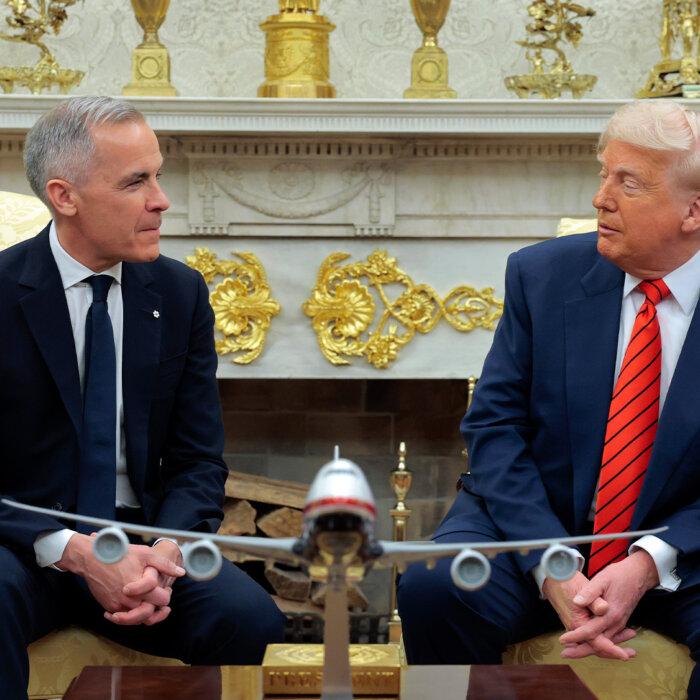
Canada’s international trade numbers took a hit earlier this year as U.S. President Donald Trump imposed sectoral tariffs, leading some businesses to shift their supply chain away from the country’s biggest trading partner.
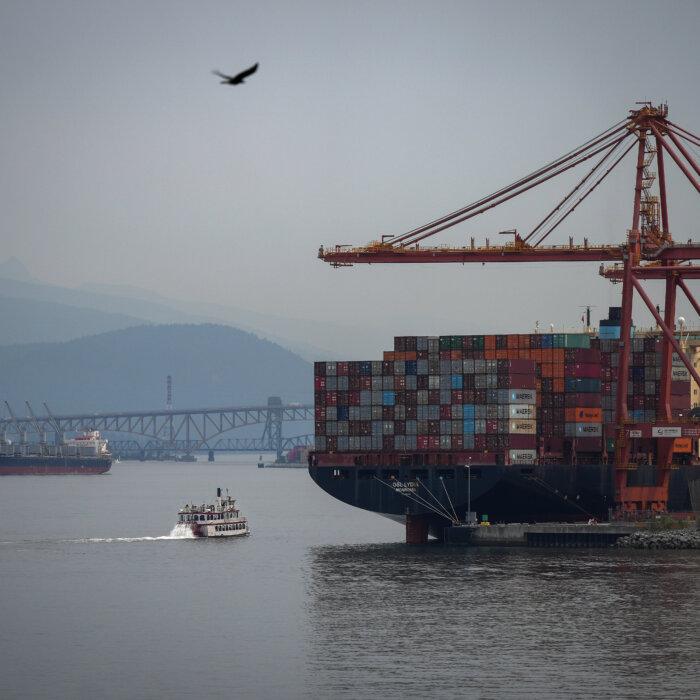
Industrial machinery, equipment, and parts exports dropped 9.5 percent in August compared to July, which was the first decline in four months. StatCan noted there were mainly lower shipments of these products to the United States, France, and Poland in August.
Exports of forestry products as well as building and packing materials were also down 10.1 percent, with lumber and other sawmill products reaching their lowest level of exports since May 2020.
“The steep decline in August 2025 followed the increase of anti-dumping and countervailing duty rates on Canadian softwood lumber that took effect in the United States in late July and early August,” StatCan noted.
Canada’s share of exports to the United States has been shrinking, with 70 percent of exports to the United States in August, compared to 75 percent during the same period last year.
Imports
Meanwhile, imports increased by 0.9 percent in August, following a 1.3 decline in July. StatCan said the increase was largely the result of an increase in imports of metal and non-metallic mineral products, which jumped 24.2 percent and included large imports of unwrought gold, silver, and platinum group metals and their alloys.In response to uncertainty caused by recent tariffs imposed by the United States, Canada imported more gold from South Africa and Switzerland in August, StatCan said.
Aside from the metal and non-metallic mineral products category, imports were down 1 percent, with decreases in six out of 11 product sections. Higher prices were also a contributing factor to the increase in imports recorded for August, the federal agency said.
Imports from the United States dropped 1.4 percent in August, which shrank Canada’s trade surplus with the United States to $6.4 billion from $7.4 billion in July.
Imports from countries other than the United States increased 4.2 percent in August. Canada’s trade deficit with other countries also increased to $12.8 billion in August from $11.2 billion in July.