Carney said while the United States had long been Canada’s closest ally and trading partner, the country has recently begun to “monetize its hegemony” through tariffs. He also said “rising powers” are now competing with the United States, while foreign governments and non-state actors threaten Canada’s sovereignty.
“Middle powers must compete for interests and attention, knowing that if they’re not at the table, they’re on the menu. Indeed, the threats that Canada faces are multiplied,” Carney said.
Carney highlighted that only one of Canada’s four submarines and less than half its maritime fleet and land vehicles are operational, which he said made the country “too reliant on the United States.” The prime minister said Canada should no longer “send three quarters of our defence capital spending to America,” and that it should make more investments in new aircraft, ships, armoured vehicles, artillery, and drones.
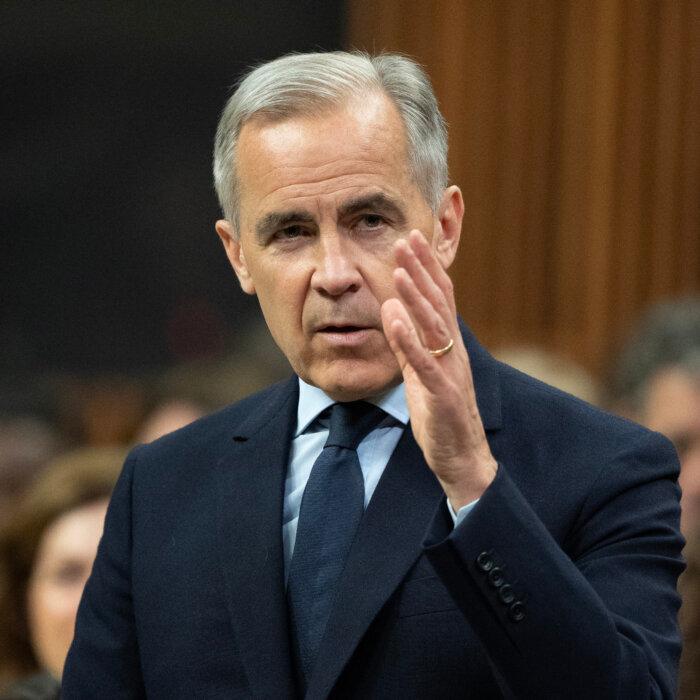

Carney said the government is currently creating a new defence procurement agency, which will be overseen by Secretary of State for Defence Procurement Stephen Fuhr. The prime minister said this would “centralize decision making and move at pace to get our armed forces the equipment they need when they need it.”
The prime minister said while national defence already accounts for over 275,000 jobs across Canada, an increase in military spending would create tens of thousands more jobs, while supporting other industries related to steel and aluminum, transportation, and weapons and ammunition manufacturing.
Canada would also meet its NATO defence spending target by increasing salaries for military members, which the Liberals had promised during the federal election campaign.
Carney also said the Canadian Armed Forces will establish the Bureau of Research Engineering and Advanced Leadership in Innovation and Science, which will focus on AI, quantum computing, and “other frontier technologies essential to safeguarding our sovereignty.”
Carney also said Canada will support “tangible commitments” from NATO allies to deter aggression and protect against all adversaries. “Our fundamental goal in all of this is to protect Canadians, not to satisfy NATO accountants,” he said.
During a press conference held later in the day, Carney was asked how the government would pay for increased military spending, and said they had “just begun the process to look for savings in government.” The prime minister said the government would not be raising taxes to pay for the military spending.
NATO Spending
According to 2024 NATO estimates, a total of nine out of 31 countries in the defence alliance are not meeting the current target of 2 percent of GDP on defence. These include Canada, Croatia, Portugal, Italy, Belgium, Slovenia, Spain, Luxembourg, and Montenegro.The report said the government’s defence policy update in April, which said military spending would reach 1.76 percent of GDP by 2030, was based on an “erroneous GDP forecast.” When adjusted for the correct GDP growth rates,” military spending would only reach 1.58 percent by then, according to the report.
Carney announced the increase in military spending ahead of the G7 summit in Kananaskis, Alta., from June 15 to 17, as well as the NATO summit in the Netherlands on June 24 and 25.
Carney told reporters that Canada recognized it will “need to spend more” on defence, and it will have those discussions with NATO allies. Carney also said Canada is close to meeting the 1.5 percent target for defence and security-related investment, and that he feels “very confident that we are in the zone of already beating that requirement.”