More than 700,000 rural Canada Post customers will no longer be able to tell if they have received mail by looking for the red flag on their mailboxes.
While some Canadians have relied on this method of knowing when they have received mail for decades, the federal postal company says the red flags on mailboxes are supposed to be used by customers to indicate to delivery agents that there is outgoing mail in the mailbox to be picked up.
“Our longstanding national process on the use of red flags/signal devices on rural mailboxes has been for customers to inform the delivery agent that outgoing mail is in the box for delivery,” Canada Post told The Epoch Times in an Aug. 7 email.
Having outgoing mail picked up by delivery agents is an added service for rural customers, Canada Post noted.
The company learned through customer inquiries that some delivery agents were using the red flags on mailboxes to notify customers that mail had been delivered in their box.
“As this is not a national delivery process, it created inconsistencies in how we are serving rural customers,” Canada Post said.
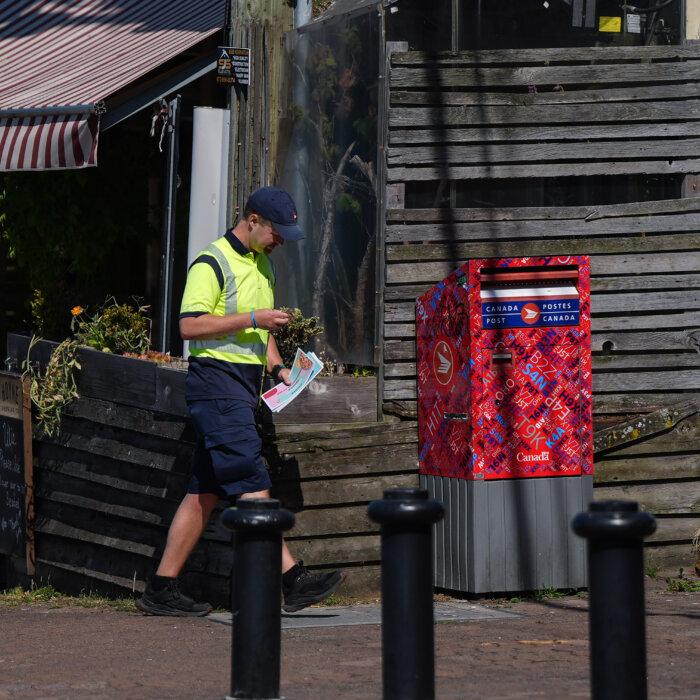

Canada Post said no policy has changed. Instead, the company has provided clarification on its existing policy to its operations and customers.
“We appreciate the feedback from our customers and apologize for any confusion,” the federal company said.
Rural Communities
In the past, Canada Post has offset the high cost of delivering to rural, remote, and indigenous communities with its low-cost urban and suburban mail delivery, a May 15 Industrial Inquiry Commission report says.“This model no longer works because the traditional core business – mail delivery – has fundamentally changed: fewer letters must now be delivered to more addresses,” Commissioner William Kaplan wrote.
Canada Post has experienced a decline of 2.2 billion letters delivered annually in 2023 from 5.5 billion in 2006, as well as a decline in parcel deliveries. In 2019, Canada Post delivered 62 percent of Canada’s parcels, but that declined to 29 percent in 2023. Private sector competitors have “almost completely taken over the market,” Kaplan said.
The Canadian Union of Postal Workers (CUPW) says rural post offices should remain open and play “a role in prompting national unity” and provide jobs in areas of higher unemployment. Meanwhile, Canada Post would like to see an end to the moratorium on rural post office closures and community mailbox conversions and says door-to-door letter carrier delivery “could no longer be justified.”
CUPW
Canada Post has been in a standoff over wages and work conditions with CUPW for more than 18 months, with CUPW saying Canada Post is using the publicity about its financial troubles to pressure the union into a bad deal.Canada Post has advocated for having part-time workers on the weekends as needed and during busy periods, rather than incurring overtime expenses for full-time staff. The union said the company wanted to increase the number of part-time staff in urban regions by 20 percent, requiring some part-time employees to work up to 30 hours per week.
An assessment by the Canada Industrial Relations Board (CIRB) found that Canada Post was effectively “bankrupt” and advised cutting costs by ending door-to-door mail services and increasing part-time staffing positions.
Kaplan’s May report revealed that Canada Post is “facing an existential crisis,” noting that it is “effectively insolvent, or bankrupt.” The report proposed a shift toward parcel delivery, closing rural post offices, increasing community mailboxes, ending daily door-to-door letter mail delivery for homes, and creating more part-time positions.
However, the union has largely rejected the report’s findings, and on Aug. 1 it rejected a Canada Post deal that offered to raise wages 13 percent over four years and create more part-time postal jobs.